What happened
Ford transformed General Pacheco for the new Ranger. A March government announcement said an additional engine investment brought the total for the model to US$660 million. In June the government announced the start of vehicle production. The engine decision is an example of vertical integration. It changes which activities take place inside the local production system and which remain with an outside supplier or overseas plant.
The US$80 million engine announcement was included in the US$660 million total. Adding the two would double count it. The engine portion equals about 12.1% of the overall plan. That share says nothing by itself about whether the engine project earns an adequate return. The right comparison is the additional investment and costs against the cost and availability of the supply it replaces.
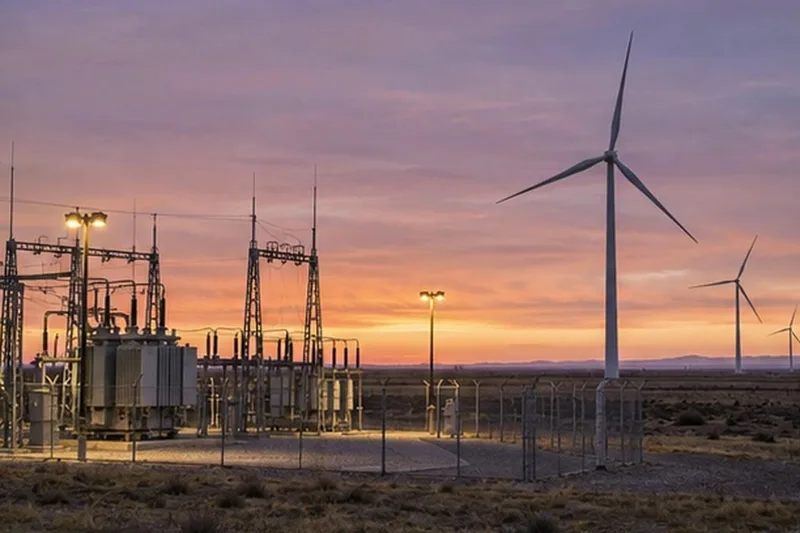
Ford has built vehicles at General Pacheco, near Buenos Aires, for decades, and the plant has produced more than 3.5 million vehicles. Between 2020 and 2023 Ford invested US$660 million to transform it for the new-generation Ranger pickup, its largest investment in the complex in 65 years. Capacity rose to 110,000 a year, about 70% more than before. Production of the new Ranger started in June 2023.
The engine plant was part of that investment. Ford began making the 3.0-litre V6 diesel at Pacheco in 2024 and the 2.0-litre Panther four-cylinder in February 2025; both had previously been imported from England and India.
Output rose from about 55,000 in 2023 to a record 62,000 in 2024. Ford then said it would raise production by 15% to 70,000 in 2025, hiring more than 160 workers, with most of it exported to markets such as Brazil, Chile, Peru and Colombia. In October 2024 the Ranger had its best month ever in Brazil, with over 3,800 sold.
In 2024 Ford planned about 51,000 engines on a Ranger production plan of at least 60,000 units, with about half using the V6 and 35% the Panther engine. Pacheco later moved to a rate of about 80,000 pickups a year, and Ford planned a single-cab Ranger from 2026.
Before the investment, the Ranger’s engines arrived from Ford plants in England and India, so making them locally shortened the supply chain. The trade-off is that Ford Argentina now carries more fixed cost, which only pays off if the plant runs close to capacity, and that depends heavily on demand in Brazil and the rest of South America over the coming years.
Key moments
Ford announces the engine investment within the enlarged programme.
Ford and the government announce the new Ranger production launch.
Vehicle and component volumes determine cost recovery.
About 60–70% is exported. The US$660m investment raised plant capacity to 110,000 a year. Sources: iProfesional; El Cronista.
The trade-offs at the heart of the case
Core tensions
Local production can protect against freight delays and shorten the route for resolving quality issues. A dedicated engine line also adds fixed costs that do not disappear when vehicle demand falls. Currency moves may raise the cost of imported parts used locally, making the local-versus-imported distinction less clear than it sounds. A second qualified source can protect volume even where local production wins the basic unit-cost calculation. Estimate the probability and duration of supply interruptions and consider the tooling cost needed to keep a genuine second source available.
Testing the evidence
The appropriate unit of observation is one engine fitted to a saleable vehicle. Track total delivered and warranted cost per engine and record the baseline before the decision. The most useful records are supplier quotations, warranty cohorts and vehicle build plans. Align their dates and definitions before drawing an inference. In particular, allow for exchange-rate changes in imported subcomponents. A change in that factor can move the reported outcome even when the intervention has had no effect. Track engines fitted to vehicles actually sold and compare similar duty cycles when assessing warranty. Localisation can improve the ability to correct defects while shifting more responsibility for those defects onto the local plant.
A related Argentine case
Toyota’s Hiace case tests the value of using common resources for an additional model. Ford’s engine case asks which activities the local plant should own instead of purchasing from an external supplier.
For your seminar, paper or interview
- Q1
At what order volume would supply reliability justify a higher accounting cost per local engine?
- Q2
How would you measure total delivered and warranted cost per engine for one engine fitted to a saleable vehicle using the available records?
- Q3
Which assumption in “Making an engine or buying it delivered” would you challenge first, and how would changing it affect the decision?
- Q4
Could exchange-rate changes in imported subcomponents explain the observed change? What evidence would distinguish that explanation?
- Q5
Under what conditions would you prefer continuing external supply with larger contingency inventory, and who would bear the residual risk?
- Vertical integration
- Local content
- Export platforms
- Capacity utilisation
How we would approach it
Simplifying Finance’s opinion, offered as a starting point for debate, not as fact or investment advice.
Appraise engine localisation at several vehicle volumes. Include tooling changes, warranty experience, inventory and supplier qualification on both sides. Give the local option credit for resilience only where the alternative supply route has an identifiable, costly vulnerability.
Make engines locally
Build the V6 and 2.0 diesel engines at Pacheco instead of importing them.
Raise output
Increase Ranger production to 70,000 a year.
Export to the region
Ship most Rangers to Brazil and other South American markets.
What this plan gives up
Local engines cut import dependence and logistics costs, but they require more capital and still rely on imported parts priced in foreign currency.
The strongest counter-argument
For the manufacturing investment committee, the alternative worth costing is continuing external supply with larger contingency inventory. Give both choices the same information date. Specify what can still be reversed, who absorbs the cost if the forecast is wrong, and the point at which new evidence would justify changing course. Make the decision conditional on an observable change in total delivered and warranted cost per engine. That condition lets someone outside the original decision team distinguish a sensible revision of the plan from an attempt to explain away poor results.
Metrics to watch
- Ranger production
- Engine output at Pacheco
Propose your solution
Pick a discussion question and set out what you would do, why, and what it would cost. Strong, well-argued answers are reviewed and published below with your first name and programme.
Published solutions
Loading published solutions…
- Government of Argentina: June 2023 Ranger production launch ↗
- Government of Argentina: March 2023 engine investment within total plan ↗
- Ford: Starts production of the Panther engine in Argentina ↗
- El Cronista: Ford completa su mayor inversión en 65 años ↗
- iProfesional: Ford Ranger cumple 30 años con récord ↗
- Parabrisas: Ford incrementará su producción de Ranger ↗
- Image: AI-generated editorial illustration
Figures are as reported by the companies or cited outlets as of 22 November 2026. Check the source before quoting. Corrections: let us know through the solution form.