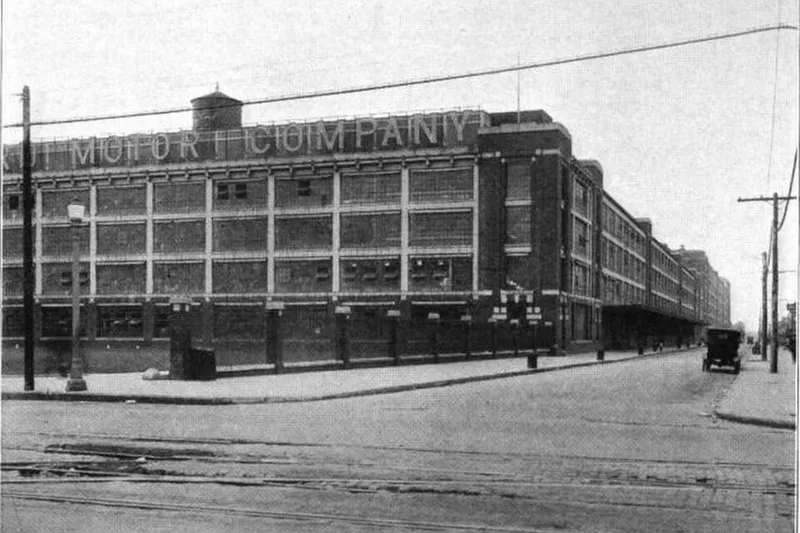
What happened
The Model T was designed for buyers who needed a car they could operate and maintain under ordinary conditions. Ford introduced it in 1908. A producer seeking a broad market faced a circular problem. Higher volume could lower unit costs, but customers had to believe the price and the ownership burden were affordable before volume could build.
The first Model T was completed at Ford’s Piquette Avenue plant in Detroit on 12 August 1908, and the car went on sale on 1 October 1908, according to IEEE Spectrum.
When it was introduced, the Model T cost $850, which The Henry Ford describes as cheap for its day. Even before the factory had built a single car, dealers had 15,000 orders, nearly twice Ford’s total sales of the previous year.
The car was built to be simple and tough. Its four-cylinder engine produced about 20 horsepower and its top speed was about 45 miles per hour, according to IEEE Spectrum.
Ford production figures compiled by The Henry Ford show how fast volume grew. Ford built 10,202 cars in 1908, 32,053 in 1910, 170,211 in 1912 and 308,162 in 1914.
As volume rose, the price fell. The Smithsonian says Ford’s moving assembly line increased production volume and prices fell from $850 to $260 by 1925.
Ford’s market share grew with the lower price. IEEE Spectrum reports that Ford produced 15 percent of all US cars in 1908, 48 percent in 1914 and 57 percent in 1923.
The Model T stayed in production until May 1927. By then Ford had built more than 15 million of them, a figure given by both Britannica and Ford.
The car was also assembled outside the United States. Britannica notes that it was built at a Ford plant in Manchester, England, and at plants in continental Europe.
Sources give slightly different starting prices because Ford sold several body styles. Ford’s heritage pages give $825 for the Runabout at launch, while other sources quote $850 for the Touring car.
The exhibit shows Ford’s yearly production rising from about 10,000 cars in 1908 to more than 300,000 in 1914.
This is a classic example of unit economics working in a company’s favour. Each car carried part of the fixed cost of factories and tools, so higher volume meant lower cost per car.
Lower cost allowed lower prices, which brought in more buyers, which raised volume again. Economists call this kind of loop a virtuous circle.
Break-even analysis helps explain the strategy. A low price raises the number of cars needed to cover fixed costs, so the plan only works if demand responds strongly.
Ford also cut the cost of owning a car, not just buying one. A simple design meant owners could keep it running with basic tools and parts.
Students can compare the Model T with modern products such as budget smartphones, where scale and simple design also bring prices down.
The same focus on one model later became a weakness, when rivals offered more choice, colour and comfort.
A useful question is how long a company should keep improving one product before replacing it.
Key concept: unit economics. Unit economics looks at the revenue and costs linked to a single unit, such as one car or one customer. If each unit earns more than it costs to make and sell, growth adds profit; if not, growth adds losses.
Fixed costs such as development and tooling are spread across all units, so the cost per unit falls as volume rises. That is why low-volume products need high prices, and why volume matters so much in the car industry.
Key concept: break-even analysis. The break-even point is the volume at which revenue covers all costs. Below it a product loses money; above it, it makes a profit.
Key moments
Ford targets everyday ownership
Model T is introduced
Standardisation supports large-scale manufacture
Source: The Henry Ford, Ford Motor Company production statistics.
The trade-offs at the heart of the case
A closer look
A household deciding whether it could afford its first Model T faced more than a purchase price. Ask who could keep it working, how far away a replacement part might be and what happened to the family’s work when the car was idle. Those answers explain why a simple design could change the number of buyers even at a fixed price. A sales comparison confined to other car owners misses them.
The alternative on the table
For comparison, consider the option to design a more specialised vehicle for a wealthier buyer. The related case “Where did the time go on the moving assembly line?” supplies a useful reference point. At Highland Park, Ford broke assembly into shorter tasks and moved the work past the workers. The later assembly line addressed how to produce a car efficiently. The Model T brief addressed which car deserved that system. An inexpensive factory cannot rescue an unsuitable product.
For your seminar, paper or interview
- Q1
What makes first-time ownership affordable after the Model T leaves the showroom?
- Q2
Which finding in the records on buyers whose alternative was to postpone car ownership would persuade you to design a more specialised vehicle for a wealthier buyer?
- Q3
Compare this decision with “Where did the time go on the moving assembly line”. Which difference between the cases would change your recommendation?
- Mass-market pricing
- Economies of scale
- Product simplicity
- Price elasticity
How we would approach it
Simplifying Finance’s opinion, offered as a starting point for debate, not as fact or investment advice.
We think the Model T worked because Ford treated price as something to be engineered, not just set. A simple, durable car built in rising volume let each price cut win more buyers, and more buyers paid for the next round of cost savings. The risk was that the same single-product focus later left Ford slow to respond when buyers wanted more choice.
Design for ownership
Make the car easy to run and repair, not just cheap to buy.
Cut price as costs fall
Pass savings to buyers to widen the market.
Keep watching rivals
Do not let a winning formula freeze.
What this plan gives up
A single standard model lowers cost but limits choice.
The strongest counter-argument
Some argue Ford stayed with one model too long and handed the next market to rivals.
Metrics to watch
- Price as months of an average wage
- Annual output
Propose your solution
Pick a discussion question and set out what you would do, why, and what it would cost. Strong, well-argued answers are reviewed and published below with your first name and programme.
Published solutions
Loading published solutions…
- Ford Motor Company • The Ford Model T | Articles | Ford Motor Company ↗
- heritagesociety.org • Ford Model T — The Heritage Society ↗
- history.com • Model T - Ford, Car & Invented | HISTORY ↗
- Smithsonian National Museum of American History • 1913 Ford Model T Touring Car ↗
- The Henry Ford • Ford’s Model T: A Car for the Great Multitude ↗
- IEEE Spectrum • August 1908: The First Ford Model T Completed in Detroit ↗
- The Henry Ford • Research Guide: Ford Motor Company Production Statistics ↗
- Photo: 1925 Ford Model T touring by ModelTMitch, CC BY-SA 4.0 (cropped and resized) ↗
Figures are as reported by the companies or cited outlets as of 22 November 2026. Check the source before quoting. Corrections: let us know through the solution form.