What happened
Ford’s wood operations produced scraps as well as timber for vehicles. Processing some of the residue into charcoal briquettes turned a material-handling problem into a potential secondary business associated with Kingsford. A waste stream can arrive at a low transfer price while requiring drying, processing, packaging and an entirely new distribution channel.
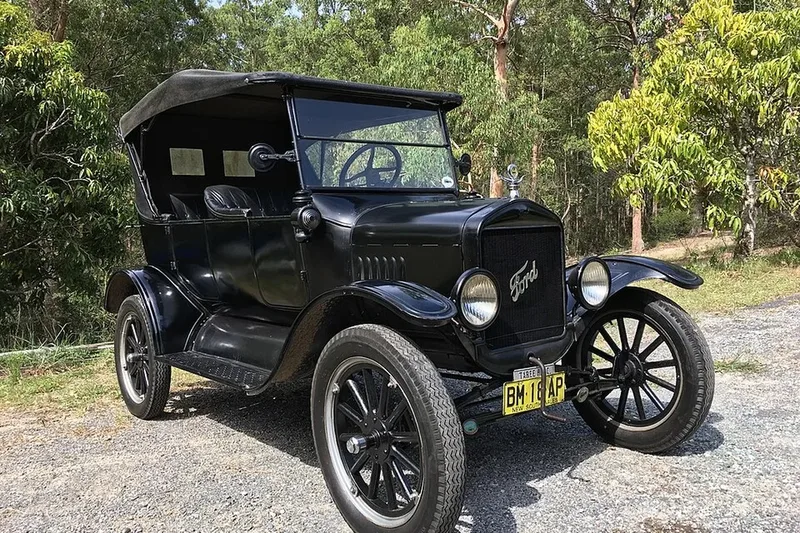
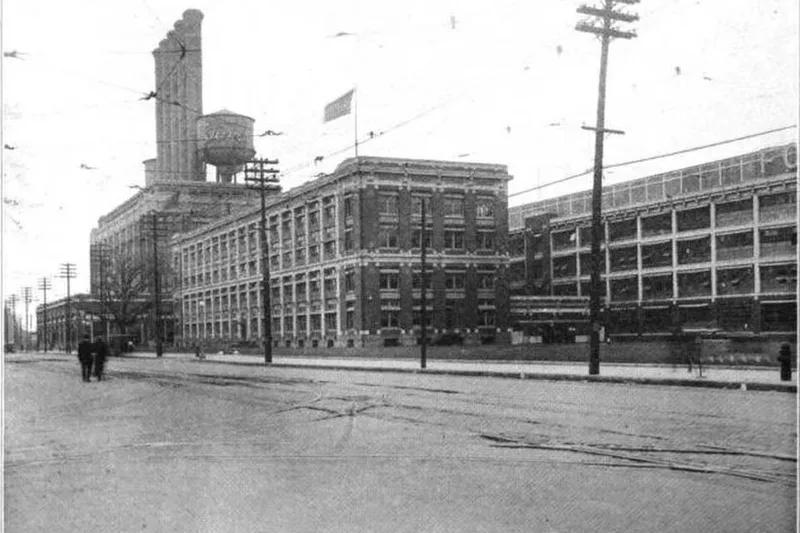
In the early 1920s Ford acquired large areas of timberland around Iron Mountain in Michigan’s Upper Peninsula. Edward G. Kingsford, a local Ford dealer and Henry Ford’s cousin by marriage, helped arrange the land purchases, according to The Henry Ford.
Ford built a large sawmill and body-parts plant there. Workers produced lumber for wooden car framework, floorboards and wheels, The Henry Ford says.
The sawmill created large amounts of wood waste. The City of Kingsford says the plant recovered several saleable by-products from every ton of scrap wood, including 610 pounds of charcoal that was made into briquettes.
The process was simple in principle. The Henry Ford explains that charred hardwood chips were crushed, mixed with starch and pressed into briquettes, with workers producing nearly 100 tons a day.
Ford sold the product through its own dealers. The Henry Ford notes that dealers across the country sold branded bags of briquettes and barbecue accessories.
The plant’s role shrank as cars stopped using wood. Ford says it kept the Kingsford plant running until 1951 despite a sharp fall in demand for automotive wood.
In 1951 Ford sold the 297-acre plant and surrounding land to the newly formed Kingsford Chemical Company, according to Ford. Sources differ on the workforce at the time: Ford mentions 1,800 employees, while a local historian quoted by the Iron Mountain Daily News says fewer than 1,000 worked there in its final days.
The brand outlived Ford’s ownership. Kingsford charcoal was later acquired by Clorox in 1973, according to Wikipedia.
The exhibit shows how much usable charcoal Ford recovered from each ton of scrap wood.
Unit economics for by-products are different from those of a main product. The raw material is almost free, but processing, packing and distribution still cost money.
Opportunity cost is the key question. Ford could have sold or burned the scrap, so the briquette business had to beat those options.
Using Ford dealers as a sales channel kept marketing costs low, because the network already existed.
Today this idea is part of the circular economy, which aims to turn waste into useful products.
The sale in 1951 shows that a business can be worth more to an owner who focuses on it fully.
Kingsford’s later growth as a leading charcoal brand suggests the new owners made good use of it.
Students can look for waste streams in modern companies, from food leftovers to used batteries, that could become products.
Key concept: unit economics. Unit economics looks at the revenue and costs linked to a single unit, such as one car or one customer. If each unit earns more than it costs to make and sell, growth adds profit; if not, growth adds losses.
Fixed costs such as development and tooling are spread across all units, so the cost per unit falls as volume rises. That is why low-volume products need high prices, and why volume matters so much in the car industry.
Key concept: opportunity cost. Opportunity cost is the value of the best alternative given up when making a choice. Money and time spent on one project cannot be spent on another.
Good decisions compare options against each other, not just against doing nothing.
Key concept: risk and return. In business and investing, higher potential returns usually come with higher risk. Entering a new market or launching a new kind of product can bring large rewards, but the chance of failure is also greater.
Managers weigh the size of the possible gain against the likelihood and cost of failure, and they often reduce risk by testing ideas on a small scale before committing large sums.
Key moments
Ford’s timber operations generate wood residue
Offcuts become feedstock for charcoal briquettes
A separate distribution market must absorb the by-product
Sources: City of Kingsford; The Henry Ford; Ford Motor Company.
The trade-offs at the heart of the case
A closer look
An offcut has a low purchase price only when disposing of it or using it elsewhere has little value. Compare selling wood residue directly with drying, processing, packing and distributing briquettes. The order of those activities matters because the wood is heavier before drying. Locating the first step near the sawmill can change the answer even if the price paid for a bag of charcoal stays the same.
The alternative on the table
For comparison, consider the option to sell untreated scrap to a local industrial user. The related case “Could an agricultural crop become a reliable car part?” supplies a useful reference point. Ford chemists at Greenfield Village explored industrial uses of soybeans, including automotive materials. The soy programme had to establish that a new input worked. The charcoal programme had to find paying customers for a processed by-product. Each commercial problem starts at a different end of the chain.
For your seminar, paper or interview
- Q1
Where should Ford process wet wood residues before selling the resulting briquettes?
- Q2
Which finding in the records on saleable briquettes per tonne of dry usable residue would persuade you to sell untreated scrap to a local industrial user?
- Q3
Compare this decision with “Could an agricultural crop become a reliable car part”. Which difference between the cases would change your recommendation?
- By-product strategy
- Circular economy
- Diversification
- Waste valorisation
How we would approach it
Simplifying Finance’s opinion, offered as a starting point for debate, not as fact or investment advice.
We think the charcoal business was a smart use of a waste stream, but it was never core to Ford. It made money from scrap that would otherwise cost money to dispose of, and Ford’s dealer network gave it a ready sales channel. Once wood left car production, selling the business to a focused owner was the right move.
Price the waste
Count what disposal would otherwise cost.
Use existing channels
Sell the by-product through networks you already have.
Sell non-core units
Let specialists run businesses outside your core.
What this plan gives up
By-products add income but can distract management from the main business.
The strongest counter-argument
Some argue a carmaker should simply sell its scrap rather than build a new product.
Metrics to watch
- Revenue per ton of scrap
- Share of waste reused
Propose your solution
Pick a discussion question and set out what you would do, why, and what it would cost. Strong, well-argued answers are reviewed and published below with your first name and programme.
Published solutions
Loading published solutions…
- census.gov • July 2021: Summer Barbecues ↗
- The Henry Ford • Ford Charcoal Briquets and Packaging, 1935-1937 ↗
- The Henry Ford • Ford Charcoal Briquets Bag, 1929-1947 ↗
- The Henry Ford • Ford Charcoal Briquets (expert set) ↗
- Ford Motor Company (FordOnline) • TBT: How Henry Ford helped establish a town in Michigan’s Upper Peninsula ↗
- City of Kingsford • The History of the City of Kingsford ↗
- Wikipedia • Kingsford (charcoal) ↗
- Photo: Charcoal Briquette by Vladsinger, CC BY-SA 3.0 (cropped and resized) ↗
Figures are as reported by the companies or cited outlets as of 22 November 2026. Check the source before quoting. Corrections: let us know through the solution form.