What happened
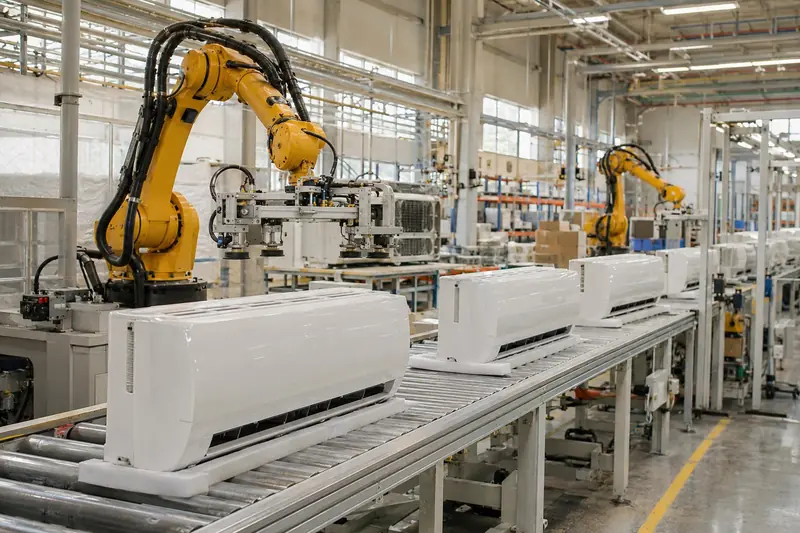
Haier built its reputation on quality and service when Chinese products were seen as cheap and unreliable.
Zhang Ruimin broke the company into thousands of small, self-managing teams that serve customers directly and share profits — the “rendanheyi” model, studied by business schools worldwide.
Haier bought GE Appliances and let it keep its management while sharing ideas, a contrast to many acquirers that impose control. It now sells premium brands like Casarte in China.
The case shows how culture, organisation design and patient acquisitions can turn a local manufacturer into a global leader.
The lessonQuality, a flexible organisation and respectful acquisitions can build a global leader from a struggling local factory.
Key moments
Zhang Ruimin takes over a failing Qingdao fridge factory.
He orders 76 defective fridges smashed.
Haier starts its “rendanheyi” micro-enterprise model.
Haier buys GE Appliances for $5.6bn.
It buys Italy’s Candy.
Revenue passes RMB 300bn with record profit.
For your seminar, paper or interview
- Q1
Why did smashing fridges matter?
- Q2
How does the micro-enterprise model work?
- Q3
Why did Haier leave GE Appliances’ management in place?
- Q4
Could the rendanheyi model work in other companies?
- Total quality management
- Organisational design
- Post-merger integration
- Brand building
Propose your solution
Pick a discussion question and set out what you would do, why, and what it would cost. Strong, well-argued answers are reviewed and published below with your first name and programme.
Published solutions
Loading published solutions…
- Haier: full-year 2025 results ↗
- EQS: revenue surpasses RMB 300bn ↗
- Tiger: overseas revenue H1 2025 ↗
- Tiger: global factories ↗
Figures are as reported in the cited sources. Check the source before quoting. Corrections: let us know through the solution form.