What happened
Villages were assigned to usual practice, SMS alone, SMS with a 75-shilling incentive or SMS with a 200-shilling incentive. Researchers tracked full immunization by 12 months in the study population. The payments were tied to timely visits under the rules of the trial.
The reported proportions fully immunized by 12 months were 82 percent in the comparison group, 86 percent with SMS, 86 percent with SMS plus 75 shillings and 90 percent with SMS plus 200 shillings. The largest-incentive group showed a statistically supported improvement versus comparison. The observed ranking does not prove every pair of groups differed.
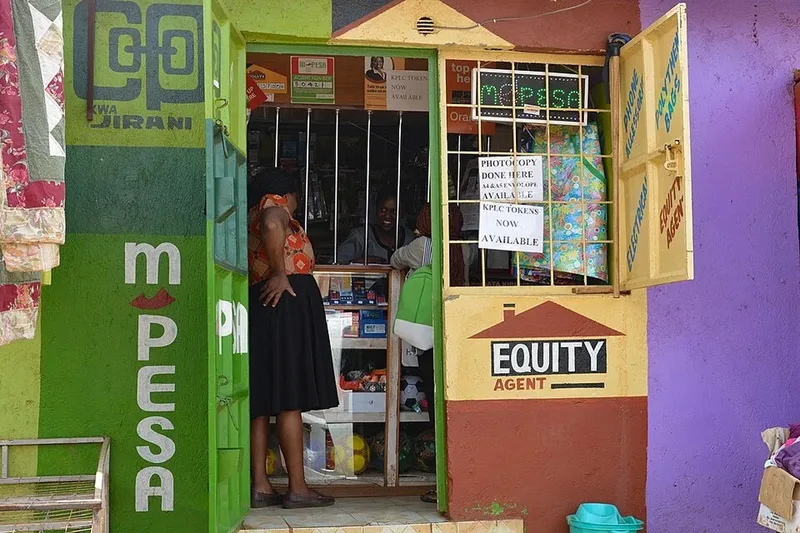
The M-SIMU trial took place in rural western Kenya, where many children start their vaccination schedule but some miss later doses. Villages were randomly assigned to standard care, SMS reminders, SMS plus a 75-shilling incentive or SMS plus a 200-shilling incentive for each timely visit, paid through mobile money.
By 12 months, 82 percent of children in the comparison group were fully immunised, compared with 86 percent with SMS alone, 86 percent with SMS plus 75 shillings and 90 percent with SMS plus 200 shillings. Only the largest incentive showed a statistically supported improvement over the comparison group.
Because baseline coverage was already high, the remaining children were harder to reach. Incentives help with costs such as transport and lost work time, while reminders address forgetting, two different barriers to completing the schedule.
Kenya has a national immunisation programme supported by Gavi, the Vaccine Alliance, and has expanded vaccines over time. Studies like M-SIMU help decide how to spend limited funds on reaching the last children.
For finance students, the case shows how to evaluate a programme by its marginal effect and cost per extra outcome, rather than by the overall coverage rate.
The study was conducted in Siaya County, an area with high child mortality where reaching every child with a complete vaccine schedule remains a priority for health authorities.
Mobile money made it possible to pay small incentives quickly and cheaply, which would have been costly with cash. That illustrates how digital payments can support health programmes.
Incentive programmes must also be designed carefully to avoid paying for visits that would have happened anyway. Targeting families with a history of missed visits, or areas with low coverage, can improve value for money.
Policymakers can use the trial’s cost data to compare incentives with alternatives such as outreach clinics, community health volunteer visits and improved vaccine stock management.
Combining several low-cost tools, each aimed at a different barrier, is often the most practical route to reaching the last children.
Kenya’s community health volunteers play an important role in tracing children who miss appointments. Combining their visits with SMS reminders and small incentives is one way programmes try to reach the remaining unvaccinated children.
Reliable vaccine supply at clinics is also essential; incentives cannot help if a child arrives and the vaccine is out of stock.
Planners therefore need to fund supply chains, outreach and demand-side tools together.
Kenya’s experience offers a useful guide for other countries where coverage is already high but stubborn gaps remain.
In such settings, each additional percentage point of coverage tends to cost more than the last, because the remaining families face the greatest barriers.
Understanding those barriers, whether distance, cost, time or information, helps decide which mix of reminders, incentives and outreach offers the best value.
Evaluations that report costs alongside outcomes make those comparisons possible for planners with tight budgets.
Mobile money, reminders and incentives together form a flexible toolkit that health authorities can adjust as coverage changes over time.
The M-SIMU results give planners concrete numbers to start from when designing those adjustments in their own counties.
Small, well-timed support can help families complete what they already intend to do.
Reliable delivery of that support, through trusted channels and on schedule, is what turns a good design into a working programme for every child.
Key moments
M-SIMU trial begins in rural western Kenya.
Children followed to 12 months of age.
Results published in The Lancet.
Source: Gibson et al., The Lancet (2017), M-SIMU cluster-randomised trial.
The trade-offs at the heart of the case
Reading the result
Read the four published immunization percentages in order. The comparison group reached about 82 percent. Reminders alone and reminders plus the smaller incentive were each around 86 percent. The reminders plus the larger incentive group reached around 90 percent. The eight-point gap between the first and last groups is easier to interpret than describing an unspecified eight percent improvement. The rounded middle values also show why a numerical ranking is inadequate. Check uncertainty and the trial’s planned comparisons before treating each apparent step as reliably different.
The financing decision
Compare sending an additional reminder with helping families meet the cost of another visit. An attendance record should retain visits made late as well as those made on time. Completion by the first birthday and protection at the intended ages are related but distinct objectives.
For your seminar, paper or interview
- Q1
Which people would be missed by measuring only additional infants completing the full measured schedule?
- Q2
Who carries the cost of messages, incentive payments and clinic capacity?
- Q3
What could the evidence on timeliness as well as eventual completion change?
- Behavioural incentives
- Health financing
- Mobile health
- Cost-effectiveness
How we would approach it
Simplifying Finance’s opinion, offered as a starting point for debate, not as fact or investment advice.
We think small cash incentives combined with SMS reminders can raise full immunisation where most children are already reached. The gains are modest in percentage points, so programmes should focus incentives on the families most likely to miss visits.
Target the gaps
Focus on families who miss later visits.
Pay on time
Make incentive payments quick and reliable via mobile money.
Track cost per child
Compare cost per additional fully immunised child.
What this plan gives up
Incentives raise coverage but add a recurring cost per child.
The strongest counter-argument
Some argue resources would be better spent on outreach clinics and vaccine supply.
Metrics to watch
- Full immunisation by 12 months
- Timeliness of each vaccine dose
Propose your solution
Pick a discussion question and set out what you would do, why, and what it would cost. Strong, well-argued answers are reviewed and published below with your first name and programme.
Published solutions
Loading published solutions…
- Mobile phone-delivered reminders and incentives to improve childhood immunisation coverage and timeliness in Kenya (M-SIMU): a cluster randomised controlled trial ↗
- M-SIMU • published cluster-randomised trial ↗
- Photo: Women and children try to shelter from the sun at a health clinic in Kapua, Turkana County, northwest Kenya, 29 January 2017 by DFID - UK Department for International Development, CC BY 2.0 (cropped and resized) ↗
Figures are as reported by the companies or cited outlets as of 22 November 2026. Check the source before quoting. Corrections: let us know through the solution form.