What happened
A spring can be clean where water leaves the ground and households can still drink contaminated water. Collection, transport and storage lie between the two points. A public works budget that measures only the finished spring may give a different answer from an evaluation that follows water into the home.
Researchers studied the allocation of spring protection and measured water quality, household behavior and child health in western Kenya. The design observed changes both at the source and nearer the point of consumption. It also examined where families collected water, a choice that reveals how they valued the improvement.
Protection reduced fecal contamination at the spring by about 66 percent. Improvement in household water quality was smaller. The study also reported a decline in child diarrhea. The difference between the two sampling points matters: a real technical improvement upstream did not pass through unchanged to every household cup.
The researchers estimated that child diarrhea fell by about one-quarter. This is a change in a health outcome, while the 66 percent result describes what was measured in the spring water. They cannot be added or interpreted using the same denominator.
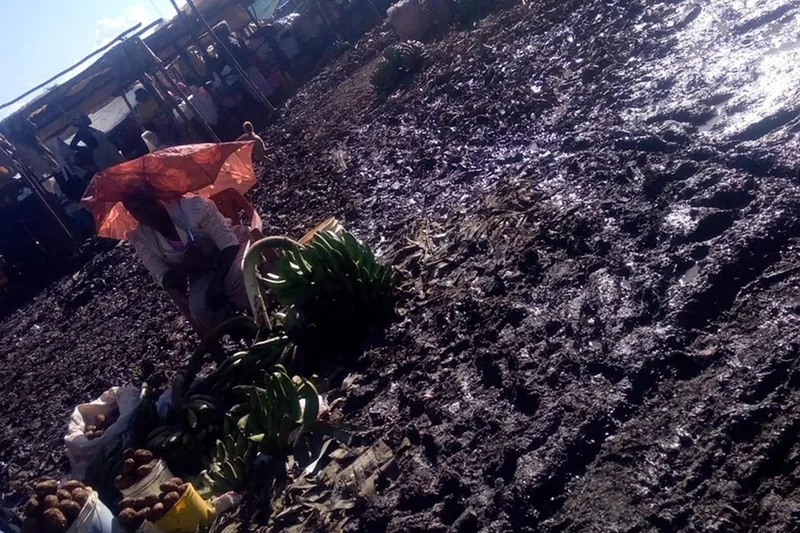
In rural western Kenya, many households collect drinking water from springs, carrying it home in 10 to 20 litre jerry cans. Custom gives everyone free access to springs, so landowners have little incentive to keep them clean, and rainwater runoff often contaminates the water.
Researchers worked with a local NGO to identify 200 springs in Busia district. Communities contributed 10 percent of the cost, usually in labour. At about US$1,000 per site, half of the springs were encased in concrete so that water flowed through a pipe rather than seeping through the ground. Local user committees maintained them at about US$35 a year.
Protected springs had 66 percent less E. coli contamination than unprotected ones, but household water had only 24 percent less, because water was recontaminated during transport and storage. Even so, diarrhoea among children under three fell by 4.7 percentage points, about 25 percent, with gains concentrated among girls.
The researchers also measured how far households were willing to walk to use protected springs, a way to estimate how much people value cleaner water. The modest values they found help explain why private investment in spring protection is rare and why public funding is needed.
The study is a classic example of a public good: everyone benefits from a clean spring, but no individual has a strong enough incentive to pay for it.
Spring protection is relatively cheap compared with piped water systems, which require pumps, pipes, treatment and ongoing operations. In rural areas with scattered households, protecting existing springs may be the most practical first step towards safer water.
The study’s design, randomly choosing which springs were protected, allowed researchers to measure effects credibly even though the intervention was simple and visible. That approach has since been used for many other water and sanitation investments.
For budget holders, the gap between source and household water quality is a reminder to measure outcomes where people actually consume water, not only where infrastructure is built.
The finding that girls benefited more from reduced diarrhoea is notable. It may reflect differences in care or exposure, and it suggests that water improvements can contribute to narrowing health gaps between boys and girls.
Community maintenance committees were a key part of the design. Small annual contributions kept springs in working order, illustrating how local ownership can sustain simple infrastructure.
Without that upkeep, concrete casings crack and drainage channels clog, and the gains from protection can erode within a few seasons.
The low cost per site makes spring protection attractive where many households depend on the same source.
Policymakers can extend these benefits by combining spring protection with promotion of safe storage containers, which keep water clean between collection and drinking, and with chlorine at the source.
Each addition is inexpensive and targets the recontamination that limited the household gains in this study.
Together they offer a layered approach to safe water that rural communities can sustain with modest outside support.
For students of public finance, the case offers a compact lesson in why governments fund shared infrastructure that private owners would not provide on their own, and in how careful measurement reveals both the benefits and their limits.
It remains widely taught in development economics.
Key moments
Researchers identify 200 springs in Busia district.
Half of the springs are protected and outcomes measured.
Results published in the Quarterly Journal of Economics.
Source: J-PAL summary of Kremer, Leino, Miguel and Zwane, Quarterly Journal of Economics (2011).
The trade-offs at the heart of the case
The financing decision
Compare further investment at the spring with support for keeping water safe on the journey home. The first benefits everyone collecting from that source. The second may matter differently according to containers, travel time and storage conditions. Identify where the observed deterioration occurs before allocating funds.
For your seminar, paper or interview
- Q1
Which people would be missed by measuring only water quality at the point of household use?
- Q2
Who carries the cost of construction, upkeep and time spent collecting water?
- Q3
What could the evidence on paired measurements at the spring and at home change?
- Public goods
- Water infrastructure
- Revealed preference
- Cost-effectiveness
How we would approach it
Simplifying Finance’s opinion, offered as a starting point for debate, not as fact or investment advice.
We think spring protection is a good public investment because it sharply reduces contamination at the source and cuts child diarrhoea. But much of the gain is lost between spring and cup, so it works best combined with safe storage and point-of-use treatment.
Protect key springs
Prioritise springs used by many households.
Add treatment
Pair protection with chlorine at the source.
Fund maintenance
Support committees that keep springs clean.
What this plan gives up
Protection is cheap per user but does not guarantee clean water at home.
The strongest counter-argument
Some argue piped water systems offer a more complete long-term solution.
Metrics to watch
- Contamination in household water
- Child diarrhoea rates
Propose your solution
Pick a discussion question and set out what you would do, why, and what it would cost. Strong, well-argued answers are reviewed and published below with your first name and programme.
Published solutions
Loading published solutions…
- Spring Cleaning • rural water impacts, valuation and property rights ↗
- Kremer and colleagues • research paper ↗
- Photo: Protecting the spring did not finish the journey to the cup by Simplifying Finance, Original editorial graphic (cropped and resized)
Figures are as reported by the companies or cited outlets as of 22 November 2026. Check the source before quoting. Corrections: let us know through the solution form.