What happened
A stack of new books can reach the right school and the wrong reading level. A teacher distributing one edition to a class faces pupils who read confidently, pupils learning in a second or third language, and pupils who have already fallen behind. A copy count treats all of these deliveries as equally valuable.
Researchers studied a randomized textbook distribution program and compared results across pupils with different starting attainment. The books followed the official curriculum. Understanding the language and content of that curriculum was itself a condition for benefiting from the purchase. The public decision concerned which resources an additional education allocation should buy.
Average test scores did not improve detectably. Pupils who had scored well before the intervention did gain. The authors discuss the mismatch between the books and many pupils’ preparation. A budget could therefore succeed at reducing the pupil-to-book ratio while doing little for the children with the weakest initial skills.
The language of instruction mattered. The books were in English, which many pupils were still learning. That gives the school a concrete way to investigate why a pupil received a book but gained little from it. Can the child understand the instructions well enough to use the book independently?
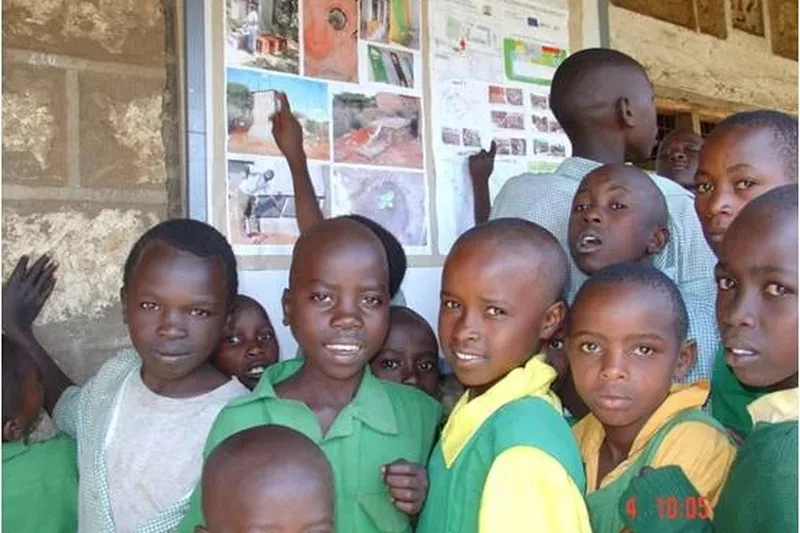
International Child Support began working in Busia and Teso districts in 1995. Researchers divided 100 low-performing schools into four groups of 25, and the first group received textbooks in 1996, with English books for several grades, maths books and science books for the final year. At the start, 80 percent of sampled pupils were in classes with fewer than one English textbook for every 20 children.
The study found no increase in average test scores, and no reduction in repetition or dropout. Gains appeared only for pupils who were already among the strongest before the programme. The authors linked this to a curriculum and examination system oriented towards the most able pupils, taught in English, which for most children was a third language.
The lesson travels well beyond Kenya. Spending measured by inputs, such as books per pupil, is easy to report but can hide whether the input matches learners’ needs. Systems from South Asia to Latin America have since shifted towards levelled readers and early-grade materials in local languages, reflecting the same insight.
For finance students, the case is a reminder that the return on an investment depends on complementary assets. A book is valuable only when combined with a reader who can understand it and a teacher who can guide its use.
The study also helped shift attention from enrolment to learning. When almost every child starts school, the question becomes what they learn while there. Later citizen-led assessments in Kenya, such as Uwezo, documented that many pupils in upper primary still struggled with basic reading, which reinforced the case for materials and teaching matched to children’s actual level.
A practical approach for schools is to test a sample of pupils before buying materials and to choose a mix of books that serves the full range of readers. That turns a procurement decision into a learning decision.
Finally, the case shows the value of measuring results for different groups. An average of zero can hide real gains for some pupils and none for others, and only a breakdown reveals where the money is working.
The textbook programme was also one of the first large randomised evaluations of a school input in Africa, and its design, phasing schools in over several years, became a template for later studies in the region. That phased approach let every school eventually receive books while still producing a fair comparison, a useful compromise when withholding a benefit entirely would be hard to justify.
Budget holders can apply the same idea when introducing any new resource: roll it out in stages, measure as they go, and adjust the next stage based on what the first one shows.
The same principle applies to technology purchases today, such as tablets or digital content, where the value depends on whether pupils and teachers can use them effectively.
Matching resources to learners, rather than to the curriculum’s ambitions, is the thread that links this study to later successful reading programmes.
Key moments
ICS begins a programme to improve primary education in Busia and Teso.
The first group of 25 schools receives textbooks.
Results published in the American Economic Journal: Applied Economics.
Source: J-PAL summary of Glewwe, Kremer and Moulin (2009), Busia and Teso districts.
The trade-offs at the heart of the case
The financing decision
Compare a second textbook purchase with time for teachers to introduce the books pupils already have. Count books reaching desks, lessons in which pupils use them and comprehension of unfamiliar material. Each measure describes a different point where another shilling of school spending might help.
For your seminar, paper or interview
- Q1
Which people would be missed by measuring only additional pupils able to use the material independently?
- Q2
Who carries the cost of purchase, replenishment and classroom use of the books?
- Q3
What could the evidence on reading comprehension by initial achievement change?
- Input versus outcome
- Heterogeneous effects
- Curriculum design
- Randomised evaluation
How we would approach it
Simplifying Finance’s opinion, offered as a starting point for debate, not as fact or investment advice.
We think the study shows that buying more of an input only helps if pupils can use it. Textbooks written for the strongest readers in a second or third language did little for the average child, so the next purchase should match materials to what pupils can actually read.
Assess reading levels first
Check what pupils can read before choosing books.
Buy for the middle and bottom
Include simpler materials and local-language readers.
Pair books with teaching
Train teachers to use materials with mixed-ability classes.
What this plan gives up
Curriculum-aligned books support exam preparation for strong pupils but leave weaker readers behind.
The strongest counter-argument
Others argue textbooks are a long-term asset whose value appears only over many years and later grades.
Metrics to watch
- Reading scores for the lowest-scoring quarter
- Books in use per pupil, not just delivered
Propose your solution
Pick a discussion question and set out what you would do, why, and what it would cost. Strong, well-argued answers are reviewed and published below with your first name and programme.
Published solutions
Loading published solutions…
- Many Children Left Behind? Textbooks and Test Scores in Kenya ↗
- Glewwe, Kremer and Moulin • published article ↗
- Photo: Primary School Class, Kikuyu, Kenya, ca.1905-ca.1940 (imp-cswc-GB-237-CSWC47-LS7-024) by Unknown photographer, Public domain (cropped and resized) ↗
Figures are as reported by the companies or cited outlets as of 22 November 2026. Check the source before quoting. Corrections: let us know through the solution form.