What happened
A flexible paper machine is most valuable when sales and production agree about the cost of changing their minds. A customer may want a new grade quickly. A mill may need a long run before the order earns its target margin. Klabin’s second Puma II machine put that tension into a concrete investment. A specification listing multiple grades was a starting point for a commercial strategy.
Klabin reported that PM28 came online in June 2023 with annual production capacity of 460,000 tonnes. The company described a paperboard machine also capable of producing white top liner and kraftliner. The capacity figure is for the machine. It cannot be assigned in full to each grade and added together. The same production hours are being sold several possible ways.
Grade mix affects more than selling price. A packaging converter needs consistent surface quality, stiffness and performance on its own line. Qualifying a new board can require samples, production trials and customer sign-off. A mill producing a technically saleable roll can still be waiting for commercial approval. The result can resemble a demand shortfall even when the customer ultimately intends to buy regularly.
An attractive small order may interrupt a long run and consume hours in changeover, startup waste and rechecking quality. Refusing every such order would protect today’s throughput while preventing the mill from building a valuable customer base. The scheduler should calculate the value of a trial as an option on repeat orders and price that option separately from the initial tonnes. A promise of volume deserves less weight than an agreed qualification calendar.
Klabin is Brazil’s largest producer and exporter of packaging paper. Its Puma unit in Ortigueira, Paraná, is a large integrated pulp and paper complex. In 2019 it announced Puma II, a two-phase expansion that became the largest investment in its 124-year history, at R$12.9 billion.
The first phase started Paper Machine 27 in 2021, making Eukaliner, a kraftliner made entirely from eucalyptus fibre, with capacity of about 450,000 tonnes a year. The second phase started Paper Machine 28, supplied by Valmet, in mid-2023. Klabin described it as the most modern paperboard machine in the Americas, with capacity of 460,000 tonnes a year of coated board for liquid packaging, beverage cans and bottles, and food. Klabin’s total capacity rose to 4.7 million tonnes a year. BNDES had approved R$3 billion of financing.
The case shows that capacity creates value only when it is matched with customers who accept the product.
Key moments
PM28 comes online in the second phase of Puma II.
Klabin identifies the machine’s capacity and potential grade mix.
Puma II cost R$12.9bn, Klabin’s largest investment, and lifted its total capacity to 4.7 million tonnes of pulp and paper a year. Sources: Klabin; Paraná state government.
The trade-offs at the heart of the case
What a converter learns from a trial roll
A carton manufacturer buys the performance of the board on its own printing, cutting and folding equipment. A small variation that appears harmless on the mill’s quality sheet can slow a high-speed converting line. In that setting a sales sample is partly a technical test. Measuring the number of samples dispatched tells the board little about future revenue. The more informative sequence is a completed trial, a validated specification, a purchase commitment and repeat delivery without a claim. A scheduler weighing two grades faces a choice about hours, not tonnes. A heavier board may run at a different speed or require a different coating and drying cycle. The product with the highest contribution per tonne can therefore generate less contribution per hour on the bottleneck machine. Add the time required for switching into and out of a production campaign, then compare the resulting contribution over a complete schedule. Splitting a single large order can change that answer. The customer’s alternative supplier matters for pricing. A converter with approved sources on two continents may resist a premium that a local customer facing long delivery lead times would willingly pay. Domestic proximity can support smaller orders and lower inventory, benefits the mill can make visible when negotiating price. A useful customer interview asks what stock the converter could stop holding after dependable local supply begins. That answer helps distinguish a genuinely differentiated service from an undifferentiated roll with an ambitious price list.
For your seminar, paper or interview
- Q1
Which measurement would let two paper grades compete fairly for machine time?
- Q2
What counts as a successful qualification trial for the converter?
- Q3
How could more frequent local deliveries change a customer’s willingness to pay?
- Q4
How would you verify contribution per available machine hour using information available at the time?
- Q5
Which finding about repeat orders per qualified packaging grade would most change your recommendation, and why?
- Product mix
- Integrated mills
- Capacity expansion
- Customer qualification
How we would approach it
Simplifying Finance’s opinion, offered as a starting point for debate, not as fact or investment advice.
The commercial team should be able to identify a grade it would turn down despite an attractive headline price. Perhaps it requires two extra cleaning cycles, unusually tight tolerances or a long credit period from an untested buyer. Specifying the rejection condition demonstrates that the sales plan values constrained resources. It also lets the board see whether the value of flexibility comes from choosing the right business or simply projecting that every possible order can fit into the same production calendar. Reserve trial time explicitly and measure the proportion that converts to repeat, on-specification business. Benchmark contribution per constrained machine hour alongside tonnes and selling price. A strategy focused on steady commodity runs is a credible alternative during commissioning. Revisit it when stable operation has been demonstrated and buyers can identify applications where the specialty grade earns a durable premium.
Build in phases
Add one machine at a time to spread risk and learn.
Integrate pulp and paper
Make pulp on site to control cost and quality.
Target growing grades
Use the flexible machine for food and beverage packaging and white board.
What this plan gives up
A flexible paperboard machine lets Klabin serve new markets, but each new grade needs customer trials, and switching grades costs production time.
The strongest counter-argument
Another way to value flexibility is to look at a weak market for one grade. A machine capable of changing product may protect contribution through a downturn. That option is useful only if another customer has approved the alternative output and the changeover can occur when needed. Estimate the cost of maintaining qualification in the alternative grade before assuming the option is free. Occasional trial runs can be valuable despite reducing reported machine efficiency in the short term. For credit analysis, compare the order book with deliveries after deductions for rejected rolls and claims. A long purchase order can carry little protection if it allows broad cancellations or if acceptance tests are incomplete. Ask the commercial team to identify the minimum revenue it can invoice under binding conditions and the minimum contribution after quality-related costs. Those figures may support a much smaller financing commitment than valuing all unfilled production slots at the latest quoted board price. A qualification trial may safeguard flexibility across a future commodity cycle.
Metrics to watch
- PM28 utilisation
- Paperboard prices
Propose your solution
Pick a discussion question and set out what you would do, why, and what it would cost. Strong, well-argued answers are reviewed and published below with your first name and programme.
Published solutions
Loading published solutions…
- Klabin 2023 sustainability report, second phase of Puma II (Klabin) ↗
- Klabin reports PM28 investment and capacity (Klabin) ↗
- Klabin: Starts up second paper machine of Puma II ↗
- Klabin: Puma II inauguration ceremony ↗
- Valmet: Klabin PM28 start-up ↗
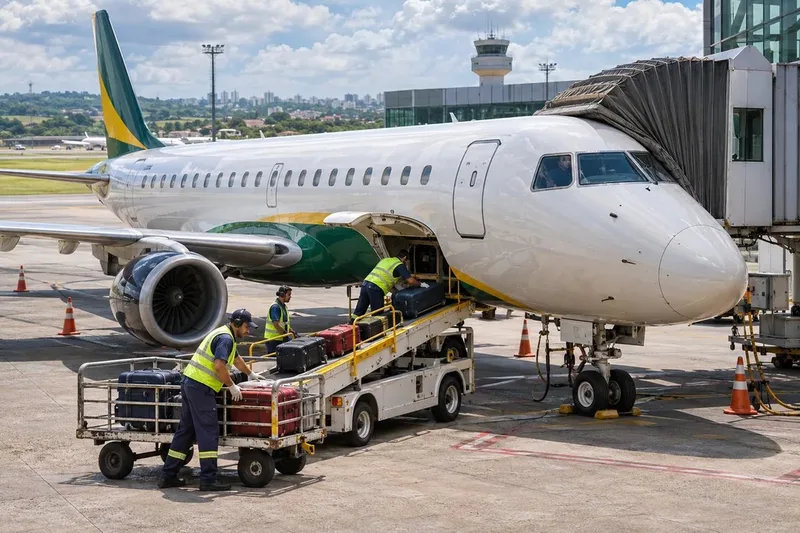
- Image: Simplifying Finance · AI-generated editorial illustration
Figures are as reported by the companies or cited outlets as of 22 November 2026. Check the source before quoting. Corrections: let us know through the solution form.