What happened
The World Bank describes the September 2008 partnership with Telekom Malaysia, with government and operator commitments of RM2.4 billion and RM8.9 billion respectively. It records a first-phase objective of access for more than 1.3 million premises. TM subsequently reported deploying the network to 1.377 million premises by end-2012. Premises passed, connected accounts and paying subscribers are separate stages. Using them interchangeably can make the cost per outcome look much smaller than it is.
The two commitments in the World Bank account total RM11.3 billion, with RM2.4 billion from government. That gives a public share of about 21 percent of the stated joint commitments. It does not show what percentage of each individual connection or each later operating cost was publicly financed.
In September 2008 the government and Telekom Malaysia (TM) signed a public–private partnership to build a High Speed Broadband (HSBB) network, mainly fibre, in Kuala Lumpur, the Klang Valley and other high-impact economic areas. The first phase was costed at RM11.3 billion: RM8.9 billion from TM and RM2.4 billion from the government, paid in claims as TM met rollout milestones. TM had to pass more than 1.3 million premises by the end of 2012 and offer open access to competitors.
TM launched its retail service, UniFi, on 24 March 2010. Take-up started slowly, but by its first anniversary UniFi had about 60,000 subscribers, ahead of TM’s internal expectations. By mid-2012 there were about 440,000 subscribers out of 1.2 million premises passed, a take-up rate of about 36 percent, among the highest in Southeast Asia. TM completed its phase one obligation at the end of 2012 with about 1.38 million premises passed, and by June 2013 UniFi had more than 600,000 subscribers.
The project was part of a National Broadband Initiative launched in 2010 with a target of 50 percent household broadband penetration. It was followed by further phases and later by the JENDELA programme, which extended fibre and mobile coverage nationwide.
Key moments
Government and TM sign the HSBB partnership
152,000 premises passed, beating the 150,000 target
UniFi high-speed broadband launched
UniFi reaches about 60,000 subscribers
About 1.38 million premises passed; phase one complete
More than 600,000 UniFi subscribers
Government funding paid on an incurred-claims basis as TM hit milestones. Sources: The Star; LIRNEasia; Oxford Business Group.
The trade-offs at the heart of the case
Fund the part the market would otherwise miss
A commercial operator may have built fibre in a dense neighbourhood without a public contribution. Paying for that same rollout can accelerate access but creates less additional coverage than reaching an otherwise uneconomic district. An isolated new network may also be poor value if households cannot afford the service.
Building where demand is uncertain
TM had to pass more than a million premises before knowing how many would subscribe. Early take-up was slow, with only about 900 subscribers in UniFi’s first month, which made the investment look risky. Government co-funding reduced TM’s exposure, but the company still carried most of the demand risk.
Open access versus incumbent advantage
As part of the deal, TM had to offer competitors access to its fibre on reasonable terms. That helps competition but can reduce TM’s incentive to invest, while competitors may argue that access prices are too high. Setting and enforcing fair wholesale terms was as important as building the network.
For your seminar, paper or interview
- Q1
What rollout would TM have funded anyway?
- Q2
Which part of a building counts as passed?
- Q3
When would a payment per connection favour the easiest customers?
- Q4
Who can unblock access to an apartment building that fibre already passes?
- Q5
What would distinguish accelerated adoption from entirely new adoption?
- Public–private partnerships
- Universal service
- Open access
- Demand risk
How we would approach it
Simplifying Finance’s opinion, offered as a starting point for debate, not as fact or investment advice.
The HSBB partnership brought fibre to over a million premises within four years, with the government paying only about a fifth of the cost and only as milestones were met. Combining milestone-based payments with open-access rules was a sensible way to share risk while keeping competition possible.
Pay on milestones
Release public funds only as coverage is delivered.
Enforce open access
Set clear wholesale prices and service levels.
Target unserved areas
Use public money where private returns are too low.
What this plan gives up
Co-funding an incumbent speeds rollout but can strengthen its market position.
The strongest counter-argument
Public money went partly to areas that might eventually have been served commercially, and TM gained a strong position in fixed broadband. Open-access obligations are only valuable if enforced.
Metrics to watch
- Fibre take-up rates
- Wholesale access pricing
Propose your solution
Pick a discussion question and set out what you would do, why, and what it would cost. Strong, well-argued answers are reviewed and published below with your first name and programme.
Published solutions
Loading published solutions…
- World Bank: Malaysia high-speed broadband public–private partnership case ↗
- Telekom Malaysia: 2012 annual report on first-phase deployment ↗
- The Star: TM invests in developing HSBB ↗
- LIRNEasia: High Speed Broadband Network Malaysia ↗
- Oxford Business Group: Telekom Malaysia ↗
- Telecoms.com: Telekom Malaysia fulfils HSBB obligations ↗
- SoyaCincau: UniFi celebrates first year ↗
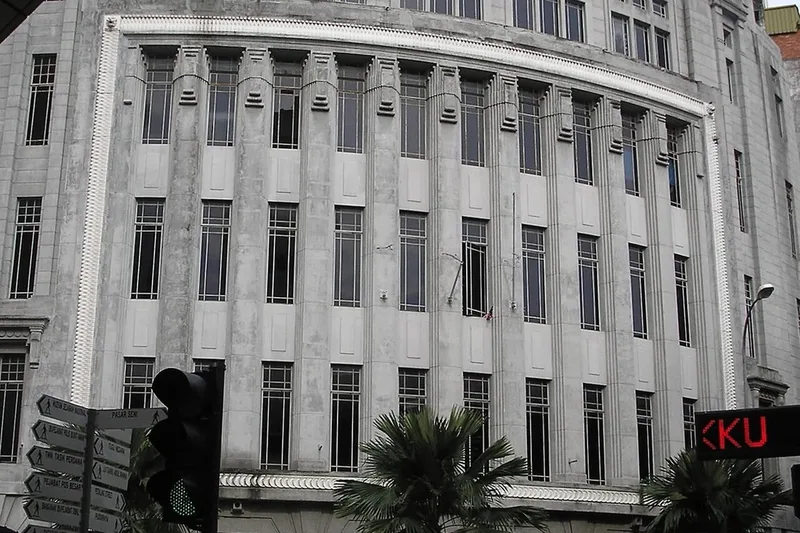
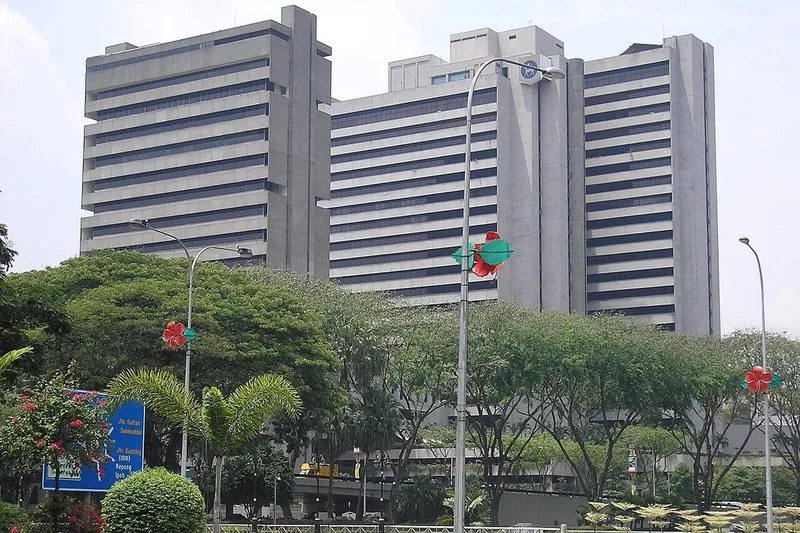
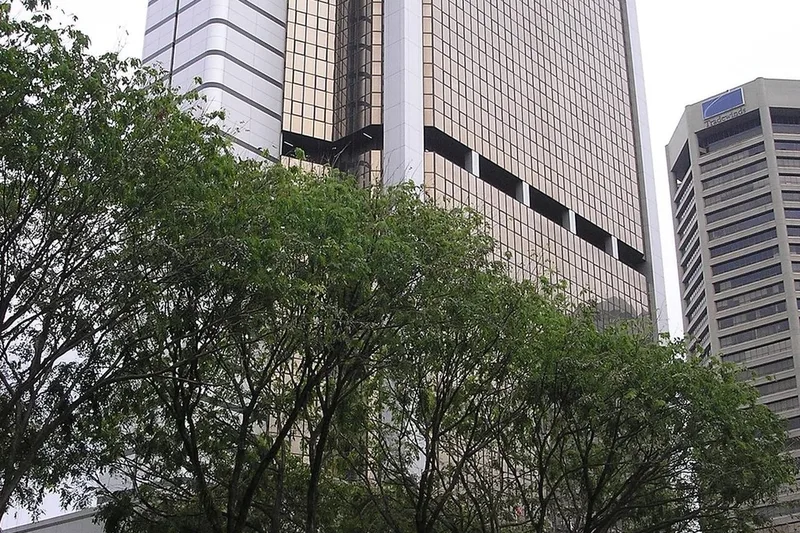
- Image: Menara Telekom in Kuala Lumpur. Photograph: Shesmax, CC BY-SA 4.0 (cropped and resized) ↗
Figures are as reported by the companies or cited outlets as of 25 November 2026. Check the source before quoting. Corrections: let us know through the solution form.