What happened
The August 2023 reset put the estimated total project cost at A$12 billion. In December Snowy Hydro described a 2,200 megawatt station and a then-planned commercial operation date of December 2028. These figures belong to that review. A pumped-hydro plant consumes electricity to lift water and later generates power when stored water returns downhill. Its financial case depends on the value of dispatchable capacity and energy across many market conditions.
Subtracting money already spent from estimated total cost provides a rough spending bridge. It does not give the price of stopping. An unfinished tunnel can require stabilisation, contractual settlement and site restoration. Completing also requires managing geological uncertainty, labour, equipment and interfaces with the grid. A public owner has to distinguish the lowest financial cost from the highest system value, especially if alternative storage assets provide different durations of service.
Snowy 2.0 is a pumped-hydro project in the Snowy Mountains of New South Wales, owned by the federal government through Snowy Hydro. It links two existing reservoirs with tunnels and an underground power station, pumping water uphill when power is cheap and generating when it is needed. When complete it is designed to provide 2,200 megawatts of capacity and 350,000 megawatt-hours of storage, about 160 hours at full output.
Announced in 2017 at about A$2 billion, the estimate rose to about A$6.1 billion at the final investment decision in December 2018. On 31 August 2023 Snowy Hydro reset the project to a cost of A$12 billion and December 2028 completion, citing design immaturity and site conditions. It replaced the fixed-price contract with a target-cost model and still estimated a net present value of about A$3 billion. Spending to June 2023 had been A$4.3 billion.
In October 2026, after a reassessment by contractor Future Generation Joint Venture, Snowy Hydro set a new target cost of A$22.2 billion, allowing for a scenario of A$25 billion, with full commissioning in late 2029. It said tunnelling was about 65% complete. Snowy Hydro said the target cost did not set the eventual taxpayer contribution.
The case shows how sunk costs should not drive decisions: what matters is whether the remaining spending is worth the value created.
Key moments
Snowy 2.0 announced at about A$2bn
Final investment decision at about A$6.1bn including early works
Reset: A$12bn and December 2028
Contractor reassessment: A$22.2bn target and late 2029
In 2026 Snowy Hydro also allowed for a cost scenario of A$25bn; full commissioning is now targeted for late 2029. Sources: Snowy Hydro; Australian Government; EconoTimes.
The trade-offs at the heart of the case
Two storage assets can deliver different products
A short-duration battery can respond quickly and cycle frequently. Pumped hydro may be valuable across longer gaps in supply, subject to reservoir and transmission constraints. Compare alternatives against a stated period of low renewable output and a stated reliability requirement. Then cost the whole combination needed to meet it. Simply comparing price per megawatt of nameplate capacity overlooks how long the capacity can be sustained and how the store is replenished. The same discipline applies to the construction alternatives. A cheaper remaining contract is little help if it delivers too late to meet the need being valued. A contractor’s revised estimate can reflect newly understood geology, changed scope, higher input prices or a different allocation of risk. Each has a different implication for the next funding decision. Paying more for a fixed-price commitment might improve certainty, while a low bid full of exclusions may leave the owner exposed. Ask for a baseline cost, a quantified contingency and an account of who bears specific overruns. This makes later updates interpretable even when the forecast date and headline cost both change.
Testing the evidence
The relevant comparison begins with storage services available after completion and a feasible mix of alternatives delivering equal duration. Ask what would cause them to differ even if the underlying decision had no effect. Here an immediate candidate is transmission constraints and hydrological conditions. Record those differences, then follow system cost per reliably delivered megawatt-hour. Present the observed change for each group separately before taking the difference. This lets a reader see whether the result comes mainly from improvement in one group or deterioration in the other. Request independent completion ranges and duration-matched alternatives. Trace several observations from the original event to the figure presented to the board, then reverse the direction and look for events that never entered the summary. The two checks answer different questions about accuracy and completeness.
For your seminar, paper or interview
- Q1
What evidence would justify continuation if much of the money already spent could never be recovered?
- Q2
How would you use a feasible mix of alternatives delivering equal duration to test changes in system cost per reliably delivered megawatt-hour, while allowing for transmission constraints and hydrological conditions?
- Q3
Compare the recommended course with a portfolio of duration-matched substitutes with a priced stop-and-secure plan. Which commitment would you make first, and what result would cause you to change course?
- Megaproject risk
- Contract design
- Sunk costs
- Public ownership
How we would approach it
Simplifying Finance’s opinion, offered as a starting point for debate, not as fact or investment advice.
Fund future work in stages tied to verified technical progress and credible contingency ranges. Publish both the stop-and-secure alternative and available substitutes for long-duration storage. Assess generation capacity, energy stored, expected availability and transmission access independently. A megawatt delivered for one hour is a different service from a megawatt delivered through several difficult days.
Change the contract
Move from a fixed-price contract to a target-cost model that shares risk with the builder.
Re-estimate line by line
Rebuild the cost estimate from detailed contractor data.
Judge future costs only
Decide whether to continue by comparing remaining costs with the project’s value.
What this plan gives up
Continuing Snowy 2.0 should provide long-duration storage for the grid, but each reset increases the cost to the government owner and reduces the project’s return.
The strongest counter-argument
A mix of shorter-duration assets and other sources of firm supply might replace some services and leave others uncovered. Specify the power required, how long it must last and how often the system can recharge each alternative. Only then does the price of an alternative become commercially comparable with the forward cost of completing the hydro project. Forecast error can grow when an owner confuses the amount spent with the proportion of useful work finished. Some early spending purchases equipment and access that will support later progress. Other work becomes obsolete after a redesign. Track independently verified physical milestones and the remaining sequence of difficult tasks. A project can look well advanced in percentage-of-budget terms while still facing most of its critical engineering uncertainty. The remaining work schedule should therefore carry more weight than a percentage drawn from spending alone.
Metrics to watch
- Tunnelling progress
- Target cost and commissioning date
Propose your solution
Pick a discussion question and set out what you would do, why, and what it would cost. Strong, well-argued answers are reviewed and published below with your first name and programme.
Published solutions
Loading published solutions…
- Snowy Hydro · August 2023 project reset ↗
- Snowy Hydro · December 2023 project update ↗
- Snowy Hydro: Securing the future of critical energy transformation resets (2023) ↗
- Australian Government: Snowy Hydro corporate plan update ↗
- Mirage News (Snowy Hydro): Snowy 2.0 cost review completed ↗
- EconoTimes: Snowy 2.0 sets A$22.2 billion target ↗
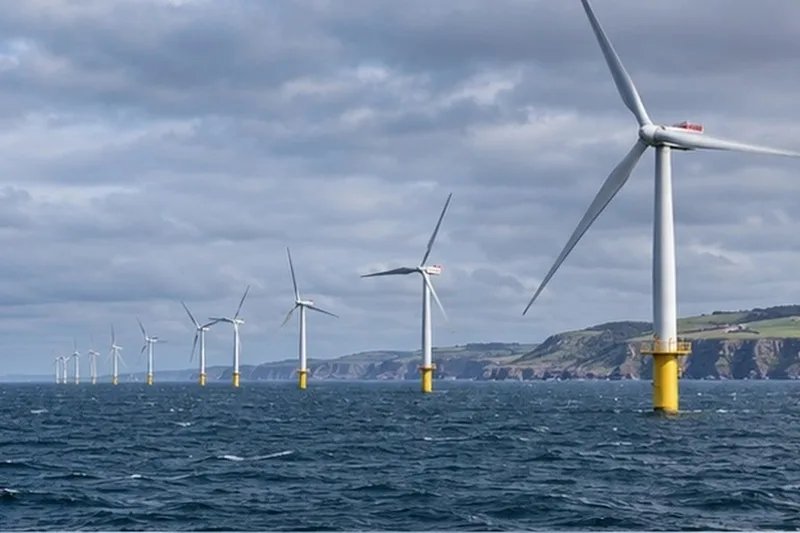
- Image: AI-generated editorial illustration for Simplifying Finance. Illustrative scene.
Figures are as reported by the companies or cited outlets as of 22 November 2026. Check the source before quoting. Corrections: let us know through the solution form.