What happened
In March 2013 the central bank linked additional reserve requirements to growth in foreign-currency mortgage and vehicle lending. In October it broadened the measure to a wider set of private foreign-currency loans, with international trade lending excluded from that measure. Further measures followed. The targeting matters because a household paid in soles and an exporter receiving dollars have different natural protection against exchange-rate movements.
Track the currency of new loans, repayments and conversions alongside outstanding balances valued at a constant exchange rate. A fall in the dollar share can come from more sol lending, repayments of dollar loans or a conversion of existing loans. Those routes affect borrowers and bank funding differently. A change in market exchange rates can also move the ratio in local-currency accounts without changing a single loan contract. Reconcile flows to the opening and closing stocks.
Consider an unchanged dollar loan and an unchanged sol loan reported in soles at the end of each month. A depreciation of the sol increases the reported local-currency value of the dollar loan. The stock’s dollar share can rise even though no officer made a new credit decision and no borrower converted a loan. Freeze the exchange rate for both reporting dates, then reconcile the remaining movement with originations, repayments, write-offs and voluntary conversions. Follow comparable borrowers as well as comparable products. A household that refinances at an unobserved lender might reduce one bank’s reported dollar exposure without reducing its own currency risk. A stronger policy evaluation therefore links balance-sheet movements with the currency in which households and businesses receive income.
Peru’s economy became highly dollarised after the inflation and hyperinflation of the 1980s, when people lost faith in the local currency. Even after inflation was brought under control in the 1990s, many loans and savings remained in US dollars.
Dollarisation creates a risk known as currency mismatch. If households and firms earn in soles but borrow in dollars, a sharp fall in the sol increases the real cost of their debts and can cause widespread defaults.
Credit dollarisation fell from about 78 percent in 2001 to 43 percent in 2012, helped by low inflation and confidence in the central bank, but it remained high compared with other economies in the region.
In March 2013 the central bank linked additional reserve requirements to growth in foreign-currency mortgage and vehicle lending. In October 2013 it broadened the measure to a wider set of private foreign-currency loans.
A reserve requirement is the share of deposits or liabilities that a bank must hold at the central bank. Raising requirements on dollar lending makes such loans more expensive, encouraging banks to lend in soles instead.
From 2015 the BCRP added further measures and provided soles liquidity to banks through currency repo operations, helping them fund loans in local currency.
The results were significant. Credit dollarisation fell to about 30 percent by December 2015 and 29 percent by December 2016. Dollar vehicle loans fell from 68 percent to 43 percent of the total in the year to January 2016.
Other countries with high dollarisation, such as Bolivia and Paraguay, have used similar combinations of macroeconomic stability and regulatory incentives to encourage lending in local currency.
The policy affected different types of borrowers in different ways. Households, especially those with mortgages and car loans, had the greatest currency mismatch, since most earn in soles. Large companies that export goods and earn dollars face less risk from dollar borrowing.
The timing of the programme proved valuable. From 2013 the US dollar strengthened against many emerging-market currencies as US interest rates were expected to rise. Peruvian borrowers who had switched to soles were better protected from the depreciation that followed.
De-dollarisation also improves the effectiveness of monetary policy. When most loans are in soles, changes in the BCRP’s interest rate have a larger effect on borrowing and spending.
For students, the case shows how central banks can use regulatory tools, not only interest rates, to address risks in the financial system.
Key moments
Additional reserve measures targeted foreign-currency housing and vehicle lending.
A broader measure applied to private foreign-currency loans with a trade exception.
The central bank subsequently documented additional de-dollarisation measures.
Sources: Contreras et al. (2018) for 2001 and 2012; BCRP for 2015 and 2016.
The trade-offs at the heart of the case
Trace debt through a change in the lender’s records
A microfinance acquisition can bring two loans supported by the same business income into one group. A currency policy can move borrowers between products or lenders. Both analyses improve when the analyst follows the underlying borrower as well as the reporting institution.
Our assessment
I would compare targeted products with suitably similar untargeted lending while checking their pre-existing trends. Control for changes in relative interest rates, loan demand and banks’ access to funding in each currency. The policy matters most when it changes the mismatch borne by the borrower. A ratio alone cannot establish whether borrowers became better protected or simply moved their foreign-currency debt elsewhere.
For your seminar, paper or interview
- Q1
How would you hold the exchange rate constant in the loan data?
- Q2
Why might a dollar loan have different risks for an exporter and a salaried worker?
- Q3
What evidence would distinguish conversion of existing debt from different new lending?
- Q4
Which pre-intervention trends would support the proposed comparison group?
- Q5
What result would make the estimated effect unsuitable for a financial valuation?
- Financial dollarisation
- Reserve requirements
- Currency mismatch
- Macroprudential policy
How we would approach it
Simplifying Finance’s opinion, offered as a starting point for debate, not as fact or investment advice.
We think the BCRP’s de-dollarisation programme was a well-designed response to a real vulnerability. By making dollar loans more costly for banks and providing soles funding, it reduced the risk that a sharp depreciation would hurt borrowers earning in soles.
Lower currency risk
Borrow in the currency of your income.
Use reserve requirements
Discourage risky dollar lending.
Provide local funding
Help banks lend in soles.
What this plan gives up
De-dollarisation lowers currency risk but can raise borrowing costs for some.
The strongest counter-argument
Some argue market forces, not rules, should decide loan currencies.
Metrics to watch
- Credit dollarisation ratio
- Exchange-rate volatility
Propose your solution
Pick a discussion question and set out what you would do, why, and what it would cost. Strong, well-argued answers are reviewed and published below with your first name and programme.
Published solutions
Loading published solutions…
- BCRP — De-dollarization of credit in Peru and unconventional monetary policy ↗
- BCRP — 2014 annual report ↗
- BCRP • Working paper 2016-02: De-dollarization of credit in Peru ↗
- Contreras, Gondo, Ore and Pérez Forero • Assessing the impact of credit de-dollarization measures in Peru ↗
- BCRP • Credit dollarisation fell to 29% in 2016 ↗
- BCRP • Dollarisation falls 8 points to 30% (Feb 2016) ↗
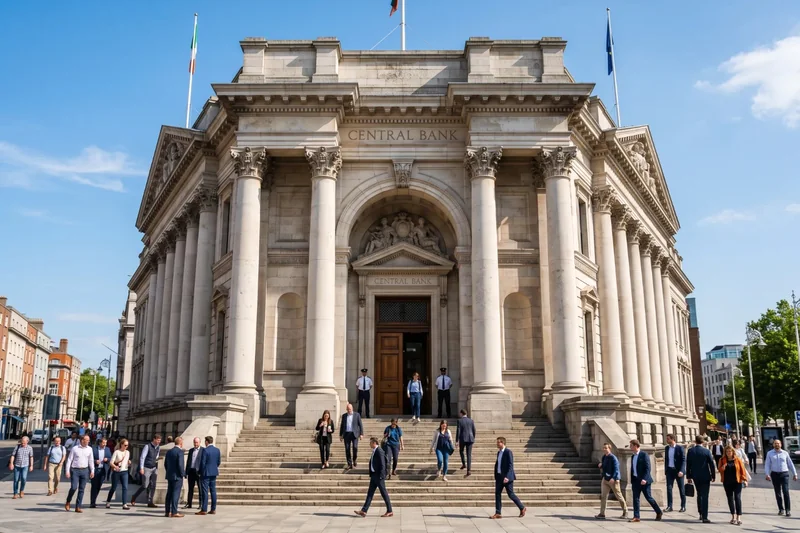
- Photo: 2017 Lima - Banco de Reserva del Perú by Felipe Restrpo Acosta, CC BY-SA 4.0 (cropped and resized) ↗
Figures are as reported by the companies or cited outlets as of 22 November 2026. Check the source before quoting. Corrections: let us know through the solution form.