What happened
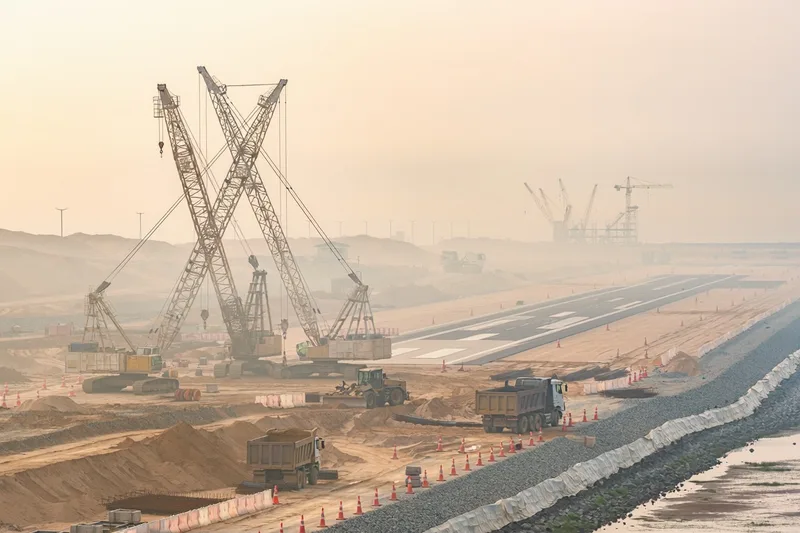
Petron traces its history to 1933 and is now part of San Miguel Corporation. It operates the Petron Bataan Refinery in Limay, which can process 180,000 barrels of crude a day and supplies about 40% of the country’s fuel needs, and the Port Dickson refinery in Malaysia. It also runs the largest network of fuel stations in the Philippines and a large network in Malaysia.
Refining is a difficult business. Refiners buy crude oil and sell products such as gasoline, diesel and jet fuel. Profits depend on the ‘crack spread’, the difference between product prices and crude costs, which swings with global supply and demand. Refineries also have high fixed costs and must run at high utilisation to make money. Shell closed its Philippine refinery in 2020, leaving Petron as the last one.
In 2025 Petron had a record year. Even though Dubai crude averaged US$69 a barrel, 13% lower than 2024, Petron optimised refinery utilisation, grew domestic sales volumes and cut financing costs. Net income jumped 84% to ₱15.6 billion and operating income rose 28% to ₱37.3 billion. Its domestic market share rose to 27.8%.
Then conditions turned. In late 2025 Tropical Storm Senyar damaged the jetty at Port Dickson, shutting the Malaysian refinery. In early 2026 Middle East tensions raised and destabilised crude prices, while the Bataan refinery underwent scheduled maintenance. First-quarter 2026 net income fell 56% to ₱1.8 billion even as revenue rose 27%. Petron said it might consider Russian crude if supply uncertainty continued.
The case explores refining economics, the value of domestic refining for energy security, and how companies manage operational and commodity risks.
Energy security is a big theme. The Philippines imports almost all its crude oil. Having a domestic refinery means the country can store crude and produce fuel locally, rather than relying entirely on imported finished products. During supply disruptions, this can be valuable. But maintaining a refinery is expensive, and many countries in Asia have closed smaller refineries because larger, more efficient plants in Singapore, South Korea, China and India can produce fuel more cheaply.
Fuel retail offers a steadier complement to refining. Petron earns margins at its stations from selling fuel, lubricants and convenience goods, and these margins tend to be more stable than refining spreads. A strong retail network also guarantees demand for the refinery’s output. However, retail is competitive, with Shell, Caltex and many independent players.
Debt and interest costs matter too. Petron carries significant borrowings to fund inventory and capital projects, so lower financing costs contributed to its record 2025 profit.
Petron’s results also show the effect of inventory accounting. When crude prices fall, refiners holding inventory bought at higher prices may record losses; when prices rise, they gain. These swings can make quarterly profits look volatile even when underlying operations are stable, so analysts often look at results excluding inventory effects to understand true performance.
For students, Petron is a reminder that a record year in a commodity business is not a new normal.
Key moments
Petron’s predecessor begins operations.
San Miguel acquires control.
Shell closes its Philippine refinery; Petron is the last.
Record ₱15.6bn profit.
Storm damage shuts Port Dickson refinery.
Profit falls 56% amid Middle East tensions.
Sources: Petron; Manila Bulletin.
The trade-offs at the heart of the case
Energy security vs. economics
A domestic refinery supports national resilience but may be less efficient than regional rivals.
Integration vs. volatility
Owning refineries and stations balances risks but exposes Petron to both.
Supply diversification vs. geopolitics
Buying Russian crude may secure supply but raises political issues.
For your seminar, paper or interview
- Q1
What determines a refinery’s profitability?
- Q2
Why did Petron become the only refinery in the Philippines?
- Q3
How should Petron manage risks from storms, maintenance and geopolitics?
- Q4
Should the government support domestic refining for energy security?
- Q5
How does fuel retail complement refining?
- Crack spread analysis
- Operating leverage
- Supply chain risk management
- Energy security policy
How we would approach it
Simplifying Finance’s opinion, offered as a starting point for debate, not as fact or investment advice.
Petron’s record 2025 shows what an efficient integrated refiner can earn, but early 2026 shows how fast conditions can change. It should strengthen resilience through diversified crude supply, physical protection of facilities and a stronger balance sheet.
Diversify crude sources
Maintain supply agreements with several regions.
Harden infrastructure
Invest in storm protection for jetties and terminals.
Use strong years to cut debt
Reduce borrowing when margins are high.
Grow non-fuel retail
Expand convenience and services at stations.
What this plan gives up
Resilience investments and debt reduction reduce dividends and returns in good years.
The strongest counter-argument
Some argue Petron should maximise utilisation and volumes to capture high margins while they last, accepting volatility as part of the business.
Metrics to watch
- Refining margins
- Refinery utilisation
- Domestic market share
- Net debt
- Crude supply sources
Propose your solution
Pick a discussion question and set out what you would do, why, and what it would cost. Strong, well-argued answers are reviewed and published below with your first name and programme.
Published solutions
Loading published solutions…
- Petron: Record-high net income of ₱15.6 billion ↗
- Philstar: Petron posts record profit ↗
- Manila Bulletin: Petron net income falls 56% in Q1 ↗
- BusinessWorld: Petron profit jumps 84% ↗
Figures are as reported by the companies or cited outlets as of 22 November 2026. Check the source before quoting. Corrections: let us know through the solution form.