What happened
On 10 June 2024 the World Bank approved US$1 billion in a second round of additional financing for Dasu Hydropower Stage I. The stage is designed as a 2,160 MW run-of-river project. The financing announcement described money approved to advance the project. It did not announce that the capacity was already delivering electricity or that the amount approved represented the total construction cost.
A partially built project has assets that can be used only if other works finish. Money already spent is sunk, but the remaining physical works have genuine option value. So do unavoidable obligations to communities and contractors. An appraisal of stopping that enters no future costs can be just as misleading as an appraisal of continuing that counts every past expense as a future benefit.
The Dasu Hydropower Project is a run-of-river plant on the Indus in Upper Kohistan, Khyber Pakhtunkhwa. It is being built in stages: Stage I has 2,160 MW and is expected to produce about 12,225 GWh a year, while later stages could raise capacity to 4,320–5,400 MW. The World Bank calls the site one of the best hydropower sites in the world.
On 10 June 2024 the World Bank approved US$1 billion in a second round of additional financing, bringing its support to about US$1.7 billion for a Stage I project that Dawn reported would cost about US$2.5 billion. The Bank estimated the project could save Pakistan US$1.8 billion a year in imported fuels, offset about 5 million tonnes of carbon dioxide and earn an economic return of around 28 percent. A separate US$700 million was approved in 2020 for a 250 km transmission line.
The project has faced delays from land acquisition, resettlement and security; in 2021 a bus carrying Chinese engineers to the site was attacked. The World Bank has highlighted social benefits in the area, including increases in adult literacy and girls’ schooling. Generation from Stage I was expected to begin around 2026.
Key moments
World Bank approves original financing
US$700 million approved for transmission line
US$1 billion second additional financing approved
First generation expected
Dawn put the Stage I cost at about US$2.5 billion; full build-out 4,320–5,400 MW. Sources: World Bank; Dawn.
The trade-offs at the heart of the case
Core tensions
Additional finance can preserve construction momentum and prevent costly demobilisation. Releasing it without a believable plan for critical works can increase exposure while pushing the first meaningful operating return further away. Delays also have consequences for the system, which must procure replacement electricity. Those savings belong in the model only from the time the project can actually export.
The community whose move sets the schedule
A project team can complete a large share of excavation and still be unable to use the next site until an access or resettlement commitment is fulfilled. Expenditure is then a misleading measure of progress along the critical path. A social commitment has independent value for the people affected and can also govern financing risk because work cannot safely or legitimately proceed without it. An engineer estimating remaining costs should include the price of maintaining partially completed works during delay. A funding package can make continuation feasible without making its underlying social return attractive. Equally, a project can have a strong social return and face an unfinanceable gap between costs and receipts. Keep the economic comparison and the treasury plan side by side when deciding what an additional loan can change.
What an additional financing approval changes
More money can allow an essential contract to proceed. It does not move the first date of commercial generation if another unfinished package still determines that date. The relevant question at an additional financing decision is which dependencies the money resolves, how much delay remains and whether the value of finishing exceeds the remaining cost under a realistic schedule. Prepare two versions of the completion plan. In the first, the extra funding is available on the anticipated dates and enables the critical works. In the second, a package with no funding shortage is delayed by site conditions. The difference shows how much economic value depends on the financing itself and how much depends on resolving a separate constraint. Money already spent gives stakeholders a strong reason to seek a workable solution. It should enter the decision only through its effect on remaining alternatives, such as the value of partially completed assets, contractual termination costs or a cheaper route to completion.
More money, same deadline
Additional financing keeps contractors working and avoids the cost of stopping and restarting. But it does not by itself solve the problems that caused delays, such as land acquisition and resettlement. Lenders must ensure that new money comes with a credible plan to address them.
Communities set the pace
A dam cannot be completed until people living on the site have moved and been compensated. Resettlement that is rushed or unfair can lead to protests and further delays; resettlement done well takes time and money but makes the schedule more reliable.
For your seminar, paper or interview
- Q1
Which liability would persist even if construction stopped tomorrow?
- Q2
How much value disappears when the first export of power moves back one year?
- Q3
Which unfinished package sets the earliest date when Dasu can earn revenue?
- Large project overruns
- Additional financing
- Resettlement
- Economic returns
How we would approach it
Simplifying Finance’s opinion, offered as a starting point for debate, not as fact or investment advice.
Dasu’s economics remain strong even with cost increases, because cheap hydropower replaces expensive imported fuel. The World Bank should tie further disbursements to clear milestones on resettlement and security, which drive the schedule.
Link money to milestones
Release funds as key obstacles are cleared.
Invest in resettlement
Treat community moves as critical path work.
Report costs openly
Publish updated estimates and reasons.
What this plan gives up
Continuing a large project avoids waste of sunk costs but risks further overruns.
The strongest counter-argument
Large dams have a long record of overruns; channelling more money into one project concentrates risk.
Metrics to watch
- Date of first generation
- Updated total cost
Propose your solution
Pick a discussion question and set out what you would do, why, and what it would cost. Strong, well-argued answers are reviewed and published below with your first name and programme.
Published solutions
Loading published solutions…
- World Bank: June 2024 additional financing decision ↗
- World Bank: Dasu Stage I implementation report ↗
- World Bank: $1 billion additional financing ↗
- Dawn: World Bank okays $1bn for Dasu ↗
- Dawn: additional financing details ↗
- World Bank: second additional financing project page ↗
- Anadolu: World Bank approves $1b ↗
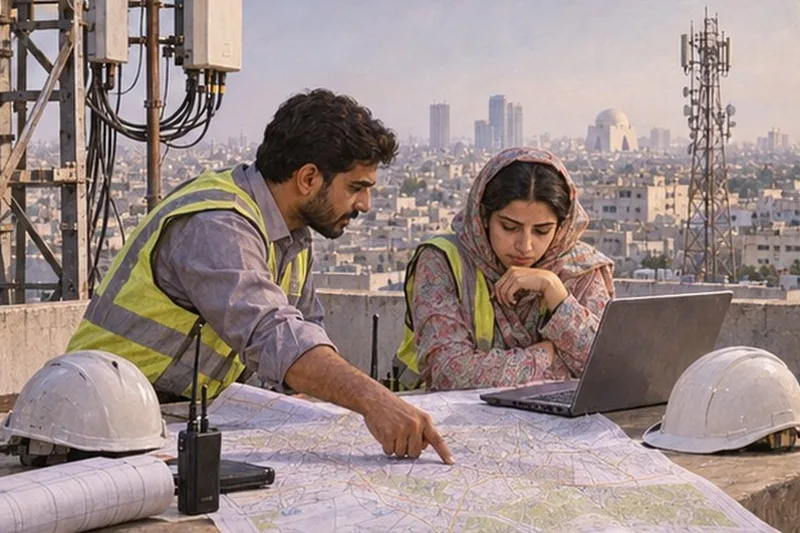
- Image: AI-generated editorial illustration · Simplifying Finance
Figures are as reported by the companies or cited outlets as of 22 November 2026. Check the source before quoting. Corrections: let us know through the solution form.