What happened
The World Bank dates original approval to March 2014 and describes a regional project across the Kyrgyz Republic, Tajikistan, Afghanistan and Pakistan. It puts project size at around US$1.2 billion and intended summer transfers at up to 1,300 MW regionally. Its January 2026 update discusses resumption of works in Afghanistan. The number is a regional design figure, not an observation of deliveries to Pakistani customers.
Summer hydropower surpluses upstream can coincide with strong Pakistani cooling demand. A trade can create value if power can reach the importing grid at a cost below the alternative available in the same hour. It remains exposed to hydrology, the availability of each transmission segment and coordination among system operators. Average annual power prices in two countries do little to show whether these conditions coincide.
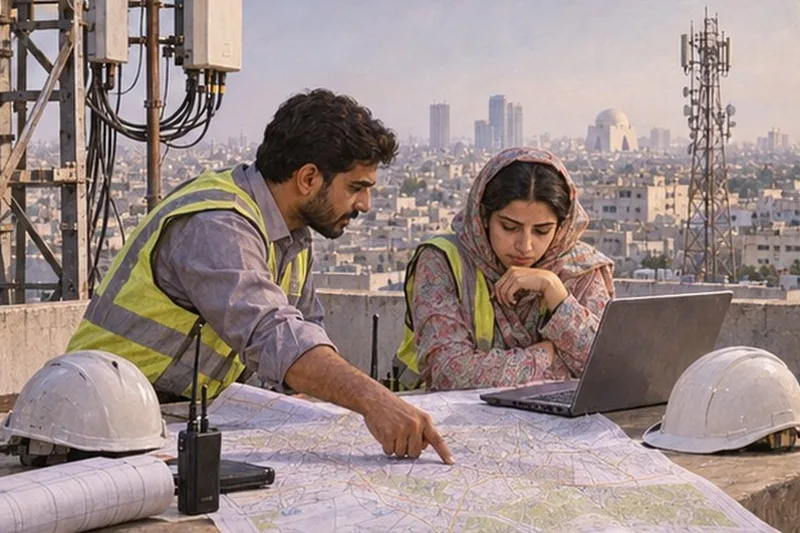
CASA-1000 is designed to carry surplus summer hydropower from Tajikistan and Kyrgyzstan through Afghanistan to Pakistan. It includes a 1,300 MW converter station in Tajikistan, about 750 km of high-voltage direct-current line via Afghanistan to Nowshera in Pakistan, and converter stations near Kabul and Peshawar. Pakistan would receive up to 1,000 MW and Afghanistan up to 300 MW. Total cost is about US$1.2 billion, financed by the World Bank, Islamic Development Bank, European Investment Bank and EBRD.
Construction began in 2018. Work in Kyrgyzstan and Tajikistan was completed by 2025, and the Kyrgyz and Tajik presidents inaugurated a key line in March 2025. Pakistan’s section was also completed. But the 562 km line through Afghanistan and its converter station were paused after the political change in August 2021. The World Bank later resumed support, and by late 2025 about three-quarters of the Afghan section was reported complete.
The project illustrates a basic problem of cross-border infrastructure: the whole line is only as useful as its weakest section. Tajikistan’s officials have said they hope for completion by the end of 2026 and operations from 2027.
Key moments
Project launched
Afghan section inaugurated
Work in Afghanistan paused after political change
Kyrgyz–Tajik line inaugurated
Pakistan section completed; Afghan works resume
Tajik and Kyrgyz sections cost about US$544 million and were completed in 2025. Sources: World Bank; Interfax; Arab News.
The trade-offs at the heart of the case
Core tensions
Paying for access can secure supply when power is scarce. If capacity has a fixed charge, a dry summer or delayed interconnector can leave the importer paying for availability it cannot use, depending on contract terms. Reserving domestic backup costs money too. The decision depends on how often the two sources of supply fail together and how costly the shortage would be.
A line can be complete on the wrong side of the border
An individual participating utility can finish its own works and meet its domestic contract milestone while the regional exchange still cannot begin. A financier evaluating progress should track the sequence of end-to-end tests and operating agreements. Months of local availability before cross-border operations may produce little revenue and still incur maintenance, staffing and financing expenses. These costs belong in the regional comparison. The relevant domestic alternative can change while construction continues. A generating fleet with spare capacity during one summer may face a fuel shortage in another. Long-term averages should be supplemented with a stress test of the import’s value during the particular hours when the domestic system is short. Do upstream water constraints occur in the same years as Pakistan’s most expensive replacement power? The answer determines how much diversification the corridor provides. Separate the value of normally inexpensive energy from the insurance value of dependable supply when alternatives are scarce.
Paying for a line that cannot carry power
If Pakistan agreed to pay for capacity whether or not power flows, delays in Afghanistan could leave it paying for nothing. Contracts that link payment to actual delivery protect the buyer but make lenders and sellers bear the risk of delays they cannot control.
Summer surplus, summer demand
Central Asian hydropower is abundant in summer, which is also when Pakistan’s demand peaks. The fit is good, but the power arrives only for part of the year, so the line sits idle in winter unless flows reverse or other uses are found.
For your seminar, paper or interview
- Q1
What value does a completed national segment have before the route is continuous?
- Q2
When would paying for domestic backup still be justified?
- Q3
Under what summer conditions is a backup power contract least likely to protect the importer?
- Cross-border infrastructure
- Take-or-pay contracts
- Political risk
- Seasonal electricity trade
How we would approach it
Simplifying Finance’s opinion, offered as a starting point for debate, not as fact or investment advice.
CASA-1000 makes economic sense on paper, but its value depends on its most fragile link. Projects of this kind need contracts that share the risk of a single section failing.
Contract for delivery
Link payments to power actually received.
Plan winter use
Find off-season uses for the line.
Sequence carefully
Prioritise the riskiest sections early.
What this plan gives up
Regional interconnection offers cheap power but depends on every country’s stability.
The strongest counter-argument
Building most of the line before resolving the Afghan section risked stranding hundreds of millions of dollars of assets.
Metrics to watch
- Completion of the Afghan section
- First commercial power flows to Pakistan
Propose your solution
Pick a discussion question and set out what you would do, why, and what it would cost. Strong, well-argued answers are reviewed and published below with your first name and programme.
Published solutions
Loading published solutions…
- World Bank: CASA-1000 regional implementation update ↗
- CASA-1000: Pakistan demand and seasonal trade ↗
- World Bank: CASA-1000 resumption Q&A ↗
- Interfax: work complete in three countries ↗
- Arab News: Pakistan and Tajikistan seek early start ↗
- Dawn: Tajikistan aims for completion by 2026 ↗
- Dawn: project design ↗
- Image: AI-generated editorial illustration · Simplifying Finance
Figures are as reported by the companies or cited outlets as of 22 November 2026. Check the source before quoting. Corrections: let us know through the solution form.