What happened
Pakistan introduced Ehsaas Emergency Cash in response to the 2020 shock to livelihoods. A July government update described one-time payments of PKR 12,000 and progress beyond 12 million recipients at that point. A later ministry summary reports PKR 179 billion delivered to more than 15 million families. Those publications refer to different stages and levels of rounding. Multiplying a rounded family count by the stated benefit need not reproduce a later total exactly.
A payment system has several points at which coverage can be lost. A family may meet the policy criteria and never submit a request. An approved person can reach a collection point and still leave empty-handed. A recipient who collects the full amount may incur travel costs or lose a day’s pay waiting. The fiscal ledger measures the transfer; the household evaluates what it can buy after obtaining it.
Pakistan launched Ehsaas Emergency Cash on 9 April 2020, within about ten days of the Covid-19 lockdown. It paid a one-off Rs12,000 to families at risk of falling into extreme poverty. The initial budget was Rs144 billion for 12 million families; it was later raised to Rs203 billion to reach about 16.9 million families.
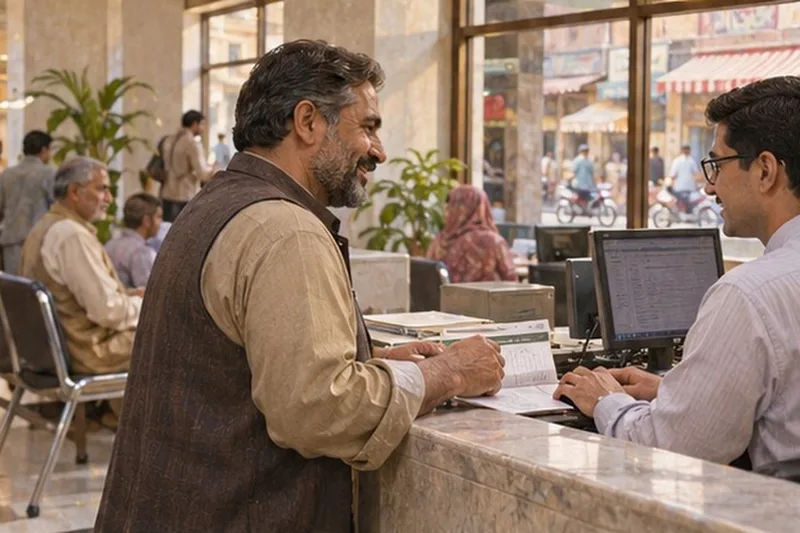
People applied by sending their identity-card number by SMS to a special number. The programme checked applications against national databases, using wealth indicators to exclude better-off households, and families collected cash at bank agents and payment centres after biometric verification. Within the first 48 hours, about 647,000 families were paid. By the end, Rs179 billion had reached 14.8 million families, roughly 100 million people.
The World Bank listed the programme among the world’s largest pandemic cash transfers by coverage. Problems remained: some beneficiaries could not collect because of biometric failures, crowds at payment centres raised health risks, and some eligible families were missed by the data. The programme ran a status portal and complaint process to handle such cases.
Key moments
April 2020 · Emergency cash programme launches
July 2020 · Government reports progress against the first transfer target
Later ministry summary · Cumulative delivery put at PKR 179 billion
Each family received Rs12,000. Sources: Dawn; Daily Times; PID.
The trade-offs at the heart of the case
Core tensions
Strict verification protects a scarce budget and public confidence. An unresolved identity discrepancy can exclude exactly the family least able to wait. Looser checks can speed an initial response but create costs in correcting duplicate or misdirected payments. A workable design needs a second route for exceptions and evidence about how quickly it resolves them.
The appeal has a budget of its own
A crisis programme usually announces the benefit before it knows the detailed cost of handling difficult cases. The easy applications go through a standard route. A smaller group needs individual attention, which can be disproportionately expensive per file. Refusing those cases makes average processing cost look attractive. It can also systematically exclude people with the least stable paperwork, access to transport or ability to wait. Compare the cost of a successful appeal with the household consequences of continued exclusion. There is also a real opportunity cost to sending staff from busy payment points to investigate appeals. The right operating plan may change from week to week as routine payments clear and exception cases dominate the queue. Publish the age of unresolved claims as well as their number. A fall in total backlog alongside a rising age for the oldest claims would be a reason to move experienced staff toward difficult files, even if the number of payments completed per worker initially falls.
The household waiting outside the payment centre
One collects it around the corner on its first visit. The other borrows for transport, queues twice and pays for food on credit until documents are corrected. The payment register will ultimately show equal transfers, but the second family receives less relief after costs and debt repayment. Average processing time among successful collections will look especially good if the second family disappears from the queue altogether. A programme manager could place temporary staff at a busy payment point or spend the same amount resolving identification exceptions before families travel. Record the reason for each unsuccessful visit and the local cost of a return journey. A shortage of staff causes a different pattern from an unresolved identity discrepancy, so a longer opening day will help only some families. Choose an improvement by how quickly it delivers usable cash to households with the greatest difficulty, while retaining a route to investigate duplicate or disputed claims. An appeals process also has an economic function. A family able to correct a rejected application nearby may avoid paying someone simply to find out why the first visit failed.
Speed versus accuracy
Using existing databases allowed payments to start quickly, but data errors excluded some eligible families and included some ineligible ones. Slower, door-to-door verification would have been more accurate but too late for a lockdown. The programme accepted some error to deliver help in days rather than months.
Biometric safety, biometric exclusion
Fingerprint checks reduced fraud, but elderly and manual workers often have worn fingerprints that fail scanners. Those families needed repeat visits and alternative verification, adding cost and delay for the poorest.
For your seminar, paper or interview
- Q1
What would you change first if authorisations were rising faster than paid households?
- Q2
How should the travel cost of an unsuccessful visit enter a delivery evaluation?
- Q3
Which change would reduce the cost borne by families who have already made one unsuccessful visit?
- Social protection delivery
- Targeting with data
- Biometric payments
- Crisis response
How we would approach it
Simplifying Finance’s opinion, offered as a starting point for debate, not as fact or investment advice.
Ehsaas Emergency Cash showed that a data-driven system built before a crisis can deliver aid at scale within days. Its lessons are to invest in accurate social registries and flexible payment options before the next emergency, and to fund the appeals process alongside payments.
Build registries in advance
Keep household data up to date.
Offer several payment routes
Use accounts and agents, not just centres.
Fund appeals
Budget for resolving rejected or failed cases.
What this plan gives up
Rapid, data-based targeting reaches many quickly but misses some eligible families.
The strongest counter-argument
One-off payments of Rs12,000 were modest relative to lost income, and relying on cash collection points created crowds during a pandemic.
Metrics to watch
- Share of eligible families paid
- Time to resolve failed biometric checks
Propose your solution
Pick a discussion question and set out what you would do, why, and what it would cost. Strong, well-argued answers are reviewed and published below with your first name and programme.
Published solutions
Loading published solutions…
- Ministry of Poverty Alleviation and Social Safety: Emergency Cash summary ↗
- Ehsaas: July 2020 programme update ↗
- Dawn: emergency cash expanded to Rs203bn ↗
- Daily Times: Rs179bn to 14.8m families ↗
- PID: 10 million beneficiaries in nine weeks ↗
- Dawn: 600,000 families paid in 48 hours ↗
- Gulf News: World Bank lists Ehsaas among top measures ↗
- Image: AI-generated editorial illustration · Simplifying Finance
Figures are as reported by the companies or cited outlets as of 22 November 2026. Check the source before quoting. Corrections: let us know through the solution form.