What happened
Punjab’s Transport Department traces planning to a 2007 feasibility initiative and describes a 27.1 km line with 26 stations. It lists 25.4 km elevated and 1.7 km cut-and-cover. Its reference comparison gives 45 minutes against two to two and a half hours. That comparison concerns a particular trip basis and should not be assigned in full to every boarding along the route.
A passenger who travels only a few stops can spend more time walking and waiting than riding. Someone travelling near the full length can gain a much larger saving. Pricing every observed trip using the end-to-end gain would exaggerate aggregate benefits. A traveller who makes an additional journey because rail becomes affordable has a different benefit again from one switching from a slower bus.
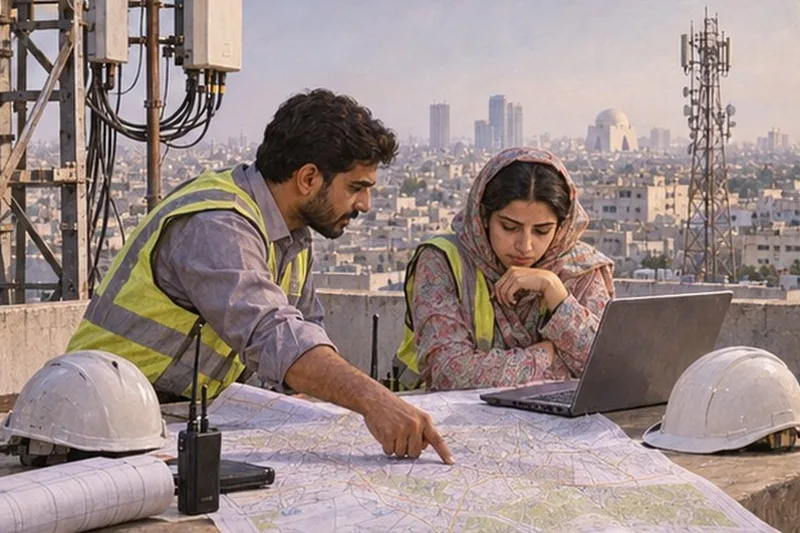
The CPEC Secretariat records the inauguration on 25 October 2020. Its project description distinguishes twenty-four elevated stations and two underground stations. A study of actual access should therefore sample different station types and surrounding street layouts. The route length is fixed, while the effort required to reach a platform can vary considerably.
The Orange Line is Pakistan’s first metro, a 27.1 km driverless line with 26 stations, 25.4 km elevated and 1.72 km underground. It was built under the China–Pakistan Economic Corridor at a cost of about US$1.6 billion, financed mainly by a soft loan from China Exim Bank, and is operated by the Punjab Mass Transit Authority with Guangzhou Metro.
It opened on 25 October 2020 after years of delays caused partly by legal challenges over heritage sites along the route. Officials said it cut a cross-city trip that could take up to two hours by road to about 45 minutes. It was designed for about 250,000 passengers a day; by August 2023 average daily ridership was about 179,000, with a peak of about 213,000, and punctuality close to 100 percent.
Running costs are much higher than fares. At the opening, an opposition politician said the operating cost was about Rs274 per passenger against a fare of Rs40, requiring a subsidy of about Rs12 billion a year. Supporters argue the subsidy buys time savings, cleaner air and less congestion for a large city.
Key moments
Initial planning studies
Construction contracts awarded
Orange Line opens
Average ridership about 179,000 a day
Cost about US$1.6 billion, largely a China Exim Bank loan. Sources: Dawn; Wikipedia.
The trade-offs at the heart of the case
Core tensions
Resources used to run more trains can reduce waiting for existing passengers. The same resources could improve access outside a station, benefiting travellers with difficult first or last kilometres. Either decision might produce more ridership. A social appraisal should include who gains time, how reliably they reach work and how they value a fare change relative to the time saved.
The trip that disappeared from the sample
A rider survey conducted aboard the train misses people who considered using it and gave up because access was costly or evening connections were poor. This can overstate passenger satisfaction and understate the social value of fixing an access barrier. There is a second group that only becomes visible after an improvement. Someone may accept a job or undertake a course because the trip becomes feasible. The value of that opportunity should not automatically be estimated as the full time difference between rail and an expensive journey the person would never have taken. Base the estimate on changed choices, willingness to pay or a transparent range. For the operator, the additional fare is income. For the wider appraisal, travel cost, opportunity and resource use need to be counted consistently so that a fare transfer does not become an extra social benefit.
Pricing the time saved on an ordinary trip
A passenger who uses only a few Orange Line stops receives a different service from a traveller who rides virtually the entire line. Both may benefit from avoiding road congestion, but they also incur access, waiting and final walking time. An appraisal based on the advertised end-to-end journey can substantially misvalue short trips. A credible sample therefore begins with people’s actual origins and destinations, including users who try the line once and return to their previous mode. To translate time into an economic benefit, distinguish a predictable ten-minute saving from ten minutes removed from an unusually bad day. A worker may adjust the departure time after a reliable service becomes available, gaining usable time at home. A fluctuating saving may merely create a larger safety margin at the destination. Collect repeated journeys for the same traveller and ask how departure behaviour changed. A revenue forecast also needs the fare passengers are willing and able to pay. That figure can differ from the value that a social appraisal assigns to reliable access.
Who benefits from time saved
Riders travelling the full length save the most time; those using a few stops save less. Valuing the line by total minutes saved can overstate benefits if many trips are short or would have been made by bus anyway. Surveys of riders and of people who tried and stopped using the line give a fuller picture.
Subsidy or fare
A low fare attracts riders and helps lower-income commuters but requires large annual subsidies. Raising fares reduces the subsidy but may push some riders back to slower, more polluting transport.
For your seminar, paper or interview
- Q1
When would a ten-minute frequency improvement beat a ten-minute faster train?
- Q2
How would you value a newly enabled journey when no previous trip time exists?
- Q3
Whose journey would the published end-to-end travel time describe least accurately?
- Mass transit appraisal
- Value of time saved
- Subsidies
- Ridership forecasting
How we would approach it
Simplifying Finance’s opinion, offered as a starting point for debate, not as fact or investment advice.
The Orange Line delivers fast, reliable trips and has a strong operating record, but ridership below forecast and high subsidies mean its value depends on better access to stations and integration with buses.
Improve station access
Build feeder buses and walking routes.
Integrate fares
Allow transfers between metro and buses.
Track true time savings
Survey riders on their alternatives.
What this plan gives up
Low fares raise ridership but increase public subsidy.
The strongest counter-argument
For the cost of one metro line, Lahore might have built several BRT corridors serving more people.
Metrics to watch
- Daily ridership against 250,000 design
- Annual operating subsidy
Propose your solution
Pick a discussion question and set out what you would do, why, and what it would cost. Strong, well-argued answers are reviewed and published below with your first name and programme.
Published solutions
Loading published solutions…
- Punjab Transport Department: Orange Line route and service design ↗
- CPEC Secretariat: Project data and opening ↗
- Dawn: ridership and operations ↗
- Dawn: six years to get the line running ↗
- Dawn: inauguration and subsidy debate ↗
- Orange Line (Wikipedia) ↗
- News24: Pakistan opens first metro line ↗
- Image: AI-generated editorial illustration · Simplifying Finance
Figures are as reported by the companies or cited outlets as of 22 November 2026. Check the source before quoting. Corrections: let us know through the solution form.