What happened
In late November the State Bank governor said Pakistan intended to pay a US$1 billion international obligation on 2 December, three days before it fell due. Reuters subsequently reported confirmation from the central bank’s spokesperson that payment had been made through Citibank in New York. The first report concerned an intention. The follow-up supplied evidence of a transfer. Neither on its own described the full maturity schedule facing the country.
A sovereign can meet one large obligation using reserves, new borrowing or incoming external receipts. Each route has a different effect on its ability to meet the next one. Reserves can fall on the payment date even when repayment improves confidence. If a trader interprets a reserve decline as fresh evidence of distress without reconciling the known maturity, the same event can appear to send contradictory signals.
In late 2022 markets doubted Pakistan could repay its debts. Devastating floods had struck, the IMF programme had stalled, and the State Bank’s reserves had fallen from over US$20 billion in August 2021 to US$7.83 billion by 18 November 2022, barely six weeks of imports. Pakistan’s longer-dated bonds traded at distressed prices.
On 25 November 2022 Governor Jameel Ahmad announced that a five-year international sukuk of about US$1.08 billion, due on 5 December, would be repaid on 2 December, three days early. He said additional funds had been arranged so that reserves would not suffer. On 2 December, the central bank transferred the money to Citigroup for distribution to investors. Pakistan’s bonds rallied.
Reserves nonetheless fell. In the week to 2 December, SBP reserves dropped by US$784 million to US$6.71 billion, which the bank attributed to the sukuk payment and other debt repayments. The same day, Saudi Arabia extended the term of a US$3 billion deposit with the central bank. Pakistan needed to repay about US$25 billion of external debt in that fiscal year, most of which was rolled over.
Key moments
SBP reserves above US$20 billion
Governor announces early repayment
US$1 billion paid to Citigroup for investors
Original maturity date
The peak is approximate (over US$20 billion). Sources: The Express Tribune; Business Recorder.
The trade-offs at the heart of the case
Core tensions
Paying a few days early can reduce settlement uncertainty and demonstrate readiness. It can also consume optionality if an anticipated inflow is late. Waiting until the contractual date preserves funds a little longer but leaves less room for operational disruption. The trade is between a small financing advantage and the consequences of a missed international payment.
What a bondholder learns at settlement
A payment announcement can move market prices before the money reaches the account designated for settlement. A bondholder reviewing the episode needs dates for the public statement, instruction, settlement and final receipt under the instrument. The sequence matters if the objective is to measure how markets responded to news rather than how the central bank managed operational risk. A price change on the payment date can be small precisely because the earlier statement was credible. From the country’s perspective, paying the maturing holder also ends the right of that holder to receive future returns under the redeemed instrument. A later issue will attract investors under different market conditions and terms. A low price on another outstanding bond can embody risk around that different maturity alongside general market movements. Comparing yields before and after settlement without matching maturities and global rate changes can turn a useful signal into an implausible claim that one payment settled every concern about sovereign financing.
Three days matter differently to each party
To a bondholder, early settlement can resolve uncertainty about a particular maturity. To a treasury with several large bills due in the same week, paying early changes which obligations have first claim on a limited cash balance. If an expected receipt is delayed, prepayment can leave less room to meet the import bill even though it did not change the amount owed on the bond. The relevant cost of those days depends on the treasury’s alternatives. For cash genuinely surplus to near-term needs, it may largely consist of interest forgone. For the last readily available dollars, it may include emergency funding or a delay to an essential payment. An analyst should record both the position immediately after redemption and the date when the next reliable inflow will become available. Success in paying this maturity supplies valuable evidence about that transaction. It cannot establish that the following maturity is funded without a new calendar and a new opening balance.
A signal that costs dollars
Paying early was meant to show investors that Pakistan would honour its debts. But it spent scarce dollars three days sooner than required, when every day of reserves mattered. The signal worked in the short term, as bonds rallied, but did not change the underlying shortage.
Bondholders versus importers
Using reserves to repay bondholders preserved market access but left fewer dollars for imports of fuel, food and inputs. Import restrictions in the following months hurt businesses. Governments under pressure must decide whose claims to prioritise.
For your seminar, paper or interview
- Q1
How could reserves fall and perceived default risk decline on the same day?
- Q2
What minimum reserve buffer would justify making an international payment early?
- Q3
How would you value the option of keeping the redemption funds available for three more days?
- Sovereign default risk
- Market signalling
- Liquidity management
- Debt rollovers
How we would approach it
Simplifying Finance’s opinion, offered as a starting point for debate, not as fact or investment advice.
Build a dated waterfall of confirmed external receipts and obligations through the next quarter. Use proof of settlement to close the line for this specific maturity. Keep obligations whose refinancing remains uncertain visible in the same report. Confidence earned from one timely payment deserves recognition without extrapolating it to maturities of different size or timing.
Communicate early
Announce payment plans to calm markets.
Line up rollovers
Secure deposit extensions alongside repayments.
Prioritise essentials
Protect critical imports while servicing debt.
What this plan gives up
Visible early repayment builds credibility but drains reserves sooner.
The strongest counter-argument
Paying on the due date would have kept the same dollars available for three more days at no reputational cost.
Metrics to watch
- Weeks of import cover
- Bond spreads over US Treasuries
Propose your solution
Pick a discussion question and set out what you would do, why, and what it would cost. Strong, well-argued answers are reviewed and published below with your first name and programme.
Published solutions
Loading published solutions…
- Reuters via Dawn: Governor’s repayment announcement ↗
- Arab News: Central bank confirms settlement ↗
- The Express Tribune: Pakistan repays $1b sukuk ↗
- Dawn: Pakistan to repay $1bn bond early ↗
- Business Recorder: SBP paid back $1 billion ↗
- The Express Tribune: reserves drop to $6.7b ↗
- ARY News: repaid before maturity ↗
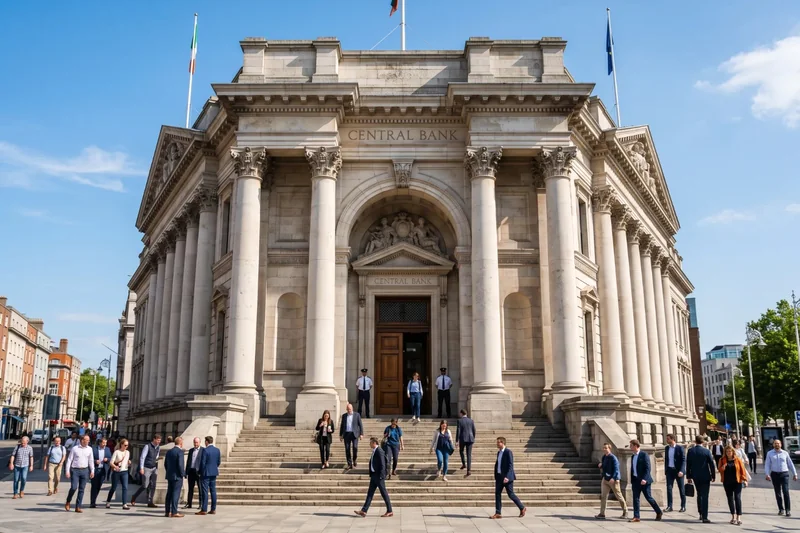
- Image: AI-generated editorial illustration · Simplifying Finance
Figures are as reported by the companies or cited outlets as of 22 November 2026. Check the source before quoting. Corrections: let us know through the solution form.