What happened
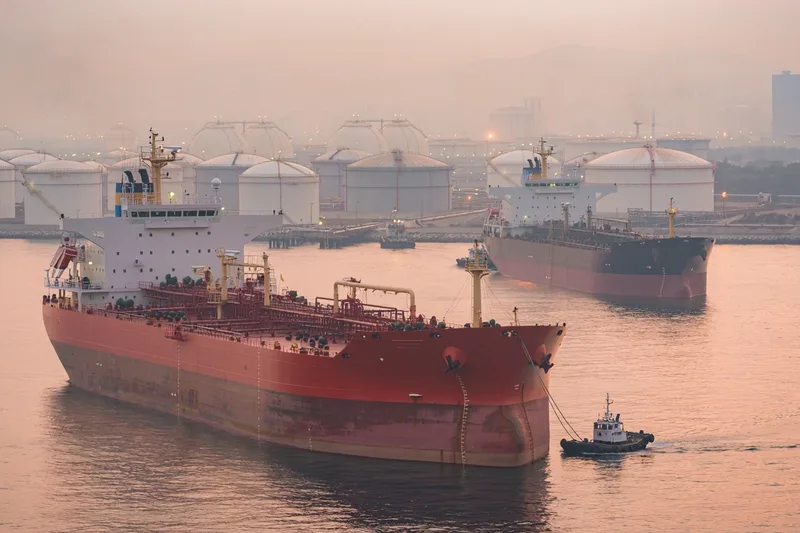
Swiber Holdings was a Singapore-based company that provided engineering, construction and installation services to the offshore oil and gas industry. It built pipelines, fixed platforms and subsea structures for oil companies in Southeast Asia, India, the Middle East and Latin America, using its own fleet of construction vessels. Incorporated in 2004, it grew quickly during the years when oil prices were above US$100 a barrel.
Growth in offshore construction requires heavy investment. Contractors need specialised ships, cranes and crews, and they often fund large parts of a project before being paid. Swiber financed its expansion with bank loans and with bonds sold in the Singapore dollar market. Several of its bonds were issued in small denominations or were held by private-banking clients, so many individuals owned them.
The Singapore dollar bond market had grown rapidly after the global financial crisis, as investors searched for yield when interest rates were near zero. Mid-sized offshore and marine companies were among the most active issuers, paying coupons of 5% to 7% or more. Many investors treated these bonds as relatively safe income, even though the issuers were small, highly leveraged and exposed to a single industry.
In mid-2014 oil prices began to fall sharply, eventually dropping below US$30 a barrel in early 2016. Oil companies cut exploration and development budgets, delayed or cancelled projects and squeezed contractors on price. Offshore service firms that had borrowed heavily to expand suddenly faced idle vessels, slower payments and a collapse in new orders.
In December 2014, as oil was falling, Swiber announced that it had won a field development contract in West Africa worth US$710 million, presenting it as a major breakthrough into a new market. The Singapore Exchange later reprimanded the company, saying the announcement had not been balanced and fair. The contract had not been formalised and the price was only indicative, to be reviewed when the field development plan was finalised.
Through 2015 and early 2016 Swiber’s finances deteriorated. It still managed to repay maturing debt, redeeming S$130 million of notes in June 2016 and S$75 million in July 2016, partly with short-term loans from DBS, its main bank. To secure those loans it pledged more of its assets to DBS, which meant that unsecured bondholders would have fewer assets to claim if the company failed.
Swiber had also been counting on a planned investment from a private equity firm to strengthen its balance sheet. That money never arrived. On 27 July 2016, to the surprise of investors who had just seen bonds repaid, Swiber applied to wind up the company and liquidate its assets, after facing about US$26 million of demands from creditors.
Within days it reversed course and applied instead for judicial management, a Singapore court process that allows an independent manager to run a struggling company and try to rescue it or sell its business, rather than breaking it up. DBS disclosed that it had about S$700 million of exposure to Swiber and expected to recover around half. Swiber still had four Singapore dollar bonds worth S$460 million outstanding, plus a yuan-denominated bond.
The High Court placed Swiber and its main subsidiary under judicial management on 6 October 2016. The company then defaulted on coupon and principal payments on its bonds. Trustees declared events of default, and bondholders faced the prospect of recovering only a small fraction of their money, behind the secured lenders who held most of the valuable assets.
Swiber was not alone. Within a few years, several other Singapore offshore and marine companies that had borrowed in the local bond market, including Ezra Holdings and Pacific Radiance, also entered restructuring. The Singapore dollar bond market recorded a string of defaults, and the offshore sector, which employed about a fifth of Singapore’s manufacturing workers, went through a painful shake-out.
The case raised questions for regulators and banks as well as for investors. Some asked whether retail and private-banking clients had understood the risks of high-yield bonds issued by small, cyclical companies. Others asked whether disclosure rules were strong enough, given the gap between the bold contract announcement and the company’s real position. Banks were criticised for strengthening their own security just before the collapse.
For students of credit, Swiber shows why the position of a bond in the capital structure matters as much as its coupon. When a company has secured bank debt and pledges assets to keep going, unsecured bondholders become more exposed with every new loan. It also shows how quickly liquidity can disappear in a cyclical industry, even for a company that is still repaying its debts a few weeks before it fails.
Key moments
Swiber incorporated in Singapore.
Announces US$710m West Africa contract.
Repays S$205m of bonds with help from DBS loans.
Files to wind up, then switches to judicial management.
High Court grants judicial management.
SGX publicly reprimands Swiber over contract announcement.
DBS said it expected to recover about half its exposure. Sources: Bloomberg via Yahoo Finance; gCaptain; SGX filings.
The trade-offs at the heart of the case
Secured lenders vs. bondholders
New pledges to banks reduced what bondholders could recover.
Disclosure vs. optimism
A bold contract announcement versus the real risk.
Yield vs. safety
Retail investors chased coupons from cyclical issuers.
For your seminar, paper or interview
- Q1
Why were offshore contractors so vulnerable to the fall in oil prices?
- Q2
What should bond investors have looked at before buying Swiber’s bonds?
- Q3
Was DBS right to lend more while taking extra security?
- Q4
How should exchanges police contract announcements?
- Q5
Should high-yield bonds be sold to retail investors in small denominations?
- Credit analysis
- Capital structure and seniority
- Industry cyclicality
- Disclosure and market integrity
How we would approach it
Simplifying Finance’s opinion, offered as a starting point for debate, not as fact or investment advice.
Swiber’s bonds were priced as if the company were far safer than it was. Investors focused on coupons instead of leverage, cyclicality and seniority. Regulators and banks should have done more to make those risks visible before the oil crash exposed them.
Stress-test cash flows
Model how a contractor survives a sharp fall in oil prices.
Check security packages
Track pledged assets and the bank’s ranking ahead of bondholders.
Demand covenants
Require limits on leverage and on new secured debt.
Diversify
Avoid concentrating income portfolios in one cyclical sector.
What this plan gives up
Tighter covenants and higher disclosure standards raise borrowing costs and could have shut smaller companies out of the bond market.
The strongest counter-argument
Some argue the oil crash was so severe that no reasonable analysis could have saved investors, and that the market priced risk sensibly given information at the time.
Metrics to watch
- Oil price and offshore capex
- Leverage of bond issuers
- Share of secured debt
- Recovery rates on defaulted bonds
- Retail participation in high-yield bonds
Propose your solution
Pick a discussion question and set out what you would do, why, and what it would cost. Strong, well-argued answers are reviewed and published below with your first name and programme.
Published solutions
Loading published solutions…
- gCaptain: Singapore court grants judicial management to Swiber ↗
- Yahoo Finance: Swiber drops liquidation plans ↗
- Conventus Law: SGX reprimands Swiber ↗
- Bloomberg: London talks, DBS cash fail to keep Swiber afloat ↗
Figures are as reported by the companies or cited outlets as of 22 November 2026. Check the source before quoting. Corrections: let us know through the solution form.