What happened
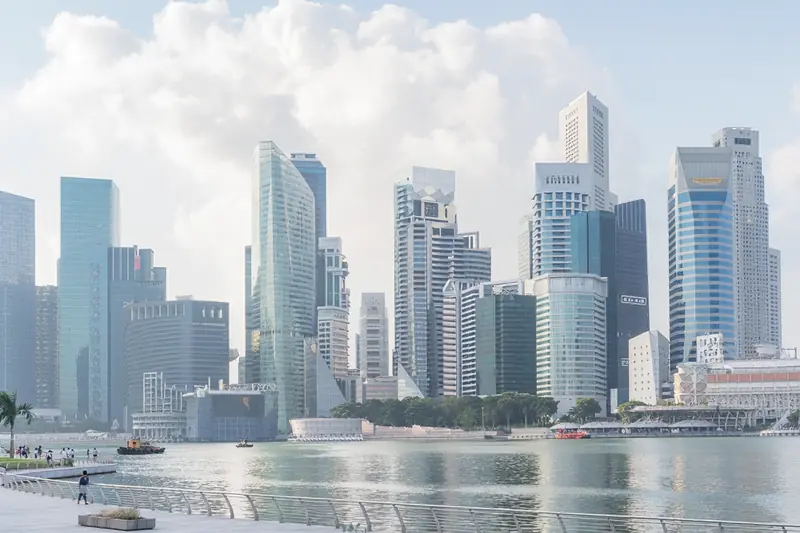
Temasek Holdings was set up in 1974 to hold and manage the Singapore government’s stakes in companies such as Singapore Airlines, Singtel, DBS and Keppel. Over time it became a global investor, owning stakes in banks, technology firms, consumer brands and infrastructure around the world. Its net portfolio was valued at S$403 billion in March 2022. Temasek operates commercially, pays dividends to its shareholder, the Minister for Finance, and contributes to Singapore’s budget.
Temasek’s strategy includes investing early in companies it believes will shape the future, such as fintech, artificial intelligence and life sciences. In 2021, during a boom in cryptocurrency prices, it joined many prominent investors in backing FTX, a fast-growing crypto exchange founded by Sam Bankman-Fried. Temasek invested US$210 million in FTX International and US$65 million in FTX US across two funding rounds between October 2021 and January 2022.
FTX was then valued at up to US$32 billion and had raised money from respected investors including SoftBank, Sequoia Capital and Ontario Teachers’ Pension Plan. Bankman-Fried was a celebrity in finance, promoting FTX through sports sponsorships and political donations.
In November 2022 FTX collapsed within days. Reports revealed that customer deposits had been transferred to Alameda Research, a trading firm also controlled by Bankman-Fried, and used for risky bets and loans. FTX filed for bankruptcy, and Bankman-Fried was later convicted in the United States of fraud and conspiracy and sentenced to prison.
Temasek wrote down its entire US$275 million investment to zero. It launched an internal review led by an independent team. In May 2023 it reported that the review found no misconduct by the investment team, but that the team and senior management responsible ‘took collective accountability’ and had their compensation reduced. Temasek said it was disappointed with the outcome and its negative impact on its reputation.
The case raises questions about due diligence, governance in state investors, incentives and how organisations learn from failures.
Due diligence is the process of investigating a company before investing: checking its finances, governance, controls and risks. FTX had serious governance weaknesses, including no proper board, weak accounting and concentrated control by its founder. Many sophisticated investors missed or accepted these problems, perhaps because of fear of missing out during a boom.
Temasek said in its review that it had relied on FTX’s audited financial statements and representations, and that the fraud was difficult to detect. Critics responded that the lack of a functioning board and the close links between FTX and Alameda should have been red flags.
The financial loss was small for Temasek, at about 0.09% of its portfolio. But public scrutiny was intense because Temasek manages national wealth. Singapore’s parliament debated the loss, and ministers explained that Temasek makes investment decisions independently, without government interference.
Accountability is a key theme. Cutting pay signalled that losses have consequences even without misconduct. But too harsh a response might discourage future risk-taking that a long-term investor needs. Balancing accountability with a healthy appetite for risk is a challenge for all investment organisations.
Temasek also faced criticism for other losses, including on investments in global technology companies after 2021, while its long-term returns remained positive. Its approach to early-stage investments was reviewed, with more focus on governance assessments.
For individual investors, the lesson is that even famous backers do not guarantee safety. Investing in a company because respected names have invested can create a false sense of security.
Temasek is not alone in facing such losses. Other sophisticated investors, including SoftBank’s Vision Fund, Sequoia Capital and the Ontario Teachers’ Pension Plan, also wrote their FTX investments down to zero. The episode prompted many venture investors worldwide to review how they assess governance at fast-growing start-ups, particularly those controlled by charismatic founders.
Singapore has another state investor, GIC, which manages the country’s foreign reserves, while Temasek manages its own portfolio of mostly Asian and global companies. Both publish long-term returns rather than short-term results, arguing that investments should be judged over decades. Temasek’s long-term shareholder return since inception has remained positive, which its leaders cite to show that occasional losses are part of a disciplined, long-term strategy.
The FTX episode also coincided with a broader reassessment of crypto in Singapore. Regulators tightened rules on crypto services for retail investors, restricting advertising and requiring safeguards for customer assets.
Ultimately, the episode showed that size and reputation cannot replace basic governance checks.
Key moments
Temasek founded.
First FTX investment.
Second FTX round.
FTX collapses; Temasek writes off US$275m.
Review finds no misconduct; pay cut.
Bankman-Fried convicted and sentenced in US.
Source: Temasek statement via Malay Mail; The Block.
The trade-offs at the heart of the case
Innovation vs. prudence
Early bets can drive returns but invite losses.
Accountability vs. risk appetite
Punishing failure may deter good risks.
Independence vs. public scrutiny
State investors operate commercially but face public pressure.
For your seminar, paper or interview
- Q1
What red flags at FTX could investors have noticed?
- Q2
Why did so many sophisticated investors back FTX?
- Q3
Was Temasek’s response to the loss appropriate?
- Q4
How should state investors balance risk-taking and public accountability?
- Q5
What due diligence steps matter most for early-stage investments?
- Due diligence
- Corporate governance
- Incentive design
- Reputational risk management
How we would approach it
Simplifying Finance’s opinion, offered as a starting point for debate, not as fact or investment advice.
Temasek’s FTX loss was small financially but a clear due diligence failure. Requiring minimum governance standards, such as independent boards and audited controls, before investing in fast-growing private firms would reduce such risks without abandoning innovation.
Set governance minimums
Require proper boards and controls before investing.
Separate hype from fundamentals
Test valuations against cash flows and risks.
Learn openly
Publish lessons from reviews to improve practice.
Keep balanced incentives
Reward sound process, not only outcomes.
What this plan gives up
Strict governance requirements may exclude some fast-moving start-ups with high potential returns.
The strongest counter-argument
Some argue the loss was within normal venture risk, and that excessive caution would harm Temasek’s long-term returns.
Metrics to watch
- Early-stage investment returns
- Governance review practices
- Portfolio performance
- Public disclosure
- Crypto sector exposure
Propose your solution
Pick a discussion question and set out what you would do, why, and what it would cost. Strong, well-argued answers are reviewed and published below with your first name and programme.
Published solutions
Loading published solutions…
- The Block: Temasek cuts salary of staff responsible for FTX investment ↗
- Malay Mail: Temasek cuts staff compensation over FTX investment ↗
- The Asset: Temasek cuts pay for staff behind FTX punt ↗
- Investing.com/Reuters: Temasek cuts compensation ↗
Figures are as reported by the companies or cited outlets as of 22 November 2026. Check the source before quoting. Corrections: let us know through the solution form.