What happened
NEA contracted with a project company for up to 3,600 tonnes of daily incineration capacity under a design, build, own and operate arrangement. The contract was signed in 2015. Electricity can offset part of the cost of disposal, but tonnes of material arriving at the gate and electricity exported to the grid are different outputs. Moisture content and composition can change energy yield even when the truck scales record the same weight.
Hyflux and Mitsubishi Heavy Industries were the developers named for the project, with TuasOne formed as a special-purpose company. Keeping the project in its own vehicle helps identify contracts and cash flows. It does not itself make the project independent of sponsors’ expertise, funding commitments or ability to complete construction. A public buyer must understand which obligations sit with the project and which could fail if a sponsor encounters financial difficulty elsewhere.
The authority needs an outlet during maintenance elsewhere in the system. A project company needs sufficient income to meet financing costs, pay staff and maintain equipment. If all remuneration rises mechanically with tonnes burned, the operator gains from throughput while the public also wants less waste. If payment is detached entirely from performance, nominal capacity can become expensive precisely when plant outages occur.
An asset expected to serve for twenty-five years needs major work before the end of its contract. If payment rewards current availability without examining the condition of equipment at expiry, the operator may have an incentive to conserve cash late in the term. The authority can specify handback conditions and independent inspections, while allowing enough operating discretion for the contractor to choose an efficient maintenance schedule.
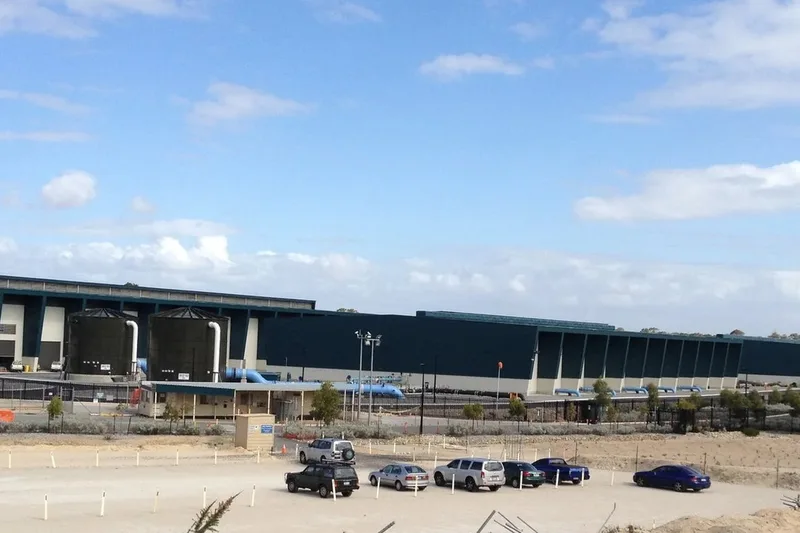
In October 2015 Singapore’s National Environment Agency signed a 25-year agreement with TuasOne, a company owned 75% by Hyflux and 25% by Mitsubishi Heavy Industries, to build and run the country’s sixth and largest waste-to-energy plant. The plant can burn up to 3,600 tonnes of waste a day and generate 120 megawatts of electricity. The project was valued at about S$750 million and was due to start operating in 2019.
It was delayed. Hyflux ran into severe financial difficulties, and in December 2019 an MHI subsidiary took over construction. The plant began initial operations in December 2021, and in 2022 MHI made TuasOne a wholly owned subsidiary to run it for 25 years. Built on 4.8 hectares, it is the most land-efficient waste-to-energy plant in Singapore.
Singapore burns most waste that is not recycled because land for landfill is scarce; the only remaining landfill is on Pulau Semakau, offshore. Each plant therefore guards against running out of disposal capacity. Under the contract, NEA pays for capacity being available, which makes revenue predictable and allows the project to be financed with long-term bank loans.
The case shows that project finance depends on its sponsors as well as on the asset. The plant itself was sound and its contract was secure, but one partner’s collapse delayed it by more than two years. Contracts that allow a stronger partner to step in, as MHI did, limit the damage. Governments and investors in infrastructure anywhere study such cases when deciding how much to rely on a single contractor.
Key moments
The project company signed a waste-to-energy services agreement with NEA.
The plant began commercial operations.
NEA marked its official opening.
Capacity 3,600 tonnes of waste a day and 120 MW of power; project valued at about S$750m. Hyflux held 75% and MHI 25% until MHI took full ownership in 2022. Sources: NEA; MHI; Recycling Today; NEA (via TSE).
The trade-offs at the heart of the case
A tonne at the gate and a unit on the grid
Set the incoming load record beside the power meter for one operating shift. A change in electricity output can arise from moisture content, auxiliary electricity use or a partial outage. A waste agency needs to know whether the promised disposal service was available regardless. Give each service a distinct performance measure before deciding whether electricity receipts justify lowering the treatment charge. In a low-waste future the public agency might need the plant for resilience while using less of its ordinary throughput. A contract based exclusively on average tonnage would make that look like failure. A contract paying solely for nameplate capacity could reward a plant unable to perform when another facility stops. Specify a readiness test under realistic system conditions and price the cost of maintaining it. With those facts visible, citizens can ask whether the same emergency protection could be purchased more cheaply through shared reserves, temporary storage or a different arrangement for planned maintenance.
For your seminar, paper or interview
- Q1
Which output should anchor a waste treatment service payment?
- Q2
How could a strong recycling programme affect the project’s revenues?
- Q3
What does a tonne of wet waste tell you about electricity sales?
- Q4
How would you test whether changes in the energy content of incoming waste explains the evidence?
- Q5
Which observation would most change your estimate of dependable disposal during network stress, and why?
- Public-private partnerships
- Availability payments
- Counterparty risk
- Construction risk
How we would approach it
Simplifying Finance’s opinion, offered as a starting point for debate, not as fact or investment advice.
Evaluate availability when the wider disposal network is most stretched. Account separately for waste accepted, electricity exported and the cost of managing residual ash. An appraisal that gives credit for avoided landfill should use the volume actually displaced and recognise the residual material still requiring disposal.
Pay for availability
Pay the operator for keeping capacity ready, so the plant is financed by a steady fee rather than waste volumes.
Check the sponsor, not just the plant
Assess each partner’s balance sheet, since a weak sponsor can delay a sound project.
Keep a step-in route
Write contracts so another partner or the authority can take over construction if a sponsor fails.
What this plan gives up
A long-term private contract shifts construction and operating risk away from the government, but if a sponsor runs into trouble the public still bears the cost of delay and lost capacity.
The strongest counter-argument
Building spare capacity can conflict with recycling ambitions yet protect households from a backlog during an outage. Linking the public requirement to network resilience gives a better starting point than extrapolating from one year’s waste tonnage. The contract should also make clear who pays when the quality of incoming material changes materially.
Metrics to watch
- tonnes of compliant capacity available when called
- dependable disposal during network stress
- Plant availability
- Waste sent to the Semakau landfill
Propose your solution
Pick a discussion question and set out what you would do, why, and what it would cost. Strong, well-argued answers are reviewed and published below with your first name and programme.
Published solutions
Loading published solutions…
- NEA · TuasOne project factsheet ↗
- NEA · Official opening and operating capacity ↗
- NEA · Waste-to-energy services agreement ↗
- NEA/Hyflux-MHI sign waste-to-energy services agreement (via Zero Waste SG) ↗
- MHI: TuasOne made a wholly owned subsidiary (2022) ↗
- Recycling Today: Hyflux and MHI selected for Singapore WTE ↗
- Photo: Waste incineration plant (6959781259).jpg by Ivan Bandura, CC BY 2.0 (cropped and resized) ↗
Figures are as reported by the companies or cited outlets as of 22 November 2026. Check the source before quoting. Corrections: let us know through the solution form.