What happened
A frequent, recognisable bus service can persuade a traveller to leave the car at home. It can also attract a traveller from another bus, create a journey that would never have been made or cause the same trip to register an additional boarding. Belfast’s first-year Glider reports recorded more than two million additional passenger journeys along the corridor. For a transport planner considering another route, the composition of that increase mattered more than the headline alone.
An increase of over 30% relative to previous bus journeys along the same route signals substantial use. Published material also attributed 1.67 million fewer car journeys to the service. That second figure is a different kind of evidence. Ticketing data can count boardings. Estimating avoided car trips requires information about what passengers would otherwise have done, including whether they would have driven alone or shared a vehicle.
An evaluation should distinguish a passenger who switches from a parallel bus from one who switches from driving. Both can benefit from reliability. Only one directly removes that passenger’s car trip. A benefit calculation also needs the trip distance and time of day. Removing one car from a heavily congested junction during the peak has a different effect from removing it from a quiet evening road.
The first-year figures compare passenger journeys on the corridor with the previous bus service. They do not establish that every additional boarding was made by somebody entirely new to public transport. A previous user can travel more frequently, and people who already used a parallel service can change route. Matching a sample of riders to their previous travel patterns makes the increase more interpretable and provides a direct check on which benefits could plausibly recur on a different Belfast corridor.
A before-and-after survey should ask about the full journey and the alternative used before Glider. A person travelling as a passenger in a car may switch to the bus without removing the car if the driver still makes the trip. A household may also reorganise several journeys when one member gains reliable public transport. Ask about occupancy, the reason for travel and whether the previous service was available on the same days. Pair this information with corridor traffic counts at comparable times. Where the two sources point in different directions, examine rerouting and changes in overall demand before converting a boarding estimate into avoided vehicle kilometres.
Glider is Belfast’s bus rapid transit system, run by the state-owned Translink. The first phase opened on 3 September 2018 with two routes: one linking east and west Belfast through the city centre, and another serving the Titanic Quarter. It uses long diesel-electric hybrid vehicles, dedicated lanes and off-board ticketing to speed up journeys. The Department for Infrastructure funded a £90 million investment in the infrastructure.
The launch was controversial because new bus lanes reduced space for cars. But in its first year, Translink reported that Glider carried over two million more passenger journeys than the buses it replaced, an increase of over 30%, and estimated that this meant around 1.67 million fewer car journeys. About ten million journeys were made across both corridors. Glider helped Translink reach 84.5 million journeys across Northern Ireland in 2018/19, the highest level in over 20 years.
Translink later said Glider had produced pre-pandemic passenger growth of around 70% on the corridors. In February 2025 the infrastructure minister announced next steps for a second phase extending Glider to north and south Belfast. The case shows how to judge a transport project by where its passengers came from, not only how many there are.
Key moments
Conventional bus services provide a corridor baseline.
The Glider rapid-transit service begins.
First-year figures are compared with the previous service.
First year from 3 September 2018. The infrastructure cost £90m, funded by the Department for Infrastructure. Sources: Translink via SyncNI and Belfast Telegraph.
The trade-offs at the heart of the case
A comparison with Thameslink: How a railway target can sharpen a bus evaluation
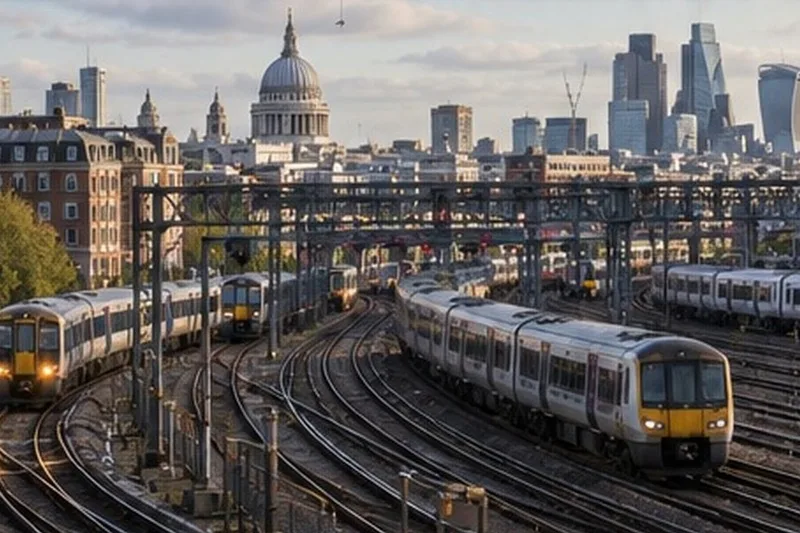
Thameslink’s central target of 24 trains an hour gives a Belfast planner a useful thought experiment. The corresponding average interval is short, yet travellers can still wait a long time if several trains arrive close together and the next is delayed. The same principle applies to a bus corridor. The average can improve while the passenger travelling at an awkward time sees little difference. At a busy stop, a long gap allows more passengers to accumulate. More people therefore experience a long gap than a short one, even when the scheduled headway looks satisfactory. Measure intervals from the platform as well as from the timetable, weighting the experience by the people actually waiting. Then examine whether faster boarding or a priority junction reduced variability. These gains may explain part of the rise in demand and can benefit established users even when few motorists switch. A convincing proposal for a second corridor should identify the first corridor’s most valuable change and show that it addresses a bottleneck on the proposed route. Buying similar vehicles alone need not reproduce the same passenger response.
For your seminar, paper or interview
- Q1
What survey question separates a diverted rider from an additional trip?
- Q2
Which benefits would survive if car substitution were half the reported estimate?
- Bus rapid transit
- Modal shift
- Induced demand
- Cost–benefit analysis
How we would approach it
Simplifying Finance’s opinion, offered as a starting point for debate, not as fact or investment advice.
Build an expansion case around measured wait times, reliability and passenger origins. Include short before-and-after travel diaries and traffic observations on plausible diversion routes. Use the first corridor as evidence of what can work and test whether the next corridor shares the features that made it work.
Build bus rapid transit, not trams
Get tram-like service for a fraction of the cost.
Give buses priority
Add bus lanes and level boarding along the corridors.
Extend to north and south Belfast
Plan a second phase after first-year results.
What this plan gives up
Bus rapid transit was cheaper and quicker than light rail, but taking road space from cars caused early congestion and complaints.
The strongest counter-argument
Waiting for perfect attribution may delay improvements that existing passengers already value. Release smaller investments that improve the present service while gathering evidence for the larger corridor commitment. Make the case for passenger convenience explicit even if the estimate of car substitution remains uncertain.
Metrics to watch
- Glider passenger numbers
- Progress on the second phase (BRT2)
Propose your solution
Pick a discussion question and set out what you would do, why, and what it would cost. Strong, well-argued answers are reviewed and published below with your first name and programme.
Published solutions
Loading published solutions…
- Smart Belfast: first-year Glider passenger comparison ↗
- Northern Ireland Assembly Committee for Infrastructure: Glider service evidence ↗
- National Audit Office: Update on the Thameslink programme ↗
- SyncNI: Glider celebrates first anniversary ↗
- NI Travel News: Happy birthday Glider ↗
- Belfast Telegraph via PressReader: Glider a safe service, says Translink ↗
- Department for Infrastructure: Belfast Rapid Transit, Glider introduction ↗
- TransportXtra: Belfast Glider’s success ↗
- Belfast City Council: Belfast Agenda progress 2023–2025 ↗
- Image: AI-generated editorial illustration
Figures are as reported by the companies or cited outlets as of 22 November 2026. Check the source before quoting. Corrections: let us know through the solution form.