What happened
Universal Robina Corporation (URC) is the food and beverage arm of the Gokongwei family’s JG Summit. Founded in 1954 as a cornstarch maker, it grew into one of the Philippines’ largest food companies, with snacks such as Jack ’n Jill potato chips, Great Taste instant coffee and C2 green tea. It also operates in Vietnam, Thailand, Malaysia and other markets, and historically had sugar, flour and feed businesses.
Branded consumer foods depend on scale, distribution to hundreds of thousands of small sari-sari stores, and strong brands at affordable prices. Many consumers buy single-serve sachets. That makes pricing delicate: small price increases can push customers to cheaper rivals.
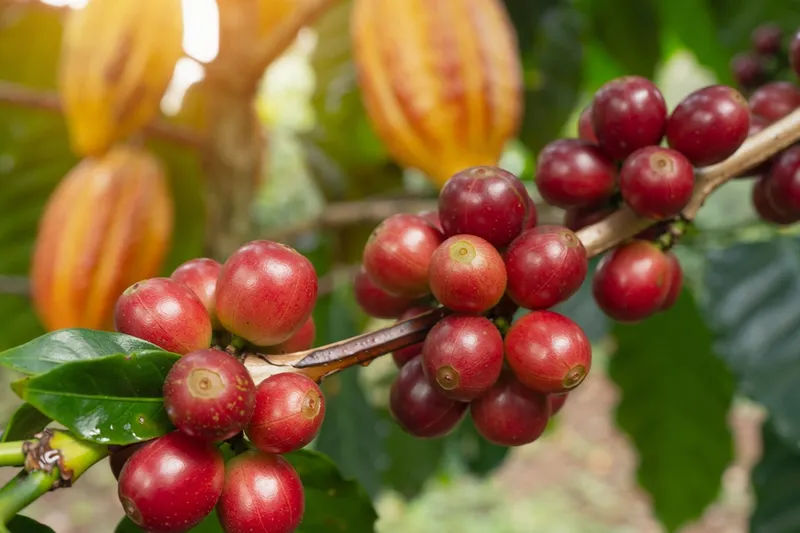
In 2024 and 2025 global coffee prices surged to record levels because of poor harvests in Brazil and Vietnam. URC, a major producer of instant coffee, faced ‘prolonged abnormally elevated coffee input costs’. It could not pass all of these on to price-sensitive customers without hurting volume. It also closed part of its packaging business, taking an impairment charge, and sold a 21% stake in its noodle joint venture to partner Nissin.
In 2025 sales rose 4% to ₱168 billion on volume growth, and branded consumer foods sales rose 5% to ₱115 billion. But operating income fell 4% to ₱16 billion and core net income fell 4% to ₱11 billion. CEO Irwin Lee said the franchise remained robust and expected margins to recover in 2026 as coffee costs eased.
The case explores how consumer goods companies manage input-cost inflation through hedging, pricing, product reformulation, pack sizes and portfolio choices, and how they balance short-term margins with long-term market share.
Commodity costs flow through to profits with a lag. Food companies typically buy raw materials months ahead, and they may hold inventory bought at earlier prices. When prices spike, the impact can appear gradually and last after market prices fall. Hedging with futures contracts can smooth costs, but it is not free and does not eliminate risk: a company that hedges at high prices may end up paying more than competitors when prices drop.
Pricing decisions in emerging markets are especially sensitive. Many URC customers buy single-serve sachets for a few pesos, so even a one-peso increase can be a large percentage change. Companies sometimes reduce pack sizes instead of raising prices, a practice called ‘shrinkflation’, but consumers may notice and resent it. Others reformulate products or launch value lines.
URC’s experience shows why branded food companies value diversified portfolios: when one input such as coffee spikes, strong performance in snacks or beverages can partly offset the hit.
The case also shows why investors look at volume growth separately from profit. Rising volumes in a bad cost year suggest the brands are healthy and that profits should rebound when costs normalise, while falling volumes would signal a deeper problem. Management’s guidance of margin recovery in 2026 rests on exactly this argument, and coffee prices over the following year will test whether it holds.
Key moments
URC founded by John Gokongwei Jr.
Builds snack, coffee and beverage brands.
Expands across Southeast Asia.
Coffee prices begin record surge.
Packaging closure; volumes up but margins squeezed.
Sells 21% of noodle JV to Nissin; expects margin recovery.
Source: Inquirer; Manila Bulletin, URC 2025 results.
The trade-offs at the heart of the case
Volume vs. margin
Holding prices protects share but sacrifices profit when costs spike.
Affordability vs. inflation
Low-income customers need small, cheap packs, limiting price increases.
Focus vs. diversification
Exiting non-core businesses sharpens focus but reduces diversification.
For your seminar, paper or interview
- Q1
Why could URC not simply raise coffee prices to protect margins?
- Q2
What tools can food companies use to manage commodity price volatility?
- Q3
How do sachet and small-pack formats affect pricing strategy?
- Q4
Was selling part of the noodle joint venture a sensible portfolio move?
- Q5
How should investors judge a year when volume rose but profit fell?
- Commodity risk management
- Price elasticity
- Portfolio strategy
- Brand equity
How we would approach it
Simplifying Finance’s opinion, offered as a starting point for debate, not as fact or investment advice.
URC was right to protect volume during a temporary cost spike, but it should build better defences: more hedging, flexible pack sizes and premium products that can absorb cost increases.
Hedge key inputs
Use forward contracts and supplier agreements to smooth coffee costs.
Use pack architecture
Adjust pack sizes and introduce premium variants to manage price points.
Strengthen premium brands
Grow higher-margin products less sensitive to commodity swings.
Focus capital on core brands
Continue exiting non-core businesses and investing in snacks and beverages.
What this plan gives up
Hedging can lock in high costs if prices fall, and premium products may not suit price-sensitive markets.
The strongest counter-argument
Some argue URC should raise prices faster, because strong brands can retain customers and margins are what drive shareholder value.
Metrics to watch
- Gross margin
- Coffee bean prices
- Volume growth
- Market share in snacks and coffee
- International segment growth
Propose your solution
Pick a discussion question and set out what you would do, why, and what it would cost. Strong, well-argued answers are reviewed and published below with your first name and programme.
Published solutions
Loading published solutions…
- Inquirer: URC full-year earnings slide 4% to ₱11B ↗
- Manila Bulletin: URC sees margin boost in 2026 as coffee costs ease ↗
- Manila Bulletin: Packaging closure costs pull down URC profit ↗
- Manila Times via Newswav: URC nets ₱11.6B, cuts stake in JV ↗
Figures are as reported by the companies or cited outlets as of 22 November 2026. Check the source before quoting. Corrections: let us know through the solution form.