The idea
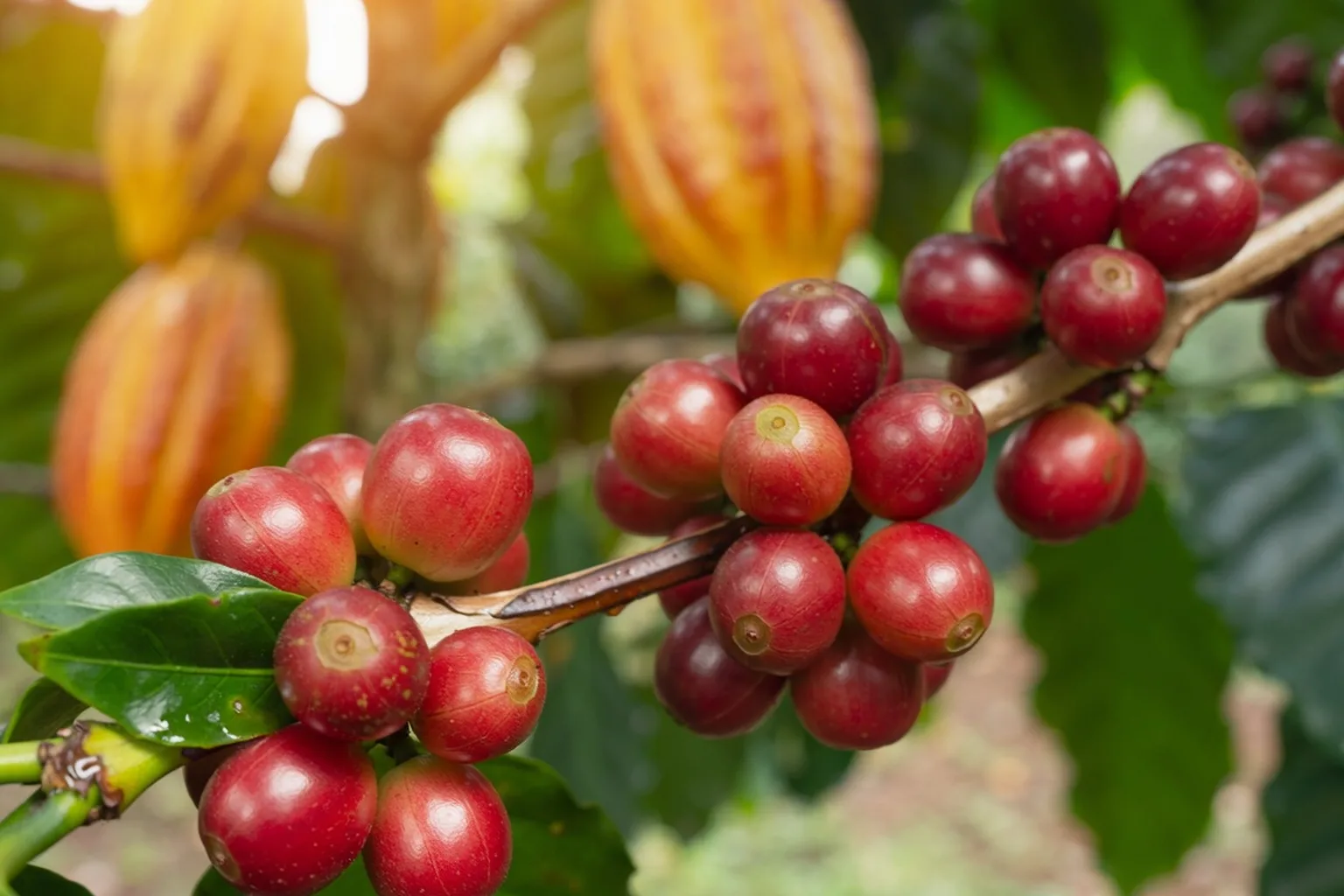
Soft commodities are crops grown rather than mined, mostly in tropical regions. Coffee, cocoa and sugar are the best known. Their production is concentrated in a few countries, depends heavily on weather and disease, and in the case of coffee and cocoa comes from trees that take years to mature. Supply cannot respond quickly to higher prices.
That combination makes softs some of the most volatile commodities, with price swings of 50% or more within a year not unusual.
Where they come from
| Crop | Main producers | Key features |
|---|---|---|
| Coffee | Brazil, Vietnam, Colombia, Indonesia, Ethiopia | Arabica (higher quality) and robusta (stronger, cheaper) |
| Cocoa | Côte d'Ivoire and Ghana (around 60%) | Trees vulnerable to disease and ageing |
| Sugar | Brazil, India, Thailand | Brazil can switch cane between sugar and ethanol |
The cocoa squeeze
Poor weather, crop disease and ageing trees cut West African harvests for several seasons.
Stocks fell and cocoa futures quadrupled to record highs in 2024.
Chocolate makers raised prices and reduced chocolate content in some products.
High prices encourage new planting, but new trees take several years to produce.
Drivers to watch
Weather
Frost in Brazil, drought or heavy rains in West Africa and Asia.
Disease
Swollen shoot virus in cocoa; coffee leaf rust.
Currencies
A weak Brazilian real can increase coffee and sugar exports.
Policy
Ethanol mandates in Brazil and export rules in India affect sugar.
From farm to shop
Small share
Raw ingredients are often a modest share of retail prices.
Lags
Retail prices often adjust months after futures move.
Hedging
Large manufacturers lock in costs months ahead.
Farmers
Many growers receive a small share of the final price.
Sustainability and regulation
New rules, such as the European Union's deforestation regulation, require importers to show that products like cocoa and coffee were not grown on recently cleared forest land. Meeting these requirements adds costs and may reshape where crops are sourced.
Programmes to support farmers, replant ageing trees and improve yields are growing, but changes take years to affect supply.
A realistic scenario
Salma runs a café in Abu Dhabi. In 2024 her coffee bean costs rose sharply after poor harvests in Brazil and Vietnam. Rather than raising all prices at once, she agreed a fixed-price contract with her roaster for part of her supply.
She also reviewed portion sizes and introduced a seasonal blend. Understanding the commodity cycle helped her plan instead of reacting to each price change.
Questions to ask yourself
What are weather and crop reports showing in major growing countries? Are stocks high or low? How long would it take for supply to recover? How much of my cost is the raw commodity? Can I fix prices for part of my needs?
Official sources to check
The International Cocoa Organization (icco.org) and International Coffee Organization (ico.org) publish market reports. The International Sugar Organization (isosugar.org) covers sugar. ICE Futures (ice.com) lists the main cocoa, coffee and sugar contracts.
Common mistakes
Expecting quick supply response
Tree crops take years to recover.
Chasing records
Extreme prices can fall just as sharply.
Ignoring stocks
Low inventories magnify weather shocks.
Forgetting currencies
The Brazilian real affects coffee and sugar exports.
Your checklist
- I know softs are concentrated in a few countries.
- I understand tree crops respond slowly to prices.
- I expect large price swings.
- I know retail prices move later and less than futures.
The short version
Coffee, cocoa and sugar come from a few tropical regions and depend on weather, disease and slow-growing crops. Prices can swing to extremes. Businesses manage the risk with contracts and planning.
Illustration: cocoa futures rose from about USD 2,500 a tonne in early 2023 to above USD 10,000 in 2024 after poor harvests in West Africa.
Softs depend on weather in a few growing regions and on slow-growing trees, so shortages can push prices to extremes for years.
Primary educational reference
International Cocoa Organization ↗Reviewed November 20, 2026. Examples are hypothetical illustrations in AED or USD. Educational content, not personalised investment, legal or tax advice.