Demand-pull
When spending grows faster than the economy can produce, prices rise. Low interest rates or large government spending can contribute.
Cost-push
When input costs such as energy or wages jump, businesses raise prices even if demand is unchanged.
Expectations
If people expect higher inflation, workers ask for bigger raises and firms raise prices, making inflation self-fulfilling. Central banks aim to keep expectations anchored.
What inflation is
Inflation is the rate at which the general level of prices rises over time. If inflation is 3%, a basket of goods and services that cost AED 100 last year costs about AED 103 this year. Each dirham buys a little less than before, which is why inflation is often described as a loss of purchasing power.
Some inflation is considered normal and even healthy. Most major central banks aim for inflation of around 2% a year. Very high inflation erodes savings and makes planning difficult, while falling prices, known as deflation, can lead people to delay spending and slow the economy.
How inflation is measured
Statistics agencies measure inflation with a consumer price index, which tracks the prices of a basket of goods and services that typical households buy, such as food, housing, transport, education and healthcare. Each item is weighted by its share of household spending.
In the UAE, consumer price figures are published by the Federal Competitiveness and Statistics Centre and by the statistics centres of individual emirates. Housing has a large weight in the basket, so changes in rents can have a significant effect on the overall rate. Economists also watch core inflation, which excludes volatile items such as food and energy, to see the underlying trend.
Demand-pull inflation in more detail
Demand-pull inflation occurs when total spending in the economy grows faster than its ability to produce goods and services. This can happen when interest rates are low and credit is easy, when governments spend heavily, when wages rise quickly or when confidence encourages households and businesses to spend more.
When factories, workers and supply chains are already busy, businesses respond to extra demand by raising prices rather than producing more. The economy is sometimes described as overheating. Central banks typically respond by raising interest rates to cool demand.
Cost-push inflation in more detail
Cost-push inflation starts on the supply side. When the costs of energy, raw materials, transport or labour rise sharply, businesses pass some of the increase on to customers. Oil price shocks in the 1970s are the classic example, when sharp rises in energy costs fed through to almost every part of the economy.
Supply disruptions can have the same effect. During 2021 and 2022, shipping bottlenecks, shortages of computer chips and higher energy prices combined with strong demand to push inflation to its highest level in decades in many countries.
The role of money and credit
Over the long run, economists widely agree that sustained high inflation requires growth in money and credit that outpaces the economy's productive capacity. Episodes of hyperinflation, such as in Germany in the early 1920s or Zimbabwe in the late 2000s, were driven by governments printing money to finance spending.
In normal times, the link between money supply and inflation is looser and harder to predict, which is why most central banks now focus on interest rates and inflation expectations rather than targeting the money supply directly.
Imported inflation and exchange rates
Countries that import many goods can experience inflation from abroad. If the prices of imported food, fuel or manufactured goods rise, or if the local currency weakens so that imports cost more, domestic prices rise too.
Because the UAE dirham is pegged to the US dollar, movements in the dollar affect the cost of imports from countries with other currencies. A weaker dollar makes goods from Europe or Asia more expensive in dirhams, while a stronger dollar makes them cheaper.
Wages and the wage-price spiral
Wages are both a cost for businesses and a source of spending for households. If prices rise and workers negotiate higher pay to keep up, businesses may raise prices further to cover the higher wage bill. This feedback loop is known as a wage-price spiral.
Central banks watch wage growth closely for this reason. Wage increases that match productivity growth are not inflationary, but sustained increases well above productivity can keep inflation high even after the original shock has faded.
How inflation affects you
Inflation affects different people in different ways. Savers holding cash lose purchasing power if interest rates are below inflation. Borrowers with fixed-rate debt can benefit, because the real value of what they owe falls. People on fixed incomes, such as some pensioners, are often hit hardest.
For investors, inflation affects the real return on investments. Shares, property and inflation-linked bonds have historically offered better protection over long periods than cash or conventional bonds, though none protects perfectly in every inflationary episode.
How the cure differs by cause
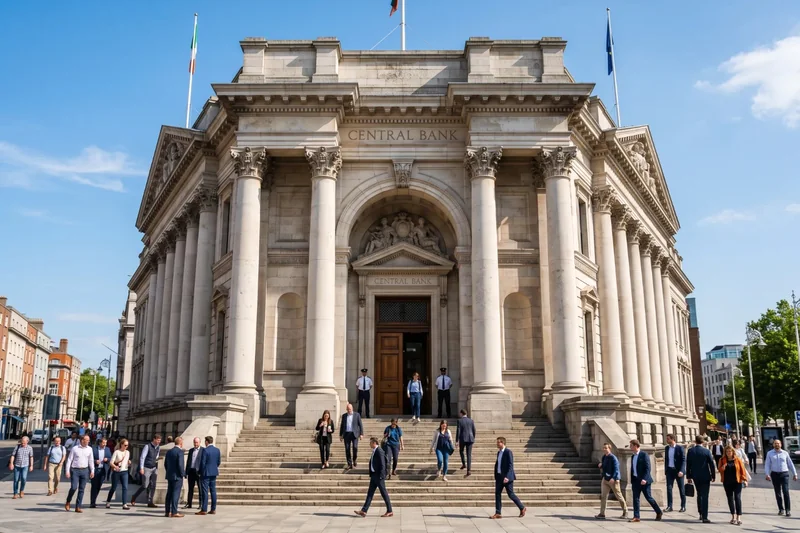
Because inflation has different causes, the right policy response differs too. Demand-pull inflation responds well to higher interest rates that cool spending. Cost-push inflation is harder: raising rates cannot produce more oil or clear a shipping bottleneck, and may slow the economy without fixing the supply problem.
In practice, central banks often focus on preventing a temporary cost shock from becoming persistent inflation through rising expectations. That is why they may raise rates even when inflation was caused by supply problems, to make sure people continue to believe inflation will return to target.
Inflation expectations in practice
Inflation expectations are measured in several ways: surveys of households and businesses, forecasts by economists and the difference between yields on regular government bonds and inflation-linked bonds. Central banks watch all of these for signs that people expect inflation to stay high.
When expectations remain close to the central bank's target even during a price shock, the shock is more likely to fade on its own. When expectations rise, central banks usually act more aggressively to prevent inflation from becoming entrenched.
Protecting yourself from inflation
- Keep an emergency fund in cash, but avoid holding large long-term savings only in cash.
- Consider investments that have historically outpaced inflation over long periods, such as diversified shares.
- Review fixed costs, such as rent and subscriptions, when contracts are renewed.
- Factor inflation into long-term goals, such as school fees and retirement.
- Watch real returns: compare interest rates and investment returns with inflation.
Inflation cannot be avoided, but planning for it helps protect your purchasing power over time.
Frequently asked questions
What are the main causes of inflation?
Demand growing faster than supply, rising costs such as energy and wages, and expectations of future price rises.
How is inflation measured in the UAE?
Through consumer price indices published by the Federal Competitiveness and Statistics Centre and emirate statistics centres.
How do central banks fight inflation?
Mainly by raising interest rates to cool demand; see the lesson on central banks.
Illustration: if oil doubles, transport and energy costs rise across the economy (cost-push); if wages then rise 6% to catch up, prices may keep rising (expectations).
Inflation can come from too much demand, rising costs or expectations of future price rises — and the cure differs for each.
Written by Simplifying Finance. Figures in the worked example are illustrative.
Reviewed November 28, 2026. Examples and lab figures are hypothetical. Educational content, not personalized investment advice.