The idea
For most people, a crypto exchange is the first step into digital assets. It is where you turn dirhams, dollars or euros into crypto and back again. Exchanges differ greatly in how safe, regulated and expensive they are.
The collapse of FTX in November 2022, once one of the world's largest exchanges, showed what can go wrong. Customer funds had been misused, and withdrawals were frozen overnight. Choosing carefully is the single biggest thing most crypto investors can do to protect themselves.

Licensing first
Check that the exchange is licensed by a regulator where you live. In Dubai, firms serving the public must be licensed by the Virtual Assets Regulatory Authority, which keeps a public register. Other countries have their own registers, such as the FCA in the UK or state and federal regulators in the US.
A licence does not guarantee safety, but it means the firm must meet rules on capital, custody, complaints and anti-money-laundering checks. Be wary of platforms that say they are licensed somewhere offshore but serve customers everywhere.
How exchanges hold your coins
When you keep crypto on an exchange, the exchange holds the keys. Look for clear statements that customer assets are kept separate from company money, held mostly in cold storage, and not lent out without consent. Some exchanges publish proof-of-reserves reports, which show they hold at least as many coins as customers are owed, though these do not always capture liabilities.
Understanding the costs
Fees are often hidden in the price rather than shown as a separate charge.
| Cost | What it is | Typical range |
|---|---|---|
| Trading fee | Charged per trade | 0.05–0.5% |
| Spread | Gap between buy and sell price | 0.1–2% |
| Deposit fee | Card or bank top-ups | 0–3.5% for cards |
| Withdrawal fee | Sending coins out | Fixed amount per coin |
| Conversion fee | Changing currency | Often inside the rate |
Withdrawals and support
Test a small withdrawal before depositing a lot. Check how long it takes, what limits apply, and whether the exchange supports your local bank. Good platforms give clear status updates and respond to support requests through official channels. Never give remote access or your passwords to anyone claiming to be support. It is also worth reading recent user reviews and news about the exchange, looking for patterns of frozen accounts, slow withdrawals or regulatory action. An exchange that has operated through several market crashes without halting withdrawals has a more useful track record than a new platform offering sign-up bonuses.
Security features to use
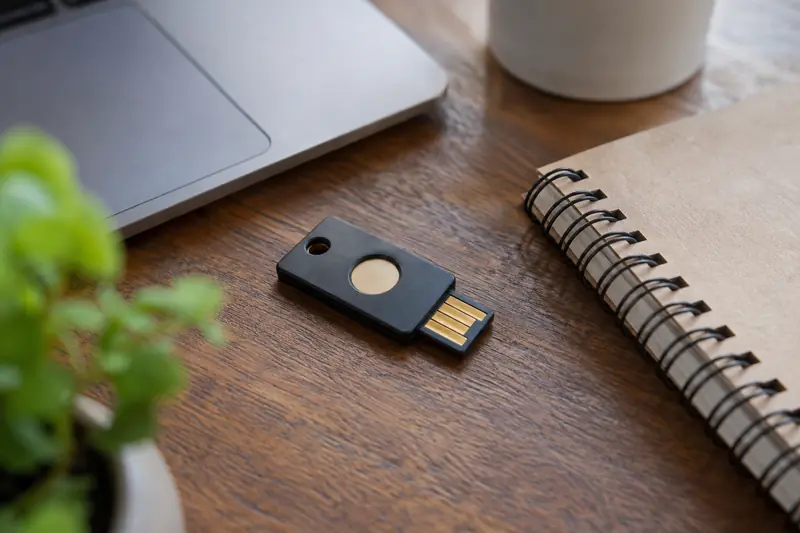
Turn on two-factor authentication with an authenticator app rather than SMS. Use a withdrawal address whitelist so coins can only be sent to addresses you have approved. Set up anti-phishing codes on emails if offered. For larger, long-term holdings, consider moving coins to a wallet you control.
Exchange or wallet for the long term?
Exchanges are convenient for buying and selling, but holding coins there means trusting the company. For larger amounts held for years, many people move coins to a wallet they control, such as a hardware wallet. That removes exchange risk but makes you responsible for keeping your seed phrase safe.
A practical middle ground is to keep a trading balance on a licensed exchange and move long-term holdings to self-custody once you are confident with the process. Always send a small test amount first and double-check the network and address before sending the rest.
A realistic scenario
Aisha in Dubai compares three apps. One is not on VARA's public register, so she rules it out. Of the two licensed options, she places a small test trade on each, compares the real cost including spread, and tests a withdrawal to her UAE bank. She chooses the one with lower total cost and faster withdrawals, and enables two-factor authentication on day one.
Exchange checklist
- Is it licensed by the regulator where I live?
- Are customer assets kept separate and mostly in cold storage?
- What is the total cost including spread?
- Have I tested a small withdrawal?
- Is two-factor authentication turned on?
The short version
A good exchange is licensed locally, keeps customer assets separate, shows its costs clearly and pays withdrawals reliably. Compare total costs, not just headline fees, use strong security settings, and avoid leaving large long-term holdings on any platform.
Illustration: buying $1,000 of bitcoin on Exchange A costs a 0.1% fee plus a 0.2% spread, about $3. On a simple 'instant buy' button at Exchange B, a 1.5% spread and 1% fee cost about $25 for the same purchase.
Pick an exchange licensed where you live, with clear fees and a record of honouring withdrawals. Don't keep more on it than you need for trading.
Primary educational reference
VARA · Public register of licensed VASPs ↗Reviewed November 21, 2026. Examples are hypothetical illustrations in AED or USD. Educational content, not personalised investment, legal or tax advice.