The idea
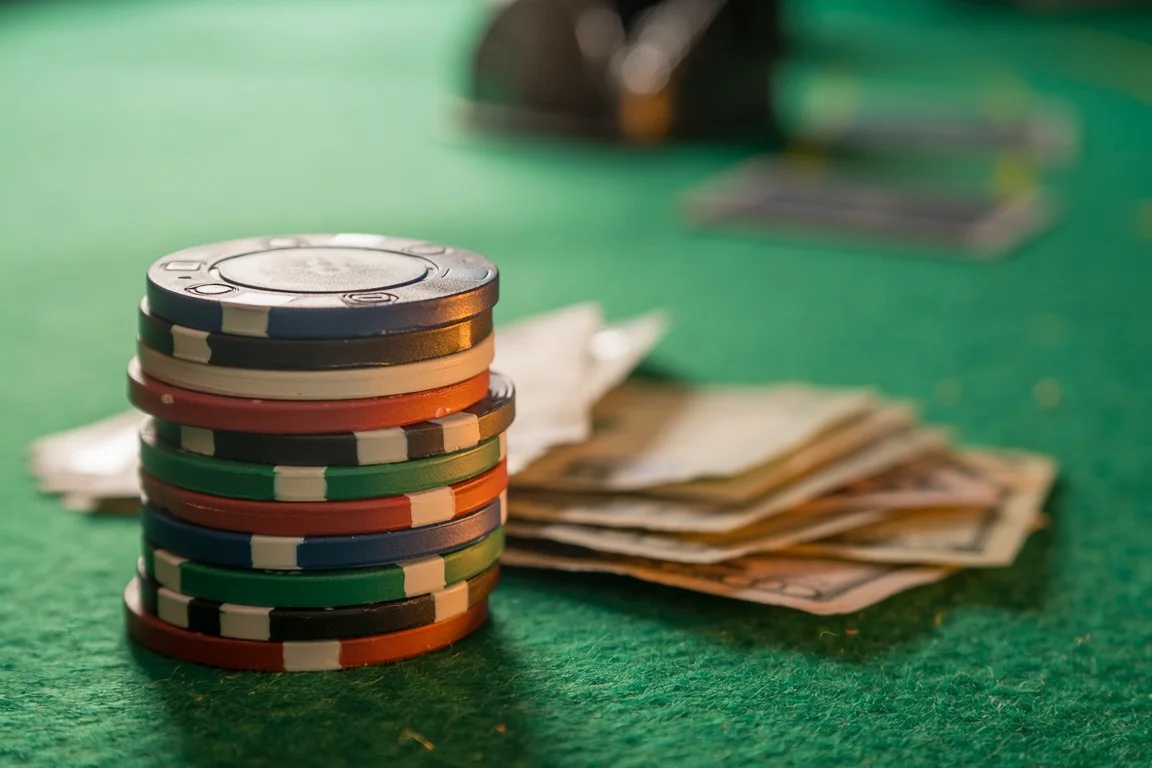
The house money effect is our tendency to take more risk with money we have recently won or gained than with money we earned or saved. The name comes from casinos, where gamblers who are ahead talk about playing with 'the house's money', as if their winnings did not really belong to them.
Economists Richard Thaler and Eric Johnson studied this in 1990. They found that people who had just won money in an experiment were much more willing to accept a risky bet than people who had not. A gain seemed to cushion the possible loss, so the risk felt smaller, even though the money was now fully theirs.

Why it happens
The effect is a form of mental accounting. We sort money into imaginary boxes depending on where it came from: salary, savings, bonus, gift, profit. Money in the 'windfall' or 'profit' box feels less valuable, so we spend or risk it more freely.
There is also an emotional element. After a win we feel confident and lucky, and losing part of a gain feels less painful than losing our starting capital. We tell ourselves we will still be ahead even if things go wrong.
Where it shows up in investing
The house money effect affects investors and traders in several ways. After a strong year, many people raise their risk or move profits into speculative assets. Traders who are up for the day often increase their position size. Crypto investors who made large gains in a rally have frequently put those gains into smaller, riskier coins.
| Situation | Typical house money behaviour |
|---|---|
| Strong year in the market | Moving profits into speculative bets |
| Winning trade | Doubling position size on the next trade |
| Annual bonus | Spending or gambling it freely |
| Inheritance or lottery win | Lending or investing without checks |
| Crypto rally | Rotating gains into tiny, risky tokens |
The break-even trap
Thaler and Johnson also found the mirror image. After a loss, people generally became more cautious, except when a bet offered a chance to get back to where they started. Then they were willing to take large risks to break even.
Investors who are down often hold on to losing positions or add to them in the hope of recovering their losses. Combined with the house money effect, this creates a dangerous cycle: bold after gains, reckless when trying to recover, and rarely sizing positions based on their true financial situation.
Why it is a mistake
Once a gain is in your account, it is simply part of your wealth. A dollar of profit buys exactly the same groceries, school fees or retirement income as a dollar of salary. Treating it as less valuable leads to taking risks you would never take with your original capital.
There is also a market timing problem. Big gains often come after long rallies, when prices are high and future returns may be lower. Raising risk at that point can mean buying more at the top.
Bonuses, windfalls and refunds
The effect is not limited to investing. People often spend tax refunds, work bonuses and cash gifts more freely than regular income, even when they have debts or no emergency fund. A €3,000 bonus spent on a holiday while a credit card balance charges 20% interest is a classic example.
One useful habit is to give windfalls a job before they arrive. Decide in advance what share goes to debt, savings, investments and enjoyment, so the money is not treated as free cash.
How to protect yourself
The most effective fix is to size every investment based on your total portfolio and your plan, not on how much profit you have made. If your plan says no more than 5% in any single stock, that rule holds whether the money came from salary or gains.
Rebalancing helps too. If shares rise strongly, rebalancing trims them back to your target and moves gains into safer assets, rather than letting profits drift into ever riskier bets. Some investors also find it helpful to look at their account as one total, rather than tracking 'original money' and 'profits' separately.
A note on taking some profits
None of this means you should never enjoy a gain. Setting aside a small, pre-agreed share of profits for something fun can be healthy, and it stops the urge to gamble with the rest. The key is that the decision is planned and sized, rather than an impulse driven by feeling lucky.
A realistic scenario
Daniel, a teacher in London, sees his £40,000 portfolio grow to £52,000. He feels tempted to put the £12,000 gain into a friend's start-up. Instead, he checks his plan: no more than 3% of his portfolio in any single private investment. He invests £1,500 in the start-up, rebalances the rest back to his 70/30 mix of shares and bonds, and uses £500 for a family weekend away.
Questions to ask yourself
- Would I take this risk with money from my salary?
- Am I treating profits as less valuable than savings?
- Is my position size based on my total wealth?
- Have I decided in advance what to do with windfalls?
- Am I trying to win back a loss rather than following my plan?
The short version
The house money effect makes recent gains feel like free money, so we gamble with them. Profits are just as real as savings. Size every bet by your whole portfolio, rebalance after strong gains, and give windfalls a plan before they arrive.
Illustration: Priya's $20,000 portfolio rises to $26,000 in a strong year. She tells herself the extra $6,000 is 'play money' and puts it all into a speculative stock that falls 70%. She loses $4,200 of real wealth, the same as if it had come from her salary.
A profit is your money, not the casino's. Treat gains exactly like money you earned, and size every position by your total wealth, not by recent winnings.
Primary educational reference
Thaler & Johnson · Gambling with the house money and trying to break even (Management Science, 1990) ↗Reviewed November 21, 2026. Examples are hypothetical illustrations in AED or USD. Educational content, not personalised investment, legal or tax advice.