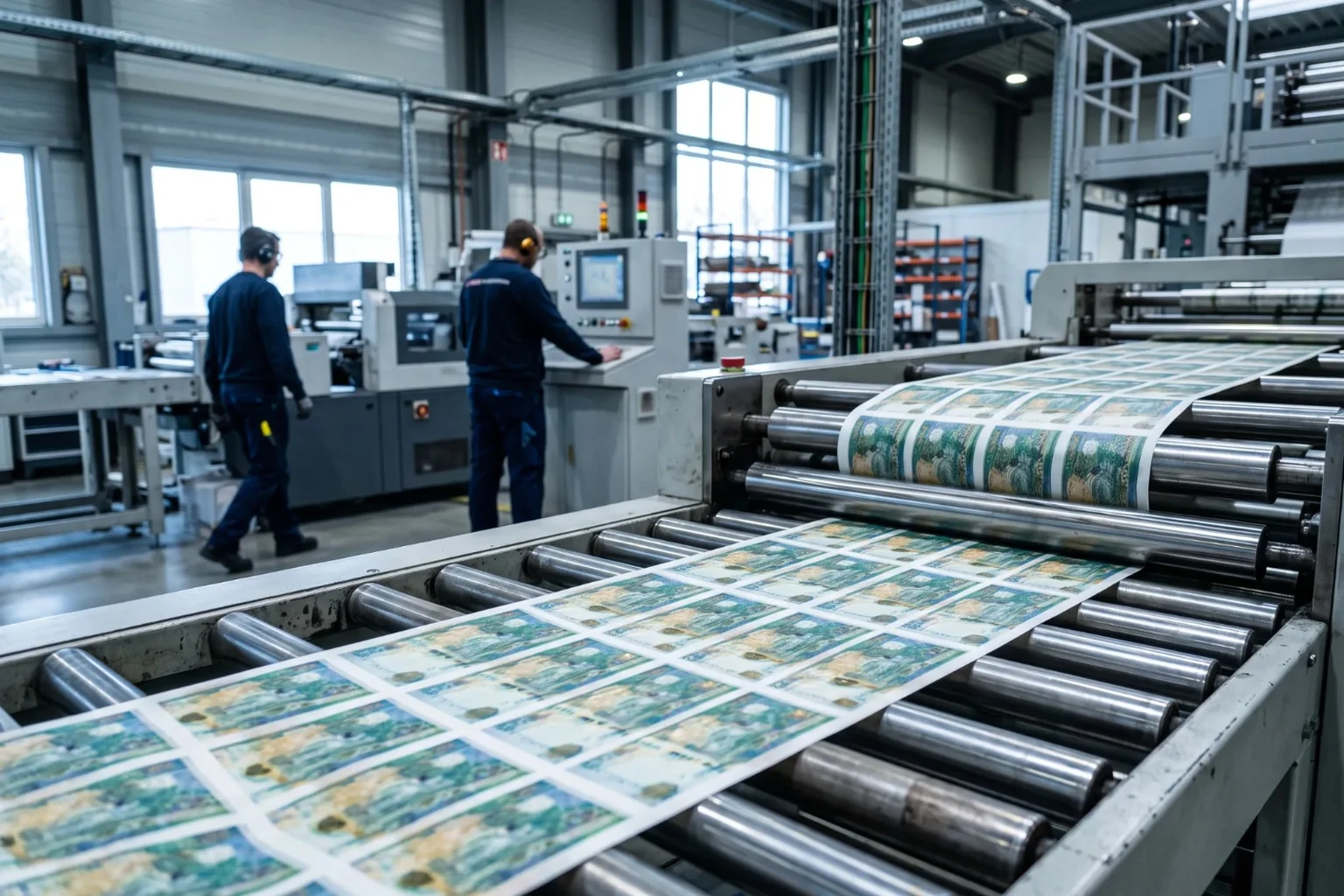
When rates hit zero
When short-term rates are already near zero, central banks can still act by buying government bonds and other assets in large amounts.
How it works
The central bank pays with new reserves. Its buying pushes bond prices up and long-term yields down, encouraging borrowing and pushing investors toward riskier assets.
The debate
QE helped stabilise markets in 2008 and 2020. Critics say it inflated asset prices, helped the wealthy most and made it harder to bring inflation down. Reversing it is called quantitative tightening.
A short history of QE
The Bank of Japan was the first major central bank to use quantitative easing, starting in 2001 as Japan struggled with deflation. The approach became widespread after the 2008 global financial crisis, when the US Federal Reserve, the Bank of England and later the European Central Bank bought large amounts of government bonds and other assets.
QE was used again on an even larger scale in 2020 during the pandemic. The Federal Reserve's balance sheet, which had been under USD 1 trillion before 2008, grew to almost USD 9 trillion by 2022. Other central banks expanded their balance sheets in a similar way.
How QE works step by step
- The central bank announces a programme to buy a set amount of assets, usually government bonds, over a period.
- It buys the bonds from banks and investors in the market.
- It pays by crediting the sellers' banks with new central bank reserves.
- The extra demand pushes bond prices up and yields down.
- Lower yields on safe assets encourage investors to buy other assets, such as corporate bonds and shares, and make borrowing cheaper.
The central bank does not hand money directly to households. Its effects work through financial markets, interest rates and the confidence that the central bank will support the economy.
Channels of influence
Economists describe several channels through which QE works. The portfolio balance channel describes how investors who sell bonds to the central bank buy other assets, raising their prices. The signalling channel describes how QE shows that the central bank intends to keep interest rates low for a long time.
QE can also improve market functioning during crises, when investors rush to sell and prices can become disorderly. In March 2020, for example, central bank buying helped restore order in government bond markets that had come under severe strain.
Is QE printing money?
QE is often described as printing money, but the reality is more nuanced. The central bank creates new reserves, which are a form of money held by banks, but this does not automatically increase the money that households and businesses spend. Whether it leads to more lending and spending depends on banks' willingness to lend and borrowers' willingness to borrow.
After 2008, QE did not lead to high consumer price inflation for more than a decade, partly because banks held much of the new reserves rather than lending them out. In 2021 and 2022, however, large QE combined with government spending, supply shocks and strong demand contributed to the rise in inflation in many countries.
Quantitative tightening
Quantitative tightening, or QT, is the reverse of QE. The central bank reduces its holdings of bonds, either by selling them or, more commonly, by not reinvesting the money when bonds mature. This gradually shrinks its balance sheet and removes some of the support QE provided.
QT tends to push long-term yields up slightly and can tighten financial conditions. Central banks usually carry out QT slowly and predictably to avoid disrupting markets, and they pay close attention to the level of reserves banks need to operate smoothly.
Effects on investors
For investors, QE has generally supported prices of bonds, shares and property by lowering interest rates and encouraging risk-taking. Periods of heavy QE have often coincided with strong market returns, while the end of QE and the start of QT have sometimes brought more volatility.
This creates a risk of relying too much on central bank support. Markets that rise mainly because of low rates and QE can fall when that support is withdrawn, as many did in 2022 when central banks raised rates and began QT at the same time.
QE and the UAE
The Central Bank of the UAE has not needed large-scale QE of the kind used by the Federal Reserve. Because the dirham is pegged to the US dollar, UAE interest rates broadly follow US rates, so the Federal Reserve's policies, including QE and QT, influence borrowing costs and liquidity in the UAE.
During periods of stress, such as 2020, the Central Bank of the UAE has used its own tools, including targeted support schemes for banks and borrowers, to maintain liquidity and support the economy.
The ongoing debate
Supporters argue that QE prevented deeper recessions and deflation after 2008 and stabilised markets in 2020. Critics argue that it inflated asset prices, increased wealth inequality by benefiting those who already owned assets, encouraged excessive borrowing and made central banks too large a presence in financial markets.
Most economists now see QE as a useful tool when interest rates are near zero, but one with side effects that need careful management, including a clear plan for eventually reducing the central bank's holdings.
A worked example of the mortgage effect
The example on this page shows how lower long-term yields can reduce mortgage payments. On a USD 300,000, 30-year mortgage, a fall in the interest rate from 6.0% to 5.5% reduces the monthly payment by about USD 95, or over USD 34,000 across the full term. Lower payments leave households with more to spend or save and make home buying more affordable.
The figures are illustrative, and mortgage rates depend on more than central bank buying, but the example shows how QE reaches ordinary households through borrowing costs.
Checking whether QE is working
Economists judge QE by its effects on long-term yields, credit spreads, lending, asset prices, inflation expectations and, ultimately, growth and inflation. Studies of the programmes after 2008 generally found they lowered long-term yields meaningfully, especially in the early rounds and during market stress.
Later rounds appeared to have smaller effects, suggesting diminishing returns as yields were already very low. This is one reason central banks now combine QE with other tools rather than relying on it alone.
Frequently asked questions
What is quantitative easing?
A central bank buying large amounts of bonds with newly created reserves to lower long-term interest rates.
Is QE the same as printing money?
Not exactly. It creates bank reserves, which do not automatically become spending by households and businesses.
What is quantitative tightening?
The reverse of QE: the central bank shrinks its bond holdings, often by not reinvesting maturing bonds.
Illustration: a central bank buys $1 trillion of bonds; if that lowers 10-year yields from 3.0% to 2.5%, a $300,000 30-year fixed mortgage linked to them becomes about $79 a month cheaper.
QE lowers long-term interest rates by buying bonds with newly created reserves. It supports asset prices — and critics say inequality too.
Written by Simplifying Finance. Figures in the worked example are illustrative.
Reviewed November 28, 2026. Examples and lab figures are hypothetical. Educational content, not personalized investment advice.