What happened
The original law was written in australes. Argentina’s central bank was to sell dollars at ten thousand australes each under the statutory conditions. When the new peso subsequently replaced ten thousand australes, the familiar one-peso-per-dollar relationship followed. A firm negotiating a lease or ordering machinery could use this rule to compare prices. It still had to decide what currency its revenue, costs and long-term obligations would actually follow under stress.
A manufacturer with export receipts might appear to have a natural currency match for its dollar debt. Check the timing as well as the amount. A seasonal exporter can owe interest before a shipment leaves, or its customer may have the right to delay settlement. In that interval the firm relies on banking access and liquidity just like a company with domestic receipts. A second check concerns who bears a change in demand. An export contract denominated in dollars does little for a borrower if the foreign customer can cancel it without penalty. The original legal parity offers a useful starting point for pricing contracts, but the operating documents determine the strength of the hedge.
One million australes at the statutory conversion represented US$100. At redenomination the same nominal amount became 100 new pesos. The change in the number printed on a note did not multiply purchasing power. Nor did a statutory conversion rule turn every privately issued dollar claim into a riskless asset. Borrower solvency, the availability of funding and the terms of a contract remained separate issues.
In 1989 and 1990 Argentina suffered hyperinflation; one widely cited measure put prices up 3,079% in 1989. President Carlos Menem’s economy minister, Domingo Cavallo, introduced the Convertibility Law (Law 23,928) in March 1991. From 1 April 1991 the central bank had to sell dollars at 10,000 australes each and hold reserves to back the monetary base. From January 1992 the new peso replaced 10,000 australes, creating the famous one-to-one parity.
The results were dramatic. According to Cavallo, inflation fell from 1,344% in 1990 to 84% in 1991, 17.5% in 1992, 7.4% in 1993 and 3.9% in 1994, and GDP grew about 7.7% a year between 1991 and 1994. Many companies and households borrowed in dollars, assuming the peg would last.
It did not. After recession from 1998, bank runs and the loss of external financing, the regime collapsed in early 2002. Dollar deposits were converted into pesos at 1.4 per dollar, while dollar debts were converted at 1 to 1, and the peso then fell much further. The case shows how a policy promise can become a business assumption.
Key moments
Congress enacts Law 23,928.
The austral conversion rule comes into force.
The peso takes the place of the austral at the prescribed conversion.
Convertibility took effect on 1 April 1991. Source: Domingo Cavallo, ‘Lessons from the Stabilization Process in Argentina’ (Kansas City Fed, 1996), citing official data.
The trade-offs at the heart of the case
Core tensions
A stable conversion rate encourages firms to compare loan interest rates without paying sufficient attention to the currency of future sales. A business collecting local receipts and owing dollars can appear naturally matched while conversion is dependable. If access becomes difficult or the relative value changes, debt service can outrun receipts even when the underlying shop or factory remains productive. Borrowing more cheaply in dollars can be sensible for an exporter with sufficiently dependable dollar receipts. The same loan can be unsuitable for a business whose local customers cannot absorb a sharp price rise. Evaluate the borrower’s revenue and debt together.
Testing the evidence
The appropriate unit of observation is one contractual payment date. Track cash available in the currency legally due and record the baseline before the decision. The most useful records are loan terms, customer invoices and currency-matched cash forecasts. Align their dates and definitions before drawing an inference. In particular, allow for customer repricing and changes in convertibility. A change in that factor can move the reported outcome even when the intervention has had no effect. Trace invoices to the currency in which customers actually settle them. A locally priced contract referencing dollars may still be difficult to collect after a shock. Match the timing of contracted debt payments to the dates at which cash becomes accessible.
A related Argentine case
A UVA contract can fix the unit balance while changing the peso payment. Convertibility created a different kind of apparent stability. In each case a borrower must translate the contract into the cash it can actually earn.
For your seminar, paper or interview
- Q1
Which company appears naturally hedged at parity but has no hedge once its sales currency and debt currency diverge?
- Q2
How would you measure cash available in the currency legally due for one contractual payment date using the available records?
- Q3
Which assumption in “Pricing a currency mismatch before it becomes visible” would you challenge first, and how would changing it affect the decision?
- Q4
Could customer repricing and changes in convertibility explain the observed change? What evidence would distinguish that explanation?
- Q5
Under what conditions would you prefer matching debt service to the currency of reliable customer receipts, and who would bear the residual risk?
- Currency boards
- Fixed exchange rates
- Currency mismatch
- Credibility of rules
How we would approach it
Simplifying Finance’s opinion, offered as a starting point for debate, not as fact or investment advice.
Describe currency exposure using the cash customers can and will pay in a stress scenario. Test repayment with and without access to conversion at the assumed rate. Evaluate the political and social durability of the arrangement separately from the precision of the arithmetic in the statute.
Fix the exchange rate by law
Back the currency with reserves at 10,000 australes per dollar.
Redenominate
Replace the austral with the peso at 1 peso per dollar from 1992.
Let firms borrow in dollars
Rely on the peg to make dollar debt seem safe.
What this plan gives up
The peg crushed hyperinflation and brought growth, but it encouraged dollar borrowing and removed monetary flexibility, so when shocks came the exit was devastating.
The strongest counter-argument
For the corporate treasurer, the alternative worth costing is matching debt service to the currency of reliable customer receipts. Give both choices the same information date. Specify what can still be reversed, who absorbs the cost if the forecast is wrong, and the point at which new evidence would justify changing course. Make the decision conditional on an observable change in cash available in the currency legally due. That condition lets someone outside the original decision team distinguish a sensible revision of the plan from an attempt to explain away poor results.
Metrics to watch
- Real exchange rate
- Share of debt in foreign currency
Propose your solution
Pick a discussion question and set out what you would do, why, and what it would cost. Strong, well-argued answers are reviewed and published below with your first name and programme.
Published solutions
Loading published solutions…
- Government of Argentina: Original text of Convertibility Law 23,928 ↗
- BCRA: Previous currency issues and peso-to-austral redenomination ↗
- Domingo Cavallo: Lessons from the Stabilization Process in Argentina, 1990–1996 ↗
- Forbes México: Argentina inflation 2023 and the 1989–1990 hyperinflation ↗
- Wikipedia: Corralito (pesification terms) ↗
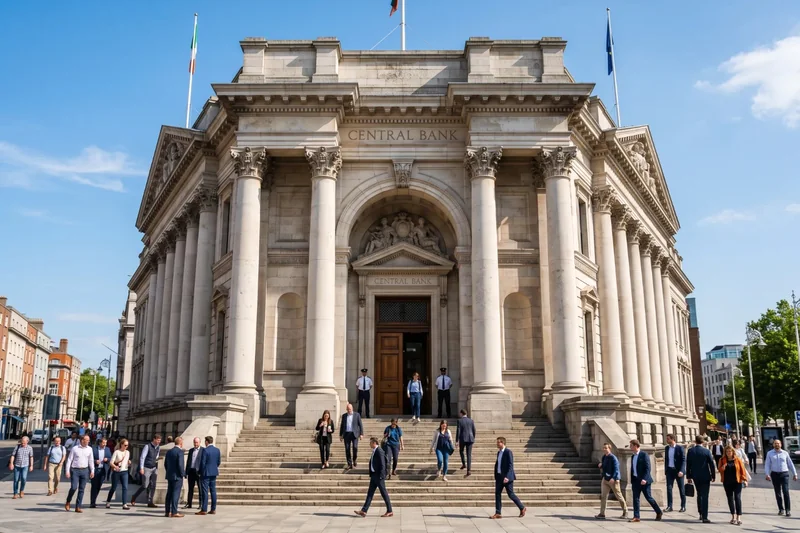
- Image: AI-generated editorial illustration
Figures are as reported by the companies or cited outlets as of 22 November 2026. Check the source before quoting. Corrections: let us know through the solution form.