What happened
Ayala Land (ALI) is the property arm of the Ayala group and the developer behind Makati’s central business district, Bonifacio Global City, Nuvali and many other estates. It builds homes from luxury to affordable segments, and owns malls, offices and hotels.
Its model centres on large, master-planned estates. Ayala buys or develops large tracts of land, builds roads and infrastructure, then sells or develops lots, offices, malls and homes, capturing value as the area grows.
After the pandemic, Philippine housing faced oversupply, especially mid-market condominiums in Metro Manila, as investment buyers and POGO tenants disappeared and interest rates rose. Developers had too many unsold units.
Ayala Land responded by cutting new launches. In 2025 it launched 42% fewer residential projects but still sold about ₱125 billion of homes, mainly by marketing existing inventory, and reduced inventory to about 19 months of sales. It also sold the Alabang Town Center mall stake and other assets, booking large gains. Net income rose 39% to ₱39.1 billion, while core net income, excluding one-off items, rose 8% to ₱30.6 billion. Revenue reached a record ₱190.2 billion, and leasing and hospitality revenue rose 7%.
ALI returned ₱18.5 billion to shareholders through dividends and buybacks and downscaled capital spending. Chairman Jaime Augusto Zobel de Ayala said the priority was ‘stability over aggressive growth’. In the first half of 2026 net income fell 19%, as residential revenue weakened, though inventory improved to 15 months.
The case explores inventory management in property, capital recycling and the interpretation of one-off gains.
Inventory months measure how long it would take to sell all unsold units at the current sales pace. High inventory ties up capital and risks price cuts. Reducing launches and focusing on existing stock helps restore balance, though it lowers future revenue.
Capital recycling means selling mature assets, such as a mall, to fund new investment or shareholder returns. It can unlock value but means losing the asset’s future income. Ayala also uses its REIT, AREIT, to recycle office assets.
Analysts cautioned that the market looks through one-off gains. Abacus Securities noted that residential reservation sales looked weak and that excess mid-market inventory remains a pressure across the sector.
Commercial and industrial lots offer another revenue stream. Ayala sold lots in estates such as Arca South and in Batangas to businesses building offices, warehouses and factories. Demand for these lots held up better than for condominiums, as companies invested in logistics and manufacturing.
Hotels and malls are being renovated to lift returns: management expected room rates at renovated hotels to rise 10–20% and rents at reinvented malls 15–20%.
Affordable housing remains a large unmet need in the Philippines, but developers find it hard to make profits at low price points without government support.
For investors, the key is to separate one-off gains from recurring growth.
Interest rates are a key swing factor. When the central bank cuts rates, mortgage costs fall and buyer demand can recover, helping developers clear inventory faster. Ayala’s caution positions it to benefit if rates fall further.
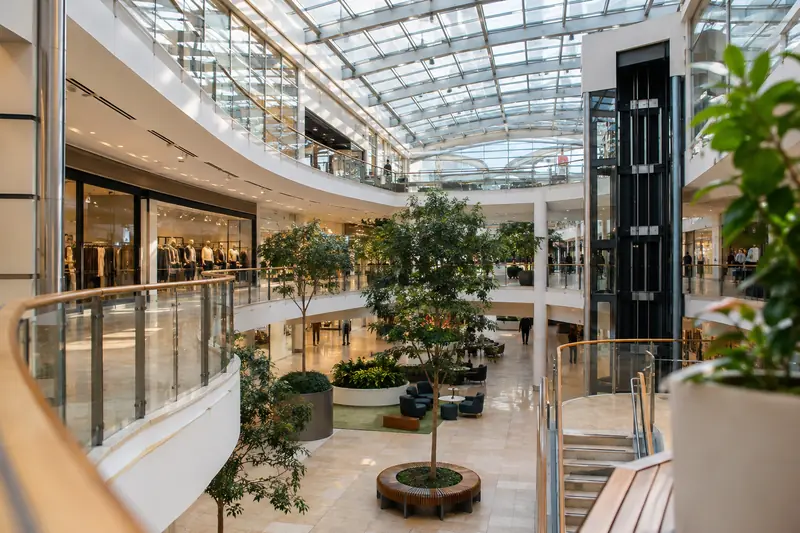
Its hotels, under the Seda brand and international partners, benefited from recovering domestic and foreign tourism, adding to recurring income. Malls such as Ayala Malls Arca South show its strategy of building retail anchors inside new estates to attract residents and businesses.
Key moments
Ayala Land formed from Ayala Corp. property assets.
Develops Bonifacio Global City and Nuvali.
AREIT lists.
Condominium oversupply builds.
42% fewer launches; record ₱39.1bn profit.
Profit down 19%; inventory at 15 months.
Sources: Manila Bulletin; BusinessWorld.
The trade-offs at the heart of the case
Growth vs. stability
Fewer launches protect the balance sheet but slow growth.
One-off gains vs. core earnings
Asset sales flatter profits temporarily.
Capital recycling vs. recurring income
Selling assets brings cash but loses rental income.
For your seminar, paper or interview
- Q1
Why did Ayala Land cut residential launches?
- Q2
How should investors treat gains from asset sales?
- Q3
What does ‘months of inventory’ tell us?
- Q4
Is selling malls a good way to fund growth?
- Q5
How can developers prepare for the next housing upturn?
- Property development cycle
- Inventory management
- Capital recycling and REITs
- Earnings quality
How we would approach it
Simplifying Finance’s opinion, offered as a starting point for debate, not as fact or investment advice.
Ayala Land’s caution is wise in an oversupplied market. It should keep clearing inventory, focus launches on premium and estate lots where demand is resilient, and grow recurring income from malls, offices and hotels.
Clear inventory
Offer flexible payment terms on finished units.
Launch selectively
Focus on premium and estate lots with strong demand.
Grow recurring income
Renovate malls and hotels for higher rents.
Recycle capital wisely
Sell non-core assets at good prices.
What this plan gives up
Selling assets reduces long-term recurring income.
The strongest counter-argument
Some argue Ayala should buy land and launch more projects now, at lower costs, to capture the next cycle.
Metrics to watch
- Inventory months
- Reservation sales
- Core net income
- Leasing revenue
- Capex
Propose your solution
Pick a discussion question and set out what you would do, why, and what it would cost. Strong, well-argued answers are reviewed and published below with your first name and programme.
Published solutions
Loading published solutions…
- Manila Bulletin: Ayala Land profit jumps 39% ↗
- BusinessWorld: Ayala Land reduces inventory ↗
- InsiderPH: Ayala Land 2025 profit soars on Alabang mall sale ↗
- InsiderPH: Ayala Land H1 2026 profit falls 19% ↗
Figures are as reported by the companies or cited outlets as of 22 November 2026. Check the source before quoting. Corrections: let us know through the solution form.