What happened
The Philippine Stock Exchange (PSE) traces its roots to the Manila Stock Exchange founded in 1927, making it one of the oldest exchanges in Asia. Its main index, the PSEi, tracks 30 large companies, many of them conglomerates controlled by families such as the Sys, Ayalas, Gokongweis and Aboitizes.
The market had disappointed investors for years. The PSEi peaked above 9,000 in early 2018 and never returned there, despite solid economic growth. Analysts pointed to high valuations at the peak, few new listings, limited technology companies and low trading liquidity.
2025 was particularly difficult. A large corruption scandal over flood-control projects, with allegations reaching senior political figures, shook confidence. The peso weakened against the US dollar, reducing returns for foreign investors. Third-quarter GDP growth disappointed. Political divisions between the President and Vice President added uncertainty.
The PSEi fell to 5,584.35 in November, its lowest since 2020, and closed the year at 6,052.92, down 7.3%, its worst year since 2013 and last among regional markets, while Japan’s Nikkei rose 24%. Foreign investors were net sellers of ₱51.8 billion, and market capitalisation fell 6.3% to ₱13.65 trillion. Only two companies held IPOs, Top Line and Maynilad, against the six the PSE had hoped for. Several companies delisted.
There were bright spots: total capital raised rose 75% to ₱144 billion, average daily trading rose 20% and mining stocks soared 92% on high metal prices. ICTSI, the global port operator, became the most valuable listed company. Regulators proposed lower minimum public float rules to attract large IPOs such as GCash.
The case examines what drives investor confidence in emerging markets and how exchanges can attract companies and capital.
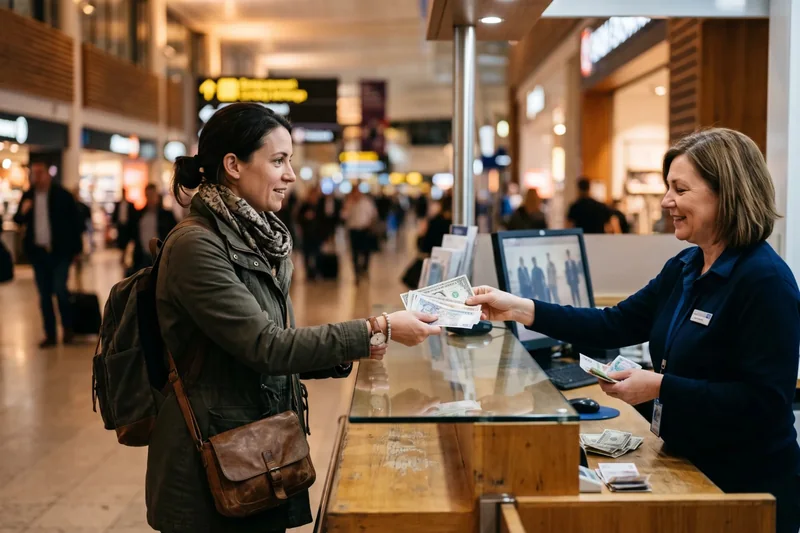
For foreign investors, returns depend on both stock prices and exchange rates. If the peso falls 5% against the dollar, a foreign investor loses 5% even if stock prices are flat. Currency weakness therefore triggers foreign selling, which can push prices lower in a self-reinforcing cycle.
Governance and rule of law matter. Corruption scandals raise questions about how public money is used and whether contracts are fair, increasing the risk premium investors demand. Markets with strong institutions usually trade at higher valuations.
Market structure is another issue. The PSE lacks large technology companies, which drove gains in other markets during the AI boom. Thin trading in many stocks discourages large investors, and frequent delistings shrink the market further.
Retail investors also shifted their money. Analysts noted that some Filipinos moved savings into cryptocurrencies and foreign stocks through apps, reducing demand for local shares. Building a culture of long-term local investing, through pension reform and financial education, would deepen the market.
Valuation matters for the outlook. After the decline, many Philippine stocks traded at low multiples of earnings and offered attractive dividends. Value investors see opportunity, but low valuations can persist if confidence does not return.
Index composition shapes performance. The PSEi is dominated by banks, property developers, conglomerates and utilities, sectors tied to the domestic economy and interest rates. When local sentiment sours, few sectors provide offsetting gains, unlike markets with large exporters or technology firms.
Rule changes such as allowing more types of REITs and easing float requirements could help, but most analysts agree that confidence in governance and policy stability is the foundation for a sustained recovery in Philippine equities.
Key moments
Manila Stock Exchange founded.
Manila and Makati exchanges unify into PSE.
PSEi peaks above 9,000.
Corruption scandal; peso weakens.
PSEi hits 5,584, five-year low.
Ends year down 7.3%.
Sources: Philstar; Daily Tribune; Manila Bulletin.
The trade-offs at the heart of the case
Economic growth vs. market returns
A growing economy does not guarantee rising stocks.
Family control vs. public float
Dominant owners limit shares available to investors.
Investor protection vs. listing ease
Strict rules protect investors but may deter listings.
For your seminar, paper or interview
- Q1
Why did the Philippine market fall while other Asian markets rose?
- Q2
How does currency weakness affect foreign investors?
- Q3
Why are there so few IPOs in the Philippines?
- Q4
How would lower public float rules change the market?
- Q5
What reforms could restore investor confidence?
- Country risk premium
- Currency risk
- Market microstructure
- Corporate governance
How we would approach it
Simplifying Finance’s opinion, offered as a starting point for debate, not as fact or investment advice.
The Philippine market’s problems are about trust and depth as much as economics. Credible anti-corruption action, steady macro policy and reforms that bring in large, high-growth listings would do more for valuations than short-term stimulus.
Strengthen governance
Enforce accountability for corruption.
Attract big listings
Ease float rules for large IPOs like GCash.
Develop local investors
Encourage pension funds and retail investing.
Improve liquidity
Support market makers and broader index inclusion.
What this plan gives up
Lower float requirements may leave fewer shares for public investors.
The strongest counter-argument
Some argue the market is simply cheap after the selloff, and patient investors will be rewarded as earnings grow.
Metrics to watch
- PSEi level
- Foreign flows
- Peso exchange rate
- IPO pipeline
- Governance reforms
Propose your solution
Pick a discussion question and set out what you would do, why, and what it would cost. Strong, well-argued answers are reviewed and published below with your first name and programme.
Published solutions
Loading published solutions…
- Philstar: PSE chief upbeat on market rebound ↗
- Daily Tribune: PSEi posts worst year since 2013 ↗
- BusinessWorld: IPO activity stalls in Philippines ↗
- Manila Bulletin: PSEi ends 2025 in red ↗
Figures are as reported by the companies or cited outlets as of 22 November 2026. Check the source before quoting. Corrections: let us know through the solution form.