What happened
BRAC Bank’s 2018 directors’ report dates the venture to July 2011. IFC came in as an equity investor in April 2013, followed by the Gates Foundation in 2014. Ant Financial became a strategic partner four years later. These events brought new capabilities and capital into the company. None by itself put cash in a village on payday. An agent serving recipients has to replenish physical money, while an agent serving senders may run short of electronic value. Sending a van to both costs money even if the flows balance across the country.
A bank evaluating the network could rank districts by transactions. That would reward an agent who turns away every tenth recipient yet operates in a crowded market. Try ranking them instead by successful withdrawals as a share of attempted withdrawals at different times of day. Interpreting the result requires observing failed attempts. A customer who sees the queue and walks away leaves no entry in the transaction ledger. Brief independent observation at busy counters can tell an investor something a larger transaction database cannot.
Merchant acceptance offers a second way to rebalance the system. If a family can spend part of a transfer directly at the grocer, it needs fewer notes. The grocer then needs a supplier who takes digital payments or an inexpensive route back into cash. One merchant’s adoption can merely move the cash-out queue up the street. Fund a trial along a complete trading route and follow purchases through to the wholesaler before paying bonuses for new merchant signs.
bKash launched on 21 July 2011 as a joint venture between BRAC Bank and Money in Motion LLC, a US company co-founded by Kamal and Iqbal Quadir. Bangladesh Bank’s rules required mobile financial services to be led by banks, which made BRAC Bank’s ownership essential. The service began with three basic functions: cash in, cash out and send money.
The investor list grew in stages. IFC became an equity partner in April 2013, the Gates Foundation invested in 2014, Ant Financial (now Ant International) joined in April 2018, and SoftBank Vision Fund 2 invested in November 2021. Bangladeshi press reported that the SoftBank deal valued bKash at about US$2 billion, making it widely described as the country’s first unicorn.
The business kept scaling. bKash reported more than 70 million registered customers in 2023 and over 83 million by 2026, according to its own history page. For 2024, The Daily Star reported revenue of about Tk 5,058 crore, up 20 percent, and profit of about Tk 316 crore, up 67 percent. BRAC Bank holds a 51 percent stake.
Mobile money networks face the same challenge everywhere. Kenya’s M-Pesa, launched by Safaricom in 2007, relied on tens of thousands of agents managing cash and electronic float, and studies of that network found agent liquidity to be one of the main constraints on service quality. The economics of a payments network are set at the counter, not in the app.
Key moments
bKash began operations in July.
IFC and then the Gates Foundation became investors.
Partnership with Ant Financial announced in April.
Source: World Bank, World Development Indicators (IT.CEL.SETS.P2).
The trade-offs at the heart of the case
Count the second visit
Place observers at selected counters during the busiest hours of successive pay cycles. Record the first attempted withdrawal, the amount requested and whether the customer had to visit another counter. With consent, ask whether the money was ultimately withdrawn, kept in the wallet or spent with a merchant. A second visit is an economic cost even when the network eventually fulfils the transaction. I would prioritise routes where repeat journeys are common and the extra van trip can serve several agents. I would change that choice if merchant acceptance proved cheaper and families could use balances directly for the goods they actually buy.
What the factory payroll reveals about the agent network
The payroll experiment elsewhere in this collection gives bKash’s distribution problem a human scale. Repeated salary deposits can teach workers to use an account independently. They can also concentrate withdrawal demand on one day in a small area. A provider that measures learning from completed transfers may miss a counter with a queue out the door. An employer can help by sharing an aggregate payroll calendar with the provider, without sharing workers’ individual balances. A provider can then plan replenishment against actual net flows. If wages remain in wallets because workers find them genuinely useful, the cash requirement falls. If balances remain because nobody can withdraw, the same ledger outcome signals a service failure. A short customer interview can distinguish the two.
For your seminar, paper or interview
- Q1
Which agent should receive extra float before payday, a busy counter or a frequently empty one?
- Q2
What would prove that merchant acceptance reduced system-wide cash handling?
- Q3
Who should pay for moving cash into a net-receiving village?
- Two-sided networks
- Agent liquidity management
- Unit economics
- Financial inclusion
How we would approach it
Simplifying Finance’s opinion, offered as a starting point for debate, not as fact or investment advice.
We would treat cash availability at the counter as bKash’s core product, not a back-office cost. A transfer only creates value if the recipient can turn it into something useful the same day, so the network should be managed on successful cash-outs and digital spending, not on raw transaction counts.
Measure failed withdrawals
Sample busy agents on paydays and track the share of withdrawal requests that are actually met.
Price rebalancing where it binds
Pay agents or distributors more for keeping cash in places that run short, rather than paying the same everywhere.
Grow digital spending routes
Push merchant and bill payments so fewer transfers need to become physical notes.
What this plan gives up
Paying for liquidity in hard-to-serve areas raises costs before it raises revenue, and better data on failed withdrawals may show a weaker service than headline growth suggests.
The strongest counter-argument
Network growth itself may solve much of the problem: as more merchants, employers and billers accept digital money, cash demand falls naturally, so heavy spending on rebalancing could subsidise a short-lived problem.
Metrics to watch
- Withdrawal success rate on paydays
- Share of transfers spent digitally
Propose your solution
Pick a discussion question and set out what you would do, why, and what it would cost. Strong, well-argued answers are reviewed and published below with your first name and programme.
Published solutions
Loading published solutions…
- IFC: bKash client profile ↗
- BRAC Bank: 2018 annual report, bKash directors’ report ↗
- World Bank: World Development Indicators, Mobile subscriptions per 100 people ↗
- bKash: History of bKash ↗
- The Business Standard: SoftBank investment to raise bKash’s valuation to $2bn ↗
- The Daily Star: bKash logged 67% profit growth in 2024 ↗
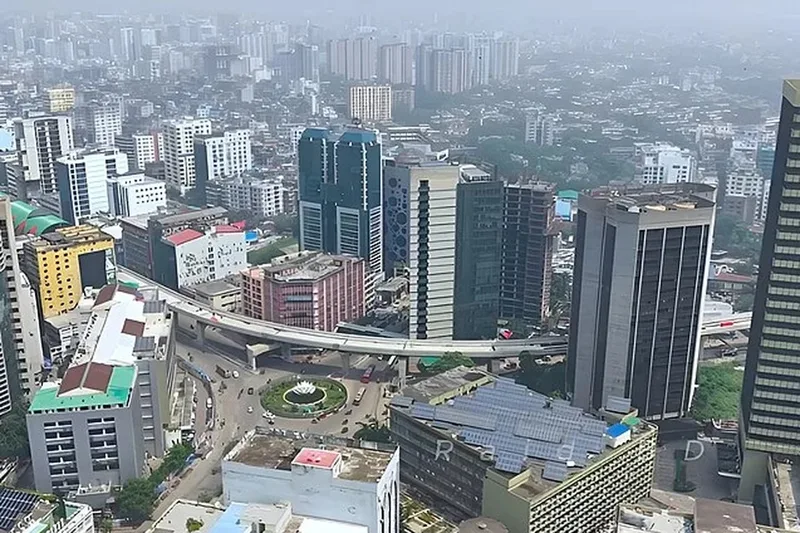
- Photo: BKash Head Office.jpg by Sakib.mahboob, CC BY-SA 4.0 (cropped and resized) ↗
Figures are as reported by the companies or cited outlets as of 22 November 2026. Check the source before quoting. Corrections: let us know through the solution form.