What happened
An i3 battery can become unsuitable for the range expectations of a driver while retaining useful stationary capacity. BMW commissioned its battery storage farm in Leipzig in 2017. Grouping packs at a fixed site created a different job for the asset and a different set of costs, including testing, connections and control equipment.
Electric car batteries lose capacity over time. A battery that no longer meets a driver’s range expectations may still have plenty of capacity for other uses.
In October 2017 BMW officially commissioned a battery storage farm at its Leipzig plant. It was designed to house up to 700 high-voltage batteries from i3 cars.
At launch it held 500 new and used batteries, because most i3s were still on the road only four years after the model’s launch.
BMW said the capacity of 700 batteries was equivalent to an electric range of 100,000 kilometres in an i3.
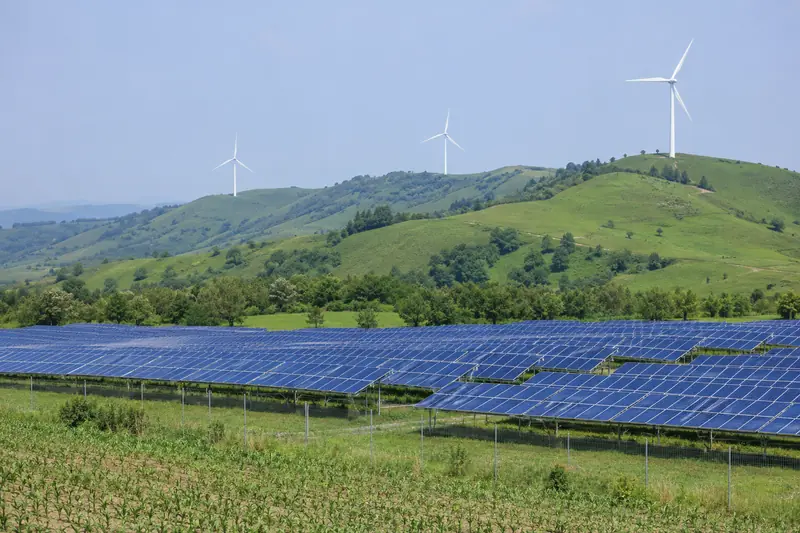
The farm supported two business models. On site, it stored power from Leipzig’s four wind turbines and helped avoid costly peaks in electricity demand, a technique called peak shaving.
Beyond the plant, it could provide services to the electricity grid, helping balance supply and demand.
On the same day, Leipzig celebrated building its 100,000th i3, according to BMW.
Reusing batteries before recycling extends their useful life and can improve the economics of electric vehicles, an approach being explored by car makers and energy companies around the world.
The exhibit shows that the storage farm began with 500 batteries and room for 700. That spare capacity allowed BMW to add more packs as i3s reached the end of their life on the road.
Unit economics matter here. A second-life battery is cheaper than a new one, but it must be tested, connected and managed, which adds costs.
The value of each battery depends on how much capacity it still has and how well it can deliver power when needed.
If those costs are lower than the value of the services the batteries provide, second-life storage can be profitable.
Second-life use also delays the point at which batteries must be recycled, spreading the value of the original investment over a longer period.
That fits the idea of a circular economy, in which products and materials are kept in use for as long as possible.
Investors focused on environmental performance often look at how companies manage the full life cycle of their products, including batteries.
Many car makers and energy companies now run similar projects, from Europe to Asia and North America, as the number of used electric car batteries grows.
The storage farm also helped BMW learn how batteries age, which is useful for designing future packs and for offering warranties to customers.
That knowledge has value beyond the storage farm itself, since battery performance affects the resale value of electric cars.
For buyers, confidence that a battery will keep useful value can make an electric car more attractive.
For managers, the case shows how a company can create a new revenue stream from assets that might otherwise be treated as waste.
It also highlights the need for clear testing standards, so that second-life batteries can be used safely and reliably.
Students can debate whether second-life storage or immediate recycling offers more value, and how that answer might change as battery technology improves.
As the number of electric cars on the road grows worldwide, the supply of used batteries will grow too. Companies that learn early how to test, reuse and recycle them may gain a cost and environmental advantage.
Leipzig was one of the first large-scale tests of that idea by a car maker.
Its results helped shape how the industry thinks about battery value after the car.
Key moments
An i3 pack powers a vehicle
Leipzig stationary battery farm commissioned
Suitable packs can serve fixed-site demand
Source: BMW Group, October 2017.
The trade-offs at the heart of the case
A closer look
A pack can retain enough energy for stationary work while delivering less power than the grid service requires. Test both properties. Then ask how many accepted packs can be committed to a service contract while others are tested or replaced. This turns the Leipzig storage farm into an availability business. The useful sales unit may be a dependable response at a specified time, rather than a count of installed packs. BMW described the installation as accommodating up to 700 second-life i3 batteries. That is a count of packs the site can accommodate, not a guarantee about dispatchable power.
The alternative on the table
For comparison, consider the option to buy new batteries designed solely for stationary storage. The related case “Making wind power part of a factory investment” supplies a useful reference point. BMW incorporated four wind turbines into the Leipzig site used to build its electric i models. Wind power creates variable supply that may make storage useful. It does not make every used battery valuable. Grade packs by usable performance and include integration and replacement before paying for their remaining life.
For your seminar, paper or interview
- Q1
Which storage promise depends on power delivery as well as energy capacity?
- Q2
Which finding in the records on usable capacity and actual dispatch of second-life packs would persuade you to buy new batteries designed solely for stationary storage?
- Q3
Compare this decision with “Making wind power part of a factory investment”. Which difference between the cases would change your recommendation?
- Circular economy
- Second-life assets
- Energy storage
- New business models
How we would approach it
Simplifying Finance’s opinion, offered as a starting point for debate, not as fact or investment advice.
We think the Leipzig storage farm was a smart test of a second life for electric car batteries. Packs that no longer suit a car can still store energy at a fixed site, adding value before recycling. The business case depends on testing, control systems and how much useful capacity the packs retain.
Test each pack
Check energy and power before reuse.
Find several uses
Combine on-site savings with grid services.
Plan for recycling
Recover materials at the end of second life.
What this plan gives up
Second-life batteries are cheaper but less predictable than new ones.
The strongest counter-argument
Some argue new purpose-built storage batteries are more reliable.
Metrics to watch
- Usable capacity per pack
- Revenue from grid services
Propose your solution
Pick a discussion question and set out what you would do, why, and what it would cost. Strong, well-argued answers are reviewed and published below with your first name and programme.
Published solutions
Loading published solutions…
- BMW Group PressClub • BMW Group underlines leading role in electro-mobility ↗
- BMW Group PressClub • Feature: Launch of BMW Battery Storage Farm in Leipzig ↗
- BMW Group • Leipzig at twenty: wind generation and the battery storage farm ↗
- BMW Group PressClub • BMW Group underlines leading role in electro-mobility ↗
- Autovista24 • New battery farm will power production and grid at BMW Leipzig ↗
- CleanTechnica • BMW Group officially commissions battery storage farm Leipzig ↗
- Photo: BMW i3 charging port by Kārlis Dambrāns, CC BY 2.0 (cropped and resized) ↗
Figures are as reported by the companies or cited outlets as of 22 November 2026. Check the source before quoting. Corrections: let us know through the solution form.