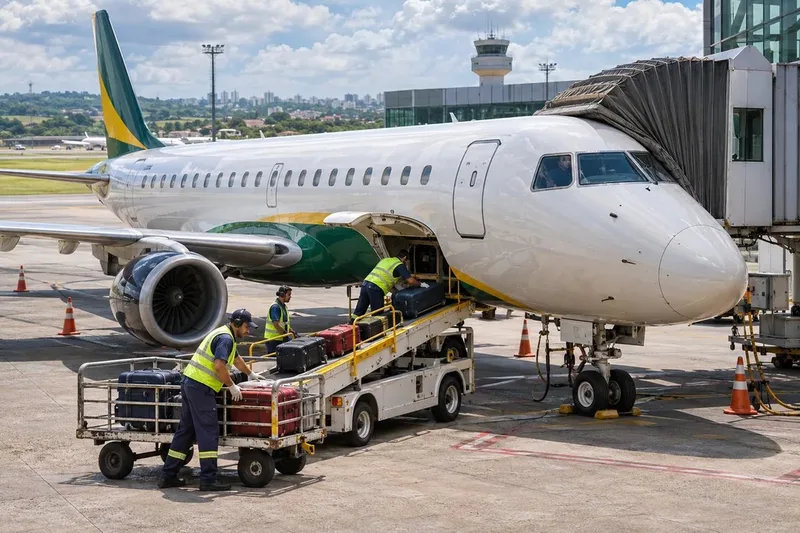
What happened
The combination was announced in 2009. The parties’ July 2011 announcement described commitments agreed with Brazil’s competition authority, CADE. BRF subsequently estimated that the assets and brands subject to sale represented about R$1.7 billion of revenue and approximately 456,000 tonnes of sales on a 2010 basis. These were measures of the operations affected, not proceeds promised for their disposal.
A frozen-food business needs continuity of supply, a reliable cold chain and enough shelf presence to make advertising worthwhile. A brand separated from its plant may struggle to match the texture or availability customers expect. A plant separated from its brand might have to sell spare capacity at commodity prices. A regulator seeking effective rivalry must consider whether the divested bundle can operate as a going concern.
For the merged group, the opportunity cost includes revenue given up and the fixed costs that might remain. A head office can lose a product line without immediately losing the staff or buildings that supported it. Conversely, serving fewer lines might release scarce production hours for more profitable goods. Estimating the change in cash earnings requires separating costs that move with the divestment from costs that stay.
In May 2009 Perdigão agreed to merge with Sadia, which had suffered large losses on currency derivatives during the global financial crisis. The combined company, Brasil Foods or BRF, became one of the world’s largest food companies. But together they held more than 70% of several Brazilian markets, including frozen pizza and processed meats.
CADE’s rapporteur voted to block the deal in June 2011. In July the parties negotiated an agreement, and on 13 July CADE approved it by four votes to one. BRF agreed to sell plants, distribution centres and brands with about 730,000 tonnes of annual capacity, about 80% of Perdigão’s domestic production, preferably to a single buyer. It also suspended the Perdigão brand for three to five years in some products and the Batavo brand in meat products for four years.
The case shows the cost of competition remedies and how regulators try to create a viable rival.
Key moments
Perdigão and Sadia announce the combination.
BRF announces competition commitments.
The combination and associated changes progress through implementation.
BRF agreed to sell assets with about 730,000 tonnes a year of capacity and suspend the Perdigão brand in some categories for three to five years. Sources: Poultry World; Gazeta do Povo; Canal Rural.
The trade-offs at the heart of the case
What has to travel with a brand
Imagine a buyer taking over a food label with strong recognition but without the sales team that secured its supermarket listings. An agreement to use the label does not automatically reserve freezer space. The buyer must negotiate terms, deliver on time and withstand promotional pressure from larger competitors. Assessing the remedy requires looking at transitional services, distribution arrangements and access to working capital even if none of those is prominently advertised on the pack. A second question concerns the denominator used for the divestment. Revenue of affected assets in a historical year measures the gross scale of activity. Some of that activity could disappear during the transfer, and some remaining products might attract former customers. Neither BRF’s lost revenue nor the divestment buyer’s future sales can simply be set equal to the reference-year figure. A price per historical tonne can be an initial diagnostic, but it cannot replace an assessment of future margins and customer retention. A regulator can test the strength of the new competitor by asking supermarket category buyers a concrete question. When a large supplier proposes worse terms, can the store shift an order to the divestment buyer within a commercially relevant period? The answer requires suitable capacity, approved products and reliable delivery. A small but responsive supplier may exert more competitive pressure than a larger trademark that cannot replenish shelves in the week a promotion is scheduled.
For your seminar, paper or interview
- Q1
Which assets besides a brand name enable a credible supermarket supplier?
- Q2
Why does historical remedy revenue differ from both sale proceeds and future revenue?
- Q3
How would a supermarket demonstrate that it has a usable alternative?
- Q4
How would you verify repeat sales at outlets served by the transferred business using information available at the time?
- Q5
Which finding about distribution coverage and contribution after separation costs would most change your recommendation, and why?
- Merger remedies
- Brand suspension
- Market concentration
- Rescue mergers
How we would approach it
Simplifying Finance’s opinion, offered as a starting point for debate, not as fact or investment advice.
For a buyer of the disposed operations, the transition period can be a test of whether stand-alone costs were estimated properly. Shared information systems or logistics may initially be available at a transitional price. Once that service ends the buyer must replace it, renegotiate or change its operating model. Include the cost after transition as well as the apparent first-year benefit. A competitor designed to survive only while its former owner supplies temporary services offers the regulator a less durable solution. Judge compliance and competition separately. Confirm that agreed assets and rights have transferred, then observe whether the new supplier wins normal listings, maintains service and can price independently. If the brand attracts an initial trial but repeat buying disappears, investigate availability alongside quality. Market share alone could conceal a viable local rival in one region and ineffective competition in another.
Offer structural remedies
Sell plants, distribution centres and brands to create a competitor.
Suspend a brand
Stop using Perdigão in concentrated categories for a fixed period.
Sell to one buyer
Package the assets so a single rival could compete nationally.
What this plan gives up
The remedies saved the merger and preserved the strong Sadia brand, but BRF had to give away a large competitor package and temporarily retire part of the Perdigão brand.
The strongest counter-argument
A divestment buyer also needs enough working capital to finance the transition between receiving ingredients and collecting supermarket invoices. The business might have attractive product margins and still miss shipments because it cannot carry sufficient inventory. An assessment of viability should therefore examine the buyer’s funding as well as the physical scope of the remedy. Interim service contracts can help, but dependence on the former owner for an essential task must have a credible end date. From the perspective of the merged group, maintaining trademark discipline can create operational costs. Packaging must identify products correctly and distribution systems must respect any restrictions applying to brands or categories. An aggregate sales plan can obscure a persistent failure affecting one product family. Build a record at the level where the commitment actually applies. Compare results with other categories where the companies faced similar changes in input costs but different remedy obligations. This improves the distinction between market conditions and the effects of separation. A sale announcement cannot establish that a divestment buyer has viable funding. The strongest purchaser is one that can respond to independent customer orders.
Metrics to watch
- BRF market share
- Competitor performance
Propose your solution
Pick a discussion question and set out what you would do, why, and what it would cost. Strong, well-argued answers are reviewed and published below with your first name and programme.
Published solutions
Loading published solutions…
- BRF announces its commitments to CADE (Issuer release via PR Newswire) ↗
- BRF annual filing, historical revenue and sales volumes attributed to the remedy (US SEC EDGAR) ↗
- Poultry World: Antitrust authority in Brazil approves Perdigão-Sadia merger ↗
- The Pig Site: Go-ahead for Brasil Foods-Sadia merger ↗
- Just Food: Brasil Foods shareholders relieved as merger approved ↗
- Image: Simplifying Finance · AI-generated editorial illustration
Figures are as reported by the companies or cited outlets as of 22 November 2026. Check the source before quoting. Corrections: let us know through the solution form.