What happened
Pilgrim’s and several subsidiaries sought Chapter 11 protection in December 2008. Its later filings record that JBS USA bought 64 percent of the common stock outstanding on emergence for US$800 million in cash. This was an investment in the reorganised equity. It was not a market valuation of the old shares before insolvency or a statement of the enterprise value including all debt.
Poultry production cannot be paused and restarted like a software subscription. Feed must be purchased, growers need reliable schedules and a processing plant needs throughput. A disruption in one link can consume liquidity faster than a quarterly earnings statement suggests. Injecting equity can restore confidence in the chain, but it cannot by itself turn an adverse relationship between feed prices and selling prices into a profitable one.
A strategic buyer may command procurement expertise or market access unavailable to a financial sponsor. It could also underestimate local contracting practices and the cost of maintaining supplier trust after restructuring. An improvement in the first year might reflect a more favourable commodity spread or lower interest expense. Compare operating margin before financing with cash generated after replacing and maintaining the assets required for production.
Pilgrim’s Pride, based in Texas, was the largest US chicken producer, with about 23% of the market, when it filed for Chapter 11 bankruptcy on 1 December 2008. It had borrowed heavily to buy Gold Kist in 2007 and was hit by high feed costs and oversupply.
In September 2009 Brazil’s JBS agreed to buy 64% of the reorganised company for US$800 million in cash, implying an equity value of US$1.25 billion. Unusually, creditors were to be paid in full, and existing shareholders kept 36%, worth about US$450 million. JBS said the whole transaction, including repaying debt, was worth US$2.8 billion. Pilgrim’s emerged from bankruptcy on 28 December 2009 and its shares returned to the New York Stock Exchange.
The case shows how a strong buyer can use a bankruptcy to gain control, and why equity value and enterprise value differ.
Key moments
Pilgrim’s seeks Chapter 11 protection.
JBS USA purchases a controlling stake in the reorganised company.
Pilgrim’s filed for Chapter 11 on 1 December 2008 and emerged on 28 December 2009. Sources: Pilgrim’s Pride; NBC News; ABC News.
The trade-offs at the heart of the case
Capital at emergence and credit for tomorrow’s feed
The direct customer of a reorganisation is not just the shareholder who agrees to invest. It is also the supplier deciding whether to ship the next load of feed on ordinary terms. A credible new investor can reassure that supplier before financial ratios have recovered. If the supplier still demands cash on delivery, the company may need a much larger working-capital cushion than its pre-crisis balance sheet suggests. A poultry producer’s feed exposure should be matched to the calendar of sales contracts. A rapid rise in feed costs can compress margins where finished-product prices are fixed for longer. Shorter contracts may allow the price to reset, but customers can switch sources. A standard sensitivity that raises all selling prices and feed costs together misses the loss incurred during the adjustment period. Build a dated schedule of purchases, deliveries and collections before estimating the amount the new equity must absorb. The control purchase can look quite different to a former shareholder and a new one. Former holdings are affected by the reorganisation terms and the issue of fresh shares. The incoming investor measures its claim against the reorganised business and its new obligations. A simple pro rata equity valuation is therefore a way of understanding the issue price, not an estimate of the value creditors surrendered or the historical value destroyed. To value the rescue, identify who supplied fresh money and which risks stayed with each group.
For your seminar, paper or interview
- Q1
How could a change to supplier terms absorb part of the new equity immediately?
- Q2
Which feed-price shock would affect cash before product prices reset?
- Q3
Why is a pro rata post-emergence valuation unrelated to the old peak share price?
- Q4
How would you verify cash available inside the reorganised processor using information available at the time?
- Q5
Which finding about feed-adjusted contribution and working-capital headroom would most change your recommendation, and why?
- Bankruptcy investing
- Plan sponsors
- Equity value vs enterprise value
- Cross-border expansion
How we would approach it
Simplifying Finance’s opinion, offered as a starting point for debate, not as fact or investment advice.
The investment also needs a definition of what counts as recovery. A normalised operating margin, reliable access to supplier credit and sustainable free cash after reinvestment are different milestones. If the new structure generates enough cash to cover operations but cannot maintain the productive assets, it has addressed the immediate liquidity problem while leaving the long-term business unresolved. Setting the milestone before the turnaround helps distinguish a durable rescue from a favourable year in an unstable commodity cycle. Protect working capital and supplier continuity before looking for integration savings. Monitor the spread between feed costs and realised product prices, adjusting for yields and hedges. Faster debt reduction may be attractive after a strong quarter. A board should reserve enough liquidity to withstand a plausible reversal in those spreads without forcing another disruption to a biologically continuous production cycle.
Act as plan sponsor
Fund the reorganisation in exchange for majority ownership.
Pay creditors in full
Make the plan attractive by repaying creditors and leaving old shareholders a stake.
Enter a new market
Use the deal to add chicken to JBS’s beef and pork business.
What this plan gives up
JBS bought control of America’s largest chicken producer at a low price, but it took on a company weakened by debt and volatile feed costs.
The strongest counter-argument
A credit analyst looking at the injection should prepare a short-horizon cash calendar alongside the longer valuation. Feed purchases, payroll, grower payments and receivable collections have different dates. Even a producer with positive annual cash flow can have a week in which essential payments exceed available cash. The loss from interrupting the biological chain may be much larger than the cost of maintaining a prudent revolving facility through that week. A strategic integration plan might propose shifting sales to higher-value customers. Those customers may require new packaging, traceability standards or delivery frequencies. Winning the contract can increase reported revenue and make cash conversion worse until the new collection cycle settles. Review the gross margin and working capital together. The new controlling shareholder should be able to show which improvements are due to its decisions and which arrived because feed prices, loan terms or market demand happened to become more favourable after emergence. New equity belongs to the reorganised capital structure. Suppliers may change their credit terms before customers change their orders.
Metrics to watch
- Pilgrim’s margins
- JBS ownership stake
Propose your solution
Pick a discussion question and set out what you would do, why, and what it would cost. Strong, well-argued answers are reviewed and published below with your first name and programme.
Published solutions
Loading published solutions…
- Pilgrim’s filing on bankruptcy and reorganisation (US SEC EDGAR) ↗
- Pilgrim’s financial reporting on the JBS share purchase (ir.pilgrims.com) ↗
- Pilgrim’s Pride: Completes reorganization ↗
- Pilgrim’s Pride: 2011 Form 10-K (SEC) ↗
- NBC News: Brazilian beef producer to be bigger than Tyson ↗
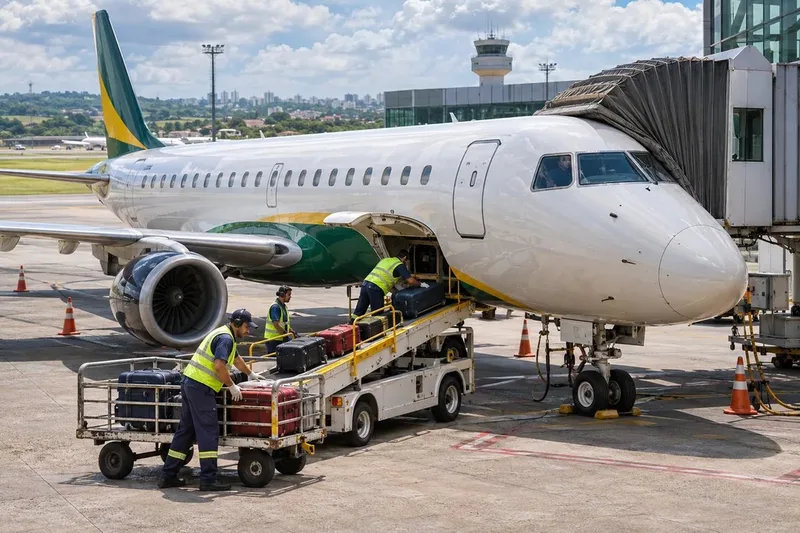
- Image: Simplifying Finance · AI-generated editorial illustration
Figures are as reported by the companies or cited outlets as of 22 November 2026. Check the source before quoting. Corrections: let us know through the solution form.