What happened
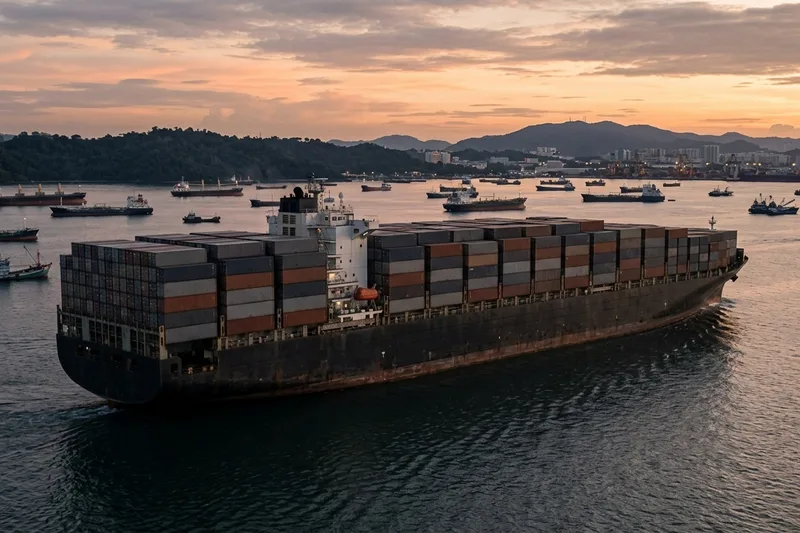
China Aviation Oil (Singapore) Corporation, or CAO, was the overseas arm of China Aviation Oil Holding Company, a state-owned group in Beijing. Based in Singapore, it bought jet fuel on international markets and shipped it to Chinese airports. Because it held a near-monopoly on China’s imports of jet fuel, its business grew rapidly with China’s airline industry. In 2001 it listed on the Singapore Exchange, with the Chinese parent keeping about 60% of the shares.
Its chief executive, Chen Jiulin, was celebrated as a business star. Under his leadership CAO grew from a small, loss-making trading office into a profitable company with a market value that at one point exceeded US$1 billion. He was praised in Singapore and China, and CAO was seen as a model of how Chinese state companies could thrive in an international market.
Buying fuel for a monopoly customer is a steady but low-margin business. To boost profits, CAO began trading oil derivatives on its own account in 2003. At first the trades were modest and profitable. The company sold oil options, collecting premiums from buyers in exchange for promising to pay out if oil prices moved beyond certain levels. This is like writing insurance: the seller earns small, steady income, but faces potentially large losses if prices move sharply.
CAO’s positions effectively bet that oil prices would fall. Instead, in 2004 oil prices rose strongly, reaching record highs in October. As prices climbed, the options CAO had sold moved deeper against it. Rather than closing the positions and accepting losses, the company rolled them forward into later dates and larger volumes, hoping prices would reverse. This is a classic pattern in trading disasters: doubling down on a losing bet instead of cutting it.
The losses created a cash crisis because derivatives counterparties demanded margin, extra collateral to cover the paper losses. By October 2004 CAO could no longer meet these margin calls. Several counterparties closed out their trades, crystallising a realised loss of about US$390 million. CAO did not immediately tell the market. Its directors instead sought help, including from its parent, while the scale of the problem was kept from public investors.
In October 2004, before the losses were disclosed, the Chinese parent sold a block of CAO’s shares to investors through Deutsche Bank, raising roughly US$108 million. Much of the money was lent back to CAO to help meet margin calls. Buyers of those shares did not know about the hidden losses. This later became a central issue in the criminal cases that followed.
On 30 November 2004 CAO announced that it had lost about US$550 million on oil derivatives, roughly equal to its entire market value. Trading in its shares was suspended. It sought protection from creditors in court. Chen Jiulin was suspended as chief executive, and PricewaterhouseCoopers was appointed to investigate. It was the biggest financial scandal in Singapore since Nick Leeson’s trading brought down Barings Bank in 1995.
Investigations found that CAO had a risk management manual with loss limits, but the limits had been breached by hundreds of millions of dollars without being stopped. The board and risk committee did not understand the size of the positions, and reporting to them was inadequate. Experts concluded that the company lacked both a sound trading strategy and effective internal controls.
In March 2006 Chen Jiulin pleaded guilty to six charges, including failing to disclose the losses and deceiving Deutsche Bank in connection with the share sale. He was sentenced to four years and three months in prison and fined. Other executives and directors, including the former finance head and members of the board, were also charged and penalised. The Chinese parent company was fined as well.
CAO survived through a restructuring. Creditors agreed to a scheme of arrangement in which they accepted partial repayment over time. New investors came in: the parent company kept control, while Temasek and BP each took stakes, with BP bringing expertise in fuel supply. CAO resumed trading on the Singapore Exchange in 2006 and gradually rebuilt its business as a jet fuel supplier, this time without speculative trading.
The case remains a standard example in risk management courses around the world. It shows how selling options can look like easy income until a large move occurs, how margin calls turn paper losses into a liquidity crisis, and how a powerful chief executive can override controls. It also raises questions about disclosure: investors who bought shares from the parent were not told about losses that management already knew.
For students of corporate governance, CAO also highlights the challenges of state-owned companies listed abroad. The parent was both the controlling shareholder and a party to the share sale, while independent directors in Singapore struggled to oversee a business run largely by a chief executive with strong political and commercial backing.
Key moments
CAO lists on the Singapore Exchange.
Starts speculative trading in oil options.
Oil hits a record; margin calls cannot be met.
Parent sells CAO shares for about US$108m.
US$550m loss announced; creditor protection sought.
Chen Jiulin sentenced to over four years.
Sources: Risk.net; Al Jazeera; China Daily.
The trade-offs at the heart of the case
Profit vs. risk
Option premiums looked like easy income.
Hope vs. discipline
Rolling losses forward instead of cutting them.
Disclosure vs. rescue
Hiding losses while seeking a rescue.
For your seminar, paper or interview
- Q1
Why did a jet fuel buyer start trading oil options?
- Q2
How did selling options expose CAO to unlimited losses?
- Q3
Why did the risk controls fail?
- Q4
Was the parent company’s share sale fair to buyers?
- Q5
What should boards do to oversee trading activities they do not fully understand?
- Options payoffs and risk
- Margin and liquidity risk
- Internal controls
- Disclosure obligations
How we would approach it
Simplifying Finance’s opinion, offered as a starting point for debate, not as fact or investment advice.
CAO’s collapse was caused less by bad luck than by a lack of discipline. A company with a stable procurement business took on open-ended speculative risk without the controls to manage it. The decision to hide the losses while selling shares to new investors turned a trading loss into a scandal.
Ban speculation
Limit derivatives to hedging real fuel purchases.
Enforce limits
Make loss limits automatic, not discretionary.
Independent risk
Give the risk function a direct line to the board.
Disclose early
Report material losses immediately to the market.
What this plan gives up
Strict hedging-only rules mean giving up trading profits in good years.
The strongest counter-argument
Some argue that trading expertise can add value for commodity buyers, and that the failure was in execution rather than in trading itself.
Metrics to watch
- Size of open derivatives positions
- Margin requirements
- Breaches of trading limits
- Board risk committee reporting
- Related-party share sales
Propose your solution
Pick a discussion question and set out what you would do, why, and what it would cost. Strong, well-argued answers are reviewed and published below with your first name and programme.
Published solutions
Loading published solutions…
- Risk.net: China Aviation Oil suffers $550 million derivatives loss ↗
- Risk.net: A wrong-way bet ↗
- China Daily: Former CAO head sentenced ↗
- Al Jazeera: China oil firm runs up huge loss ↗
Figures are as reported by the companies or cited outlets as of 22 November 2026. Check the source before quoting. Corrections: let us know through the solution form.