What happened
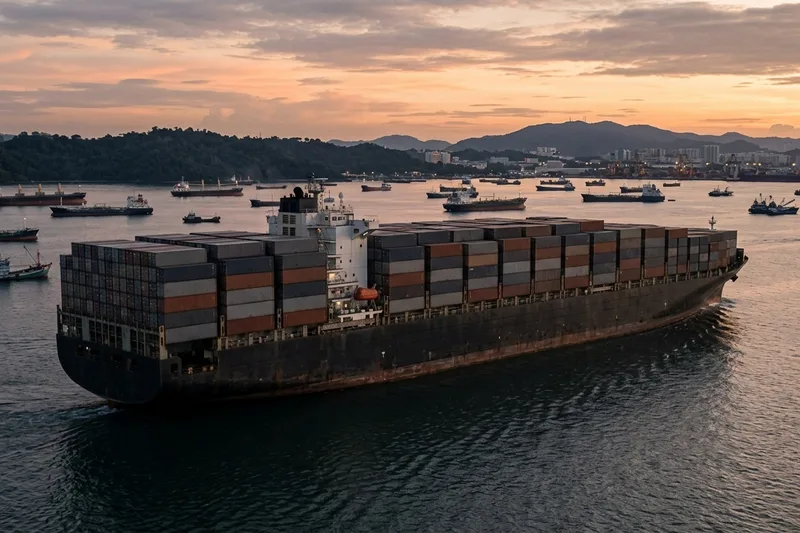
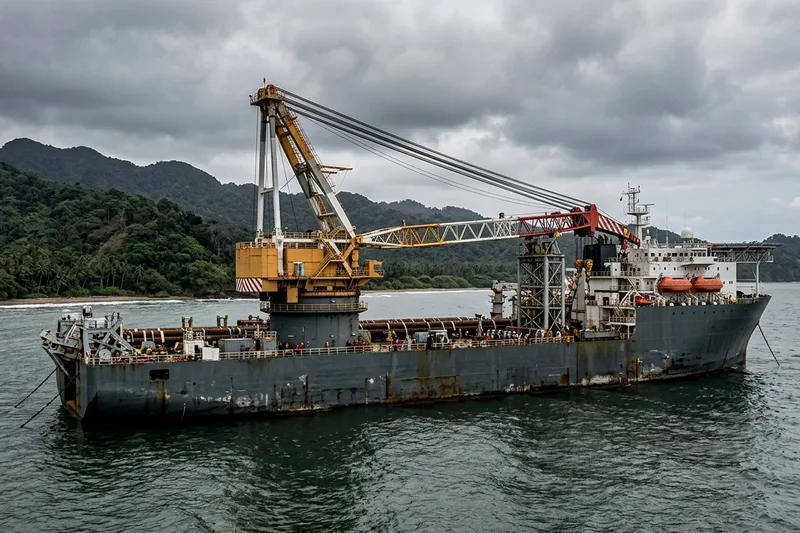
Keppel Offshore & Marine, or Keppel O&M, was the rig-building arm of Keppel Corporation, one of Singapore’s largest conglomerates, partly owned by Temasek. Its shipyards in Singapore and around the world built oil drilling rigs, floating production vessels and other offshore equipment. In the 2000s it became one of the two dominant rig builders globally, alongside Sembcorp Marine.
Brazil was one of its most important markets. After huge offshore oil discoveries in the mid-2000s, the state oil company Petrobras launched a massive investment programme, ordering rigs and production platforms worth tens of billions of dollars. Keppel had a Brazilian subsidiary, Keppel FELS Brasil, and a shipyard in Brazil, and it won a string of contracts with Petrobras and with Sete Brasil, a company set up to own drilling rigs leased to Petrobras.
In 2014 Brazilian prosecutors began an investigation known as Operation Car Wash, or Lava Jato. It uncovered a vast scheme in which construction and engineering companies paid bribes to Petrobras executives and politicians, often by inflating contracts and channelling money through intermediaries. Dozens of politicians and business leaders were charged, and the scandal shook Brazilian politics.
Keppel’s name emerged through its long-time agent in Brazil, Zwi Skornicki. He was arrested and, as part of a plea deal, told investigators that he had paid bribes on behalf of rig builders, including Keppel. Brazilian prosecutors alleged that commissions paid to him were partly passed on to Petrobras officials and to the then ruling Workers’ Party.
According to the US Department of Justice, between at least 2001 and 2014 Keppel O&M paid about US$55 million in bribes to officials at Petrobras and to the governing party in Brazil, in order to win 13 contracts with Petrobras and Sete Brasil. The bribes were concealed as outsized commissions to the intermediary under the cover of legitimate consulting agreements. Keppel said the payments had been made with the knowledge or approval of former senior executives of Keppel O&M.
Because Keppel O&M had a US subsidiary and used the US financial system, US authorities had jurisdiction under the Foreign Corrupt Practices Act. In December 2017 Keppel O&M reached a global resolution with authorities in the United States, Brazil and Singapore. It agreed to pay total criminal penalties of about US$422 million. The money was divided roughly half to Brazil and a quarter each to the United States and Singapore.
Under the deal, Keppel O&M entered a deferred prosecution agreement with the US Department of Justice, meaning charges would be dropped if it complied with conditions such as improving its compliance programme for three years. Its US subsidiary pleaded guilty. Keppel FELS Brasil signed a leniency agreement with Brazilian prosecutors. A former senior member of Keppel O&M’s legal department also pleaded guilty in the United States.
In Singapore, the Corrupt Practices Investigation Bureau issued Keppel O&M a conditional warning instead of prosecuting the company, as part of the global resolution. It was the first coordinated anti-bribery settlement between the United States and Singapore. However, the decision in January 2023 to issue stern warnings rather than charges against six former Keppel O&M employees drew public criticism and questions in parliament about whether Singapore was being too lenient.
The bribery case added to a difficult period for Keppel O&M. The collapse of oil prices from 2014, combined with Sete Brasil’s bankruptcy in 2016, left it with cancelled orders and unfinished rigs. Keppel took large impairments on its offshore and marine business over several years. Eventually Keppel decided to exit rig building altogether, merging Keppel O&M with Sembcorp Marine to create Seatrium in 2023.
The case shows the risks that companies face when they rely on agents in countries where corruption is common. Agents can open doors and navigate bureaucracy, but they can also hide bribes. Companies with strong reputations at home can suffer severe damage when misconduct by intermediaries comes to light abroad.
It also highlights the growing reach of anti-corruption laws. Foreign companies that list in the United States, use US banks or have US subsidiaries can be prosecuted under US law for bribes paid elsewhere. Cooperation among prosecutors in different countries has made it harder for companies to escape scrutiny.
For boards, the Keppel case raises questions about oversight of overseas operations, the design of compliance systems and accountability for individual executives. It also asks how a company that was part-owned by the state, and seen as a national champion, should be held to account when its employees break the law abroad.
Key moments
Bribery scheme in Brazil begins, per US authorities.
Brazil’s Operation Car Wash investigation starts.
Sete Brasil files for bankruptcy protection.
US$422m global resolution announced.
Stern warnings for six former Keppel O&M employees.
Keppel O&M merges with Sembcorp Marine into Seatrium.
Sources: Straits Times via CPIB; US Department of Justice.
The trade-offs at the heart of the case
Growth vs. integrity
Big contracts came through a corrupt agent.
Leniency vs. deterrence
Warnings instead of prosecutions drew criticism.
Head office vs. local units
Distant oversight of overseas operations.
For your seminar, paper or interview
- Q1
Why do companies use intermediaries in markets like Brazil, and what are the risks?
- Q2
How could Keppel’s board have detected the bribery earlier?
- Q3
Was Singapore’s response to the case strong enough?
- Q4
How did US law reach a Singapore company’s conduct in Brazil?
- Q5
What should a compliance programme for agents include?
- Anti-corruption compliance
- Agency risk
- Cross-border enforcement
- Corporate reputation
How we would approach it
Simplifying Finance’s opinion, offered as a starting point for debate, not as fact or investment advice.
Keppel’s case shows that a national champion’s reputation cannot protect it from misconduct by its agents. The settlement was substantial, but the lighter treatment of individual executives weakened its deterrent effect. Companies need controls that follow the money through intermediaries.
Vet agents rigorously
Check ownership, fees and track record of every intermediary.
Cap commissions
Benchmark agent fees and require justification.
Hold individuals to account
Link pay and careers to compliance outcomes.
Audit overseas units
Run independent audits of high-risk markets.
What this plan gives up
Tight controls on agents can slow deals and cost contracts in markets where rivals take fewer precautions.
The strongest counter-argument
Some argue that companies cannot police every payment by independent agents, and that heavy penalties punish shareholders for the acts of a few executives.
Metrics to watch
- Agent and consultant fees
- Whistleblower reports
- Regulatory actions in high-risk markets
- Board compliance reporting
- Penalties on individuals
Propose your solution
Pick a discussion question and set out what you would do, why, and what it would cost. Strong, well-argued answers are reviewed and published below with your first name and programme.
Published solutions
Loading published solutions…
- US DOJ: Keppel Offshore & Marine agrees to pay $422 million ↗
- CPIB: Conditional warning issued to Keppel Offshore & Marine ↗
- Seatrade Maritime: Keppel O&M to pay over $422m ↗
- Straits Times via CPIB: Keppel O&M to pay US$422m in fines ↗
Figures are as reported by the companies or cited outlets as of 22 November 2026. Check the source before quoting. Corrections: let us know through the solution form.