What happened
Canadian National Railway was created by the federal government in 1919 from bankrupt private railways and privatised in 1995. It became one of North America’s most efficient railways, with a unique network linking ports on the Atlantic, the Pacific and, through its US lines, the Gulf of Mexico.
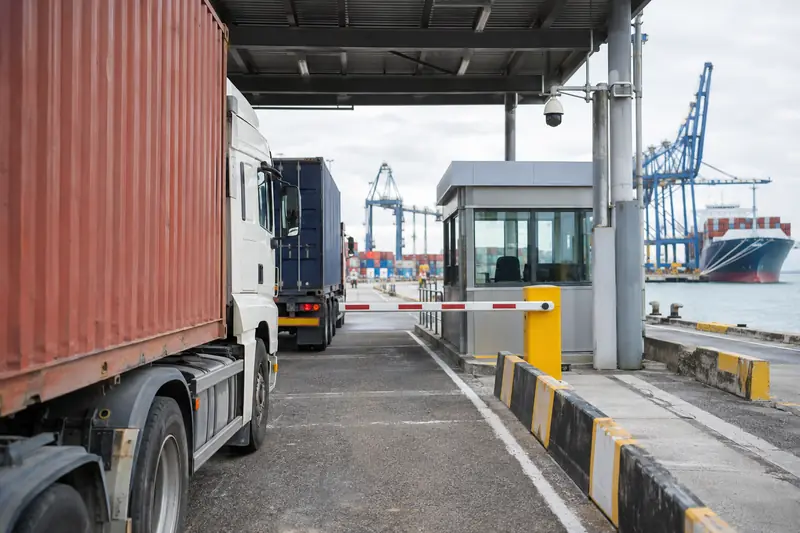
CN carries grain, potash, coal, oil, lumber, cars and containers. Its intermodal business moves containers from ports such as Prince Rupert and Vancouver to inland markets in Canada and the US Midwest, competing with US ports for Asian trade.
2024 was difficult. In August a labour dispute with the Teamsters Canada Rail Conference led to a brief lockout that shut down CN and CPKC simultaneously, until the federal government ordered binding arbitration. Months of uncertainty before the stoppage pushed shippers to divert US-bound cargo away from Canadian ports. Port labour disputes in British Columbia and Quebec followed in the fall. CEO Tracy Robinson said CN had been ‘resourced for more volumes than we handled’.
In 2025 US tariffs on Canadian goods, including steel, aluminium, lumber and autos, added new pressure. About 32% of CN’s volumes were tied to Canada–US shipments. CN estimated tariffs and trade uncertainty cut its 2025 revenue by more than C$350 million. It withdrew its 2024–2026 financial outlook mid-year.
Even so, CN improved productivity. Full-year 2025 revenue rose 2% to C$17.3 billion, operating income rose about 5% and fourth-quarter earnings per share rose 12%. It bought back shares and raised its dividend, while expecting ‘flattish’ volumes in 2026 if tariffs remained.
The case explores how infrastructure businesses with high fixed costs respond to demand shocks, and how labour relations and trade policy shape their prospects.
Railways have high operating leverage: most costs, such as track, locomotives and crews, are fixed in the short term. When volumes fall, profits drop sharply; when they recover, profits jump. CN’s response to weak volumes was to cut costs per unit of work, measured by operating expenses per gross ton-mile, which fell 4% in the fourth quarter of 2025.
Labour relations in Canadian rail are sensitive because a stoppage can halt much of the country’s exports within days. Governments have repeatedly intervened to end disputes, which critics say weakens bargaining incentives on both sides. Shippers, especially grain farmers and potash miners, lobby hard for reliable service.
Competition with CPKC, which has a direct route into Mexico, and with trucks and US railways also shapes CN’s strategy. The proposed Union Pacific–Norfolk Southern merger could create a giant US rival and change interline relationships.
A useful measure for railways is the operating ratio: operating expenses as a share of revenue. A lower ratio means a more efficient railway. CN has historically been among the best in North America, and its 2025 operating income of about C$6.6 billion on C$17.3 billion of revenue reflects that discipline even in a weak year.
CN also returns a large share of its cash to shareholders. In the third quarter of 2025 alone it repurchased close to 8 million shares for about C$1 billion, while keeping debt at roughly 2.5 times EBITDA. Buybacks support earnings per share when volumes are flat, but they also reduce the cash cushion available if a downturn deepens.
For investors around the world, CN is a reminder that even ‘toll-road’ infrastructure businesses are exposed to politics: trade rules, labour law and government intervention can shift results as much as the economy.
Key moments
CN formed by the federal government.
Privatised.
Acquires Illinois Central and Wisconsin Central.
Lockout shuts down Canadian rail freight.
Tariffs cut revenue by over C$350m; outlook withdrawn.
Volumes expected ‘flattish’.
Source: CN 2025 annual report.
The trade-offs at the heart of the case
Fixed costs vs. volatile demand
High operating leverage magnifies shocks.
Labour peace vs. cost control
Efficiency drives can provoke disputes.
Trade dependence vs. diversification
Cross-border traffic is valuable but exposed to tariffs.
For your seminar, paper or interview
- Q1
Why are railways so sensitive to changes in volume?
- Q2
How did the 2024 lockout affect CN beyond the days of stoppage?
- Q3
How should CN respond to US tariffs?
- Q4
Should governments intervene in rail labour disputes?
- Q5
How does CN compete with CPKC?
- Operating leverage
- Industrial relations
- Trade policy risk
- Network strategy
How we would approach it
Simplifying Finance’s opinion, offered as a starting point for debate, not as fact or investment advice.
CN’s network is a durable asset, but its earnings depend on trade flows it cannot control. It should keep improving productivity, diversify traffic toward domestic and non-US export markets and invest in labour relations to prevent future shutdowns.
Grow non-US exports
Expand traffic to Asia through Prince Rupert and Vancouver.
Flex resources
Match crews and locomotives quickly to demand changes.
Invest in labour relations
Negotiate longer agreements with scheduling improvements.
Protect the balance sheet
Keep leverage moderate to fund investment through downturns.
What this plan gives up
Flexible staffing can strain relations with workers, and diversification takes years.
The strongest counter-argument
Some argue CN should invest heavily now in cross-border capacity, because trade tensions will pass and North American integration will continue.
Metrics to watch
- Revenue ton-miles
- Operating ratio
- Cross-border volumes
- Labour agreements
- Port throughput
Propose your solution
Pick a discussion question and set out what you would do, why, and what it would cost. Strong, well-argued answers are reviewed and published below with your first name and programme.
Published solutions
Loading published solutions…
- CN: Fourth quarter and year-end 2025 results ↗
- BNN Bloomberg: Tariffs take $350M bite out of CN revenues ↗
- FreightWaves: CN profits dip after port and weather disruptions ↗
- CN: 2025 annual report ↗
Figures are as reported by the companies or cited outlets as of 22 November 2026. Check the source before quoting. Corrections: let us know through the solution form.