What happened
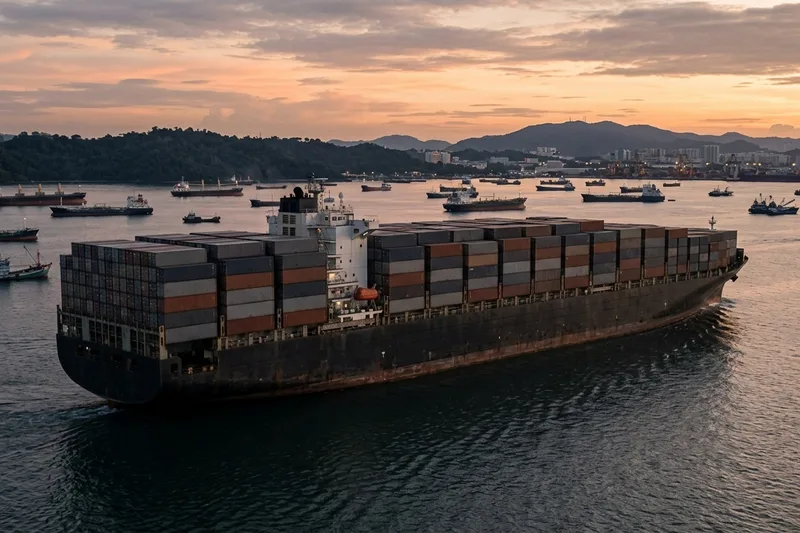
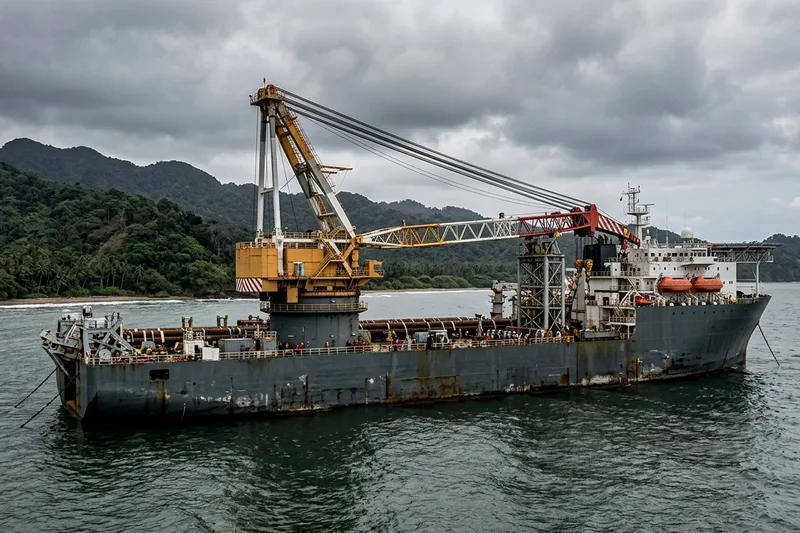
Ezra Holdings was founded in Singapore in 1999 and grew quickly during the oil boom of the 2000s. It owned and operated offshore support vessels, which carry supplies and crews to oil platforms, and built a subsea business that installed pipelines and equipment on the seabed. It operated under the EMAS brand and had several companies listed in Singapore, including EMAS Offshore and the shipbuilder Triyards.
In 2016 Ezra combined its subsea business with Japanese partners to form EMAS Chiyoda Subsea. Ezra held 40%, engineering company Chiyoda held 35% and shipping group Nippon Yusen, or NYK, held 25%. The joint venture won large contracts, including a share of a US$1.6 billion project for Saudi Aramco’s Hasbah offshore gas field with India’s Larsen & Toubro.
The oil price collapse that began in 2014 hit offshore service companies hard. Oil companies cut spending and delayed projects, demand for vessels collapsed and day rates fell sharply. Companies that had borrowed to build fleets were left with idle ships and heavy debts. Several Singapore firms, including Swiber and Swissco, entered court-supervised restructuring in 2016.
Ezra struggled with falling revenue, losses and rising debt. Its share price fell about 98% over three years. A key problem was its guarantees for EMAS Chiyoda Subsea. Ezra had guaranteed many of the venture’s obligations, including payments for chartered vessels, so if the venture failed, creditors could come after Ezra.
On 27 February 2017 EMAS Chiyoda Subsea filed for Chapter 11 bankruptcy protection in Houston, Texas, saying it suffered from weak demand for subsea work and tight credit. It owed creditors about US$966 million. Ezra warned that it faced an immediate going-concern issue because it was a guarantor for about US$900 million of the venture’s liabilities, and that the venture’s bankruptcy did not deal with its charter obligations. Ezra also said it might write down its investment in the venture by about US$170 million.
Creditors began making claims and statutory demands against Ezra in Singapore. On 18 March 2017 Ezra itself filed for Chapter 11 bankruptcy protection in New York, along with two subsidiaries. Its total debts were estimated at up to US$2 billion. Its largest unsecured creditors were Singapore’s three main banks: DBS with claims of about US$281 million, OCBC with about US$207 million and UOB with about US$23 million. Bondholders held S$150 million of notes.
Choosing a US court was unusual for a Singapore company. Chapter 11 is attractive because it provides an automatic, worldwide stay on creditor actions, allows the company to keep running its business while restructuring, and offers a well-tested process with flexible tools. At the time, Singapore’s own restructuring laws were more limited. The Singapore High Court recognised the protection by granting stay orders for the joint venture’s Singapore subsidiaries.
Ezra’s case contributed to a debate in Singapore about modernising its insolvency laws. In March 2017 parliament passed amendments to the Companies Act, introducing features similar to Chapter 11, such as wider moratoriums, rescue financing with priority and the ability to cram down dissenting creditors. Singapore aimed to become a regional centre for debt restructuring rather than losing cases to US courts.
For bondholders and unsecured creditors, the outlook was bleak. Analysts expected recoveries of only a few cents on the dollar. Ezra’s assets were mostly vessels with depressed values and stakes in struggling subsidiaries. Its listed subsidiaries faced their own problems, with EMAS Offshore seeking extensions from its banks.
The joint venture partners also faced losses. Chiyoda and NYK had invested in EMAS Chiyoda Subsea expecting to benefit from Ezra’s experience and Asian relationships. Instead, the venture collapsed within about a year of its creation. The case raised questions about due diligence in joint ventures and the risks of guarantees.
Ezra’s failure is part of the broader story of Singapore’s offshore and marine sector after 2014, when dozens of companies restructured or failed and local banks wrote off large loans. It shows how leverage, guarantees and cyclical demand can combine to destroy a business quickly.
For students, the case is useful for analysing cross-border insolvency, the hidden risks of guarantees and off-balance-sheet obligations, and how legal systems compete to attract restructuring cases.
Key moments
Ezra Holdings founded in Singapore.
Oil prices begin to collapse.
EMAS Chiyoda Subsea formed with Chiyoda and NYK.
EMAS Chiyoda Subsea files Chapter 11 in Houston.
Singapore amends Companies Act for restructuring.
Ezra files Chapter 11 in New York.
Sources: Bloomberg via Yahoo Finance; Seatrade Maritime; The Star.
The trade-offs at the heart of the case
Growth vs. guarantees
Guarantees for a venture became Ezra’s undoing.
Home vs. foreign courts
A Singapore firm chose US bankruptcy.
Banks vs. bondholders
Secured lenders ranked ahead of note holders.
For your seminar, paper or interview
- Q1
Why did Ezra guarantee the debts of its joint venture?
- Q2
Why did Ezra file for bankruptcy in the United States rather than Singapore?
- Q3
How did the oil crash affect offshore service companies?
- Q4
What did Singapore change in its insolvency laws, and why?
- Q5
What should joint venture partners check before investing?
- Cross-border insolvency
- Guarantees and contingent liabilities
- Joint venture structuring
- Industry cyclicality
How we would approach it
Simplifying Finance’s opinion, offered as a starting point for debate, not as fact or investment advice.
Ezra failed because it combined heavy leverage with large guarantees in a highly cyclical industry. Its choice of a US court exposed weaknesses in Singapore’s restructuring regime, which Singapore has since improved. Investors and partners should treat guarantees as real debt.
Disclose guarantees
Report contingent liabilities clearly to investors.
Limit guarantees
Cap support for joint ventures.
Match debt to cycles
Use less leverage in cyclical businesses.
Restructure early
Engage creditors before liquidity runs out.
What this plan gives up
Limiting guarantees can make it harder to win large contracts or attract partners.
The strongest counter-argument
Some argue that the oil crash was so severe that even well-managed offshore firms failed, so Ezra’s structure mattered less than the market.
Metrics to watch
- Offshore vessel day rates
- Contingent liabilities in filings
- Restructuring cases in Singapore courts
- Bank provisions for offshore loans
- Bond recovery rates
Propose your solution
Pick a discussion question and set out what you would do, why, and what it would cost. Strong, well-argued answers are reviewed and published below with your first name and programme.
Published solutions
Loading published solutions…
- Bloomberg: Ezra files for US bankruptcy ↗
- Seatrade Maritime: Ezra flags $900m exposure as guarantor ↗
- The Star: What lies ahead for Ezra ↗
- HFW: EMAS and Ezra Holdings Chapter 11 bankruptcy ↗
Figures are as reported by the companies or cited outlets as of 22 November 2026. Check the source before quoting. Corrections: let us know through the solution form.