What happened
Visteon was spun off from Ford in 2000 as a separate parts supplier. Five years later it still relied on Ford for about 70 percent of its revenue, Reuters reported.
In September 2005 the two companies agreed a restructuring. Ford said it would transfer 23 Visteon plants and facilities in the United States and Mexico to a new temporary business managed by Ford, according to Ford’s SEC filing.
The facilities included 17 plants and six offices and other sites, Wikipedia notes. The new company was called Automotive Components Holdings, and its purpose was to prepare most of the operations for sale.
Ford said it would spend up to $1.15 billion on the deal, Reuters reported, allowing Visteon to unload unprofitable plants and about 17,400 highly paid employees.
The deal reshaped Visteon. Reuters said Visteon’s revenue would fall from $18.7 billion in 2004 to about $11.4 billion, with Ford’s share falling from about 70 percent to about 50 percent.
The affected plants employed about 25,000 workers, of whom 5,000 would be cut, Autoblog reported.
Ford explained the move as a way to improve its cost structure while protecting the supply of components, according to GlobeSt, which quoted Ford executive Al Ver.
Analysts saw the deal differently. A Fitch Ratings director called it a clear positive for Visteon, while Reuters reported that the agreement was viewed negatively for Ford.
The exhibit shows how much the 2005 deal shrank Visteon and reduced its reliance on Ford.
Supply chains carry risk when one supplier provides a large share of critical parts.
Spinning off a supplier can sharpen focus, but only if the supplier can win other customers.
Provisions are amounts set aside for expected future costs, such as supporting a struggling supplier.
Labour agreements made the plants costly, which affected both companies’ choices.
Many carmakers spun off parts businesses around the same time, with mixed results.
Taking plants back is often a short-term fix while new owners are found.
Students can ask how a company should manage risk when it depends heavily on one supplier.
Key concept: supply chains. A supply chain is the network of suppliers, factories, transport links and distributors that turns raw materials into a finished product in a customer’s hands. Decisions about who supplies what, where parts are made and how much stock to hold affect cost, speed and resilience.
A lean chain with few suppliers and little stock is cheap to run but vulnerable to disruption, while a chain with backup suppliers and buffer stock costs more but recovers faster from shocks. Car makers worldwide have spent the past decade rebalancing that trade-off.
Key concept: provisions and impairments. When a company expects to lose value on an asset or to pay a future cost, accounting rules require it to recognise that loss in advance. An impairment writes down an asset’s value; a provision sets aside money for a likely future payment.
These estimates rely on management judgement, so analysts read the notes to the accounts to see what assumptions lie behind them.
Key concept: opportunity cost. Opportunity cost is the value of the best alternative given up when making a choice. Money and time spent on one project cannot be spent on another.
Good decisions compare options against each other, not just against doing nothing.
Key concept: risk and return. In business and investing, higher potential returns usually come with higher risk. Entering a new market or launching a new kind of product can bring large rewards, but the chance of failure is also greater.
Managers weigh the size of the possible gain against the likelihood and cost of failure, and they often reduce risk by testing ideas on a small scale before committing large sums.
Key concept: unit economics. Unit economics looks at the revenue and costs linked to a single unit, such as one car or one customer. If each unit earns more than it costs to make and sell, growth adds profit; if not, growth adds losses.
Fixed costs such as development and tooling are spread across all units, so the cost per unit falls as volume rises. That is why low-volume products need high prices, and why volume matters so much in the car industry.
Key concept: economic moats. An economic moat is a lasting advantage that protects a company’s profits from competitors, much as a moat protects a castle. Sources include strong brands, patents, cost advantages, networks and high switching costs for customers.
Key moments
Visteon separated from Ford
Parties negotiate restructuring framework
Selected component operations return towards Ford
Source: Reuters via NZ Herald.
The trade-offs at the heart of the case
The alternative on the table
For comparison, consider the option to procure replacement components immediately from unrelated suppliers. The related case “How much of a car should one factory make?” supplies a useful reference point. Ford’s Rouge complex linked raw-material handling, processing and vehicle manufacture. Rouge sought security through ownership. Visteon shows the difficulty of replacing capability built around one buyer. Include the time to move tooling and validate a new source in any outside bid.
For your seminar, paper or interview
- Q1
Who controls a vital piece of supplier tooling during a Visteon disruption?
- Q2
Which finding in the records on costs still borne by Ford under the revised supply arrangement would persuade you to procure replacement components immediately from unrelated suppliers?
- Q3
Compare this decision with “How much of a car should one factory make”. Which difference between the cases would change your recommendation?
- Spin-offs
- Supplier dependence
- Restructuring
- Make or buy
How we would approach it
Simplifying Finance’s opinion, offered as a starting point for debate, not as fact or investment advice.
We think the Visteon story shows that spinning off a supplier does not end dependence on it. Ford still relied on Visteon for many parts, so when Visteon struggled Ford had to step back in to protect its own supply. Separation works best when the supplier can win enough business from others to stand on its own.
Test independence early
Check whether a spun-off supplier can win other customers.
Protect critical parts
Keep backup sources for key components.
Plan for a second deal
Budget for support if the supplier struggles.
What this plan gives up
A spin-off can sharpen focus but leaves the parent exposed to the supplier’s problems.
The strongest counter-argument
Some argue Ford should have restructured the plants before spinning them off.
Metrics to watch
- Share of parts from one supplier
- Cost of supplier support
Propose your solution
Pick a discussion question and set out what you would do, why, and what it would cost. Strong, well-argued answers are reviewed and published below with your first name and programme.
Published solutions
Loading published solutions…
- US Securities and Exchange Commission • Corporate filing — What happened when a supplier separation needed a second agreement ↗
- US Securities and Exchange Commission • ITEM 7. MANAGEMENT’S DISCUSSION AND ANALYSIS OF FINANCIAL CONDITION AND RESULTS OF OPERATIONS ↗
- US Securities and Exchange Commission • VISTEON CORPORATION AND SUBSIDIARIES ↗
- SEC • Ford Form 8-K on Visteon agreements (2005) ↗
- NZ Herald (Reuters) • Visteon to cut plants and workers in deal with Ford ↗
- Autoblog • Ford takes back Visteon plants ↗
- Wikipedia • Visteon ↗
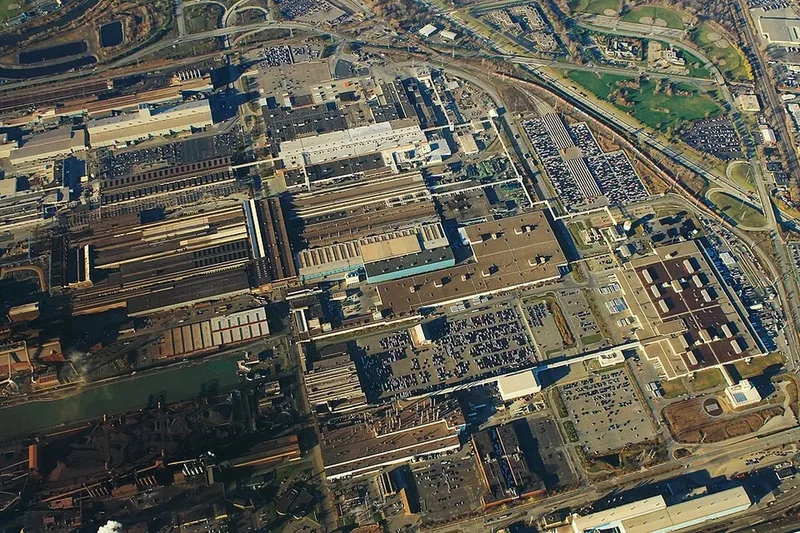
- Photo: Visteon Corporate Campus by Dwight Burdette, CC BY 3.0 (cropped and resized) ↗
Figures are as reported by the companies or cited outlets as of 22 November 2026. Check the source before quoting. Corrections: let us know through the solution form.