What happened
Ford’s Rouge complex linked raw-material handling, processing and vehicle manufacture. Bringing stages together reduced dependence on outside deliveries and allowed management to coordinate materials through the site. It also placed more kinds of industrial risk on Ford’s own balance sheet. A slowdown in final vehicle orders could travel back into operations that were costly to idle.
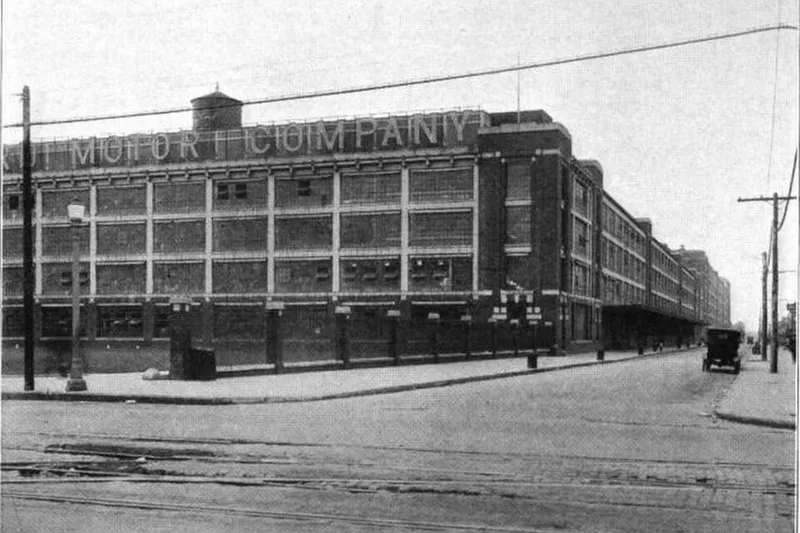
Ford built the Rouge complex in Dearborn, Michigan, between 1917 and 1928. When it was finished, it was the largest integrated factory in the world.
The aim was to turn raw materials into finished cars on one site. The Henry Ford describes how the Rouge turned coal, iron ore, limestone, rubber and sand into iron, steel, tires, glass and complete vehicles.
The scale was enormous. The Henry Ford says that at its peak in the 1930s the Rouge employed more than 100,000 workers, and the Detroit Historical Society says it covered about 2,000 acres.
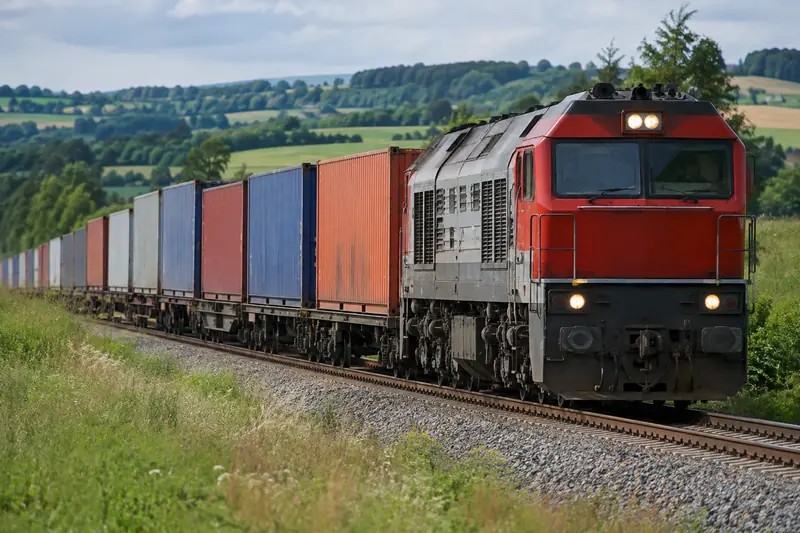
The site had its own transport. Ford employees maintained 100 miles of railroad track inside the factory grounds, according to The Henry Ford, and at its 1930s peak this was one of the largest private rail operations in the world.
The foundry alone covered 30 acres and was, at its start, the largest in the world, according to The Henry Ford. Steelmaking furnaces and rolling mills were added in 1926.
The complex was planned to produce around 4,000 cars a day at its height, The Henry Ford reports. The 1928 Model A was the first car built entirely at the Rouge.
Integration later gave way to specialisation. In 1989 Ford sold the steel operations to Rouge Steel, giving up the river frontage and docks and about 45 percent of the original 2,000 acres, according to The Henry Ford.
The Rouge is still in use. As of 2018 the Detroit Historical Society said the plant sat on 600 acres with about 6,000 employees, and it remains Ford’s single largest industrial complex.
The exhibit shows the scale of the Rouge at its peak, with 100,000 workers and thousands of cars a day.
Vertical integration means owning several stages of the supply chain, from raw materials to finished products.
It can secure supply and reduce dependence on outside firms, which mattered when suppliers could not keep up with Ford’s volume.
But integration also ties up large amounts of capital in plants such as steel mills and glass works.
If car demand falls, those upstream plants also sit idle, so risk spreads through the whole chain.
Most carmakers today buy most of their parts from specialist suppliers, keeping only key stages in-house.
Electric vehicles have revived interest in integration, as some makers now produce their own batteries and chips.
Students can ask which stages of a supply chain are worth owning and which are better bought from others.
Key concept: supply chains. A supply chain is the network of suppliers, factories, transport links and distributors that turns raw materials into a finished product in a customer’s hands. Decisions about who supplies what, where parts are made and how much stock to hold affect cost, speed and resilience.
A lean chain with few suppliers and little stock is cheap to run but vulnerable to disruption, while a chain with backup suppliers and buffer stock costs more but recovers faster from shocks. Car makers worldwide have spent the past decade rebalancing that trade-off.
Key concept: capital versus operating spending. Capital expenditure, or capex, buys long-lived assets such as factories, machines and tooling; its cost is spread over many years through depreciation. Operating expenditure, or opex, covers day-to-day costs such as wages, energy and materials.
The distinction matters because capex commits a company for years. Once a plant or production line is built, it must be used at high volume to earn back its cost, so capex decisions are among the most important a manager makes.
Key concept: opportunity cost. Opportunity cost is the value of the best alternative given up when making a choice. Money and time spent on one project cannot be spent on another.
Key moments
Ford develops the Rouge site
Successive manufacturing stages are brought together
Material supply and assembly become interdependent
Sources: The Henry Ford; Detroit Historical Society.
The trade-offs at the heart of the case
A closer look
A casting department with an apparent low unit cost may quietly depend on the rest of the Rouge complex taking everything it produces. Give it the external alternative of selling castings to other customers or buying them to cover a shortfall. This exposes the value of flexibility sacrificed by integration. Rail and material-handling savings belong in the calculation alongside inventory created when adjoining processes run at different speeds.
The alternative on the table
For comparison, consider the option to buy steel and components under long-term supply contracts. The related case “What happened when a supplier separation needed a second agreement?” supplies a useful reference point. Ford separated Visteon in 2000. Visteon shows that a separate legal entity can remain dependent on Ford. At the Rouge, internal ownership still could not eliminate fluctuations in demand for the finished product.
For your seminar, paper or interview
- Q1
How should the Rouge price flexibility lost by bringing successive processes under one roof?
- Q2
Which finding in the records on delivered input cost and capital tied up across the complex would persuade you to buy steel and components under long-term supply contracts?
- Q3
Compare this decision with “What happened when a supplier separation needed a second agreement”. Which difference between the cases would change your recommendation?
- Vertical integration
- Industrial scale
- Make or buy
- Operational risk
How we would approach it
Simplifying Finance’s opinion, offered as a starting point for debate, not as fact or investment advice.
We think the Rouge made sense for Ford in its era of huge, steady demand, when controlling every input protected supply and cost. But owning every stage also meant owning every risk, from steel prices to idle furnaces. Ford’s later sale of large parts of the site shows how the balance changed when markets and technology moved on.
Integrate where supply is scarce
Own the stages that outsiders cannot supply reliably.
Buy where markets work
Use suppliers for parts with many competing sources.
Review regularly
Sell assets that no longer give an advantage.
What this plan gives up
Integration secures supply but ties up capital and spreads risk across the whole chain.
The strongest counter-argument
Some argue specialist suppliers are more efficient than any single integrated owner.
Metrics to watch
- Capital per car
- Share of parts made in-house
Propose your solution
Pick a discussion question and set out what you would do, why, and what it would cost. Strong, well-argued answers are reviewed and published below with your first name and programme.
Published solutions
Loading published solutions…
- The Henry Ford • K-12 Research Guide: Ford Rouge Factory - AskUs ↗
- The Henry Ford • Ford Rouge Factory History and Timeline | The Henry Ford ↗
- pbs.org • The Life of Henry Ford | American Experience | Official Site | PBS ↗
- The Henry Ford • K-12 Research Guide: Ford Rouge Factory ↗
- The Henry Ford • Ford Rouge Factory Tour: History and Timeline ↗
- Detroit Historical Society • Ford Rouge Complex ↗
- Michigan Economic Development Corporation • Ford River Rouge Complex ↗
- Photo: Ford Dearborn Factory Aerial (45574999515) by formulanone, CC BY-SA 2.0 (cropped and resized) ↗
Figures are as reported by the companies or cited outlets as of 22 November 2026. Check the source before quoting. Corrections: let us know through the solution form.