What happened
The original Bronco gave Ford an all-purpose off-road vehicle for the 1966 model year. When Ford unveiled the revived Bronco family in 2020, the name carried a long-standing association that a new badge would have had to earn. Heritage could attract attention, but a modern customer still expected everyday usability and dependable delivery.
The original Bronco was a four-wheel-drive utility vehicle that debuted as a 1966 model, ABC7 reports. TechCrunch notes it was built to compete with the Jeep CJ-5.
Ford stopped making the Bronco in 1996, CNBC notes. The Detroit Bureau says this effectively left the serious off-road market to Jeep and Land Rover for many years.
On 6 July 2020 Ford announced a new Bronco brand with a family of off-road SUVs, off-road driving schools and an owner community, according to Ford’s announcement.
Ford unveiled the new Bronco two-door and four-door models and the smaller Bronco Sport on 13 July 2020, CNBC reports.
Demand was strong. Ford said more than 165,000 people placed refundable $100 deposits in the first three weeks, according to WXYZ Detroit.
Ford’s chief operating officer at the time, Jim Farley, told investors that reservations had far exceeded expectations, CNBC reported.
Reservations are not the same as orders. Gizmodo noted that dealers would later contact reservation holders to complete orders, choose options and confirm prices.
The smaller Bronco Sport went on sale first, while the larger models followed, ABC7 reported.
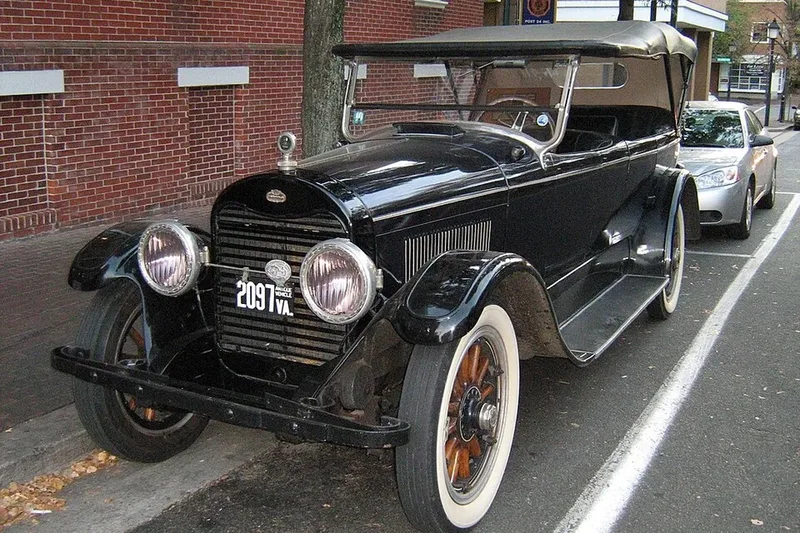
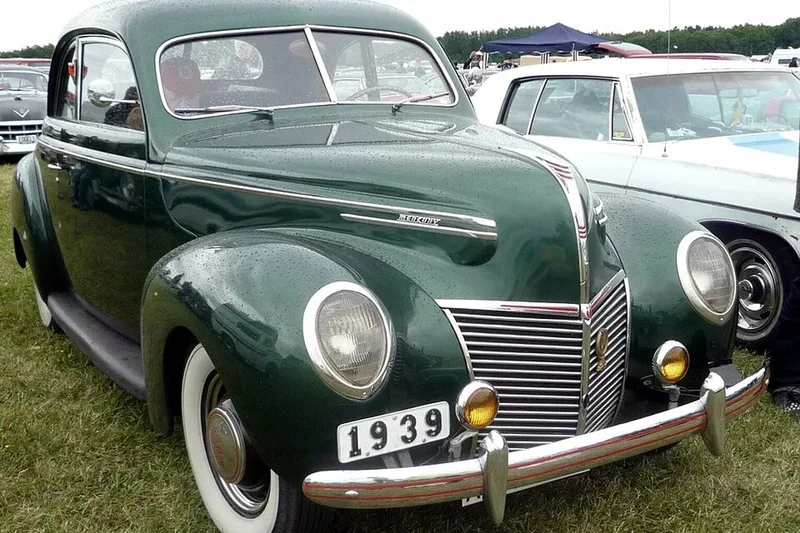
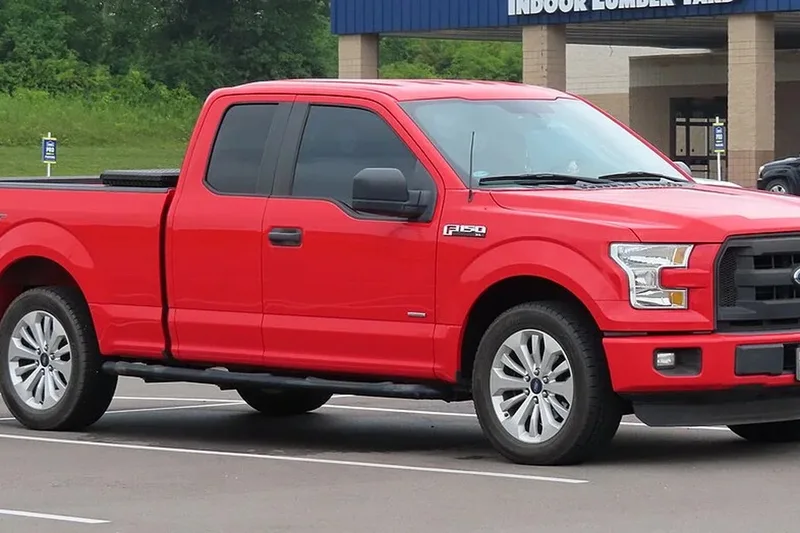
The exhibit shows the gap of 24 years between the end of the original Bronco and its return.
A famous name can act as an economic moat, because rivals cannot copy its history.
Heritage lowers customer acquisition cost, as people already know the name.
But reservations are refundable, so they show interest rather than guaranteed sales.
Offering a smaller Bronco Sport widened the audience beyond hard-core off-road fans.
Ford also built a community and driving schools around the name, which can increase customer lifetime value.
Other brands have revived old names, with mixed results, showing that heritage alone is not enough.
Students can ask when it is better to revive an old name and when to create a new one.
Key concept: economic moats. An economic moat is a lasting advantage that protects a company’s profits from competitors, much as a moat protects a castle. Sources include strong brands, patents, cost advantages, networks and high switching costs for customers.
Brands with deep heritage and loyal customers can charge higher prices for many years, but moats must be maintained: a brand that disappoints customers can lose its advantage.
Key concept: customer acquisition cost and lifetime value. Customer acquisition cost (CAC) is what a company spends to win a new customer, through advertising, promotions and sales effort. Lifetime value (LTV) is the profit that customer brings over the whole relationship.
A business is healthy when lifetime value comfortably exceeds acquisition cost. In the car industry, a customer who returns for several cars over the years can be worth far more than the first sale suggests.
Key concept: opportunity cost. Opportunity cost is the value of the best alternative given up when making a choice. Money and time spent on one project cannot be spent on another.
Good decisions compare options against each other, not just against doing nothing.
Key concept: risk and return. In business and investing, higher potential returns usually come with higher risk. Entering a new market or launching a new kind of product can bring large rewards, but the chance of failure is also greater.
Managers weigh the size of the possible gain against the likelihood and cost of failure, and they often reduce risk by testing ideas on a small scale before committing large sums.
Key concept: unit economics. Unit economics looks at the revenue and costs linked to a single unit, such as one car or one customer. If each unit earns more than it costs to make and sell, growth adds profit; if not, growth adds losses.
Fixed costs such as development and tooling are spread across all units, so the cost per unit falls as volume rises. That is why low-volume products need high prices, and why volume matters so much in the car industry.
Key moments
Original Bronco arrives
Name builds a distinct off-road identity
Ford unveils the revived Bronco family
Sources: Ford Motor Company; CNBC.
The trade-offs at the heart of the case
A closer look
A returning name can attract collectors and still fail to reach households that need a dependable everyday vehicle. Split early Bronco reservations by intended use and by the vehicle the household would replace. Then look at final price acceptance and cancellations after delivery times become known. This distinguishes a durable market for the vehicle from a short window of enthusiasm for a familiar name.
The alternative on the table
For comparison, consider the option to create a new off-road nameplate. The related case “What was a Le Mans win worth to Ford?” supplies a useful reference point. Ford’s GT40 programme culminated in victory at Le Mans in 1966. A famous win can produce awareness quickly, while an old model name already carries associations. Both effects are valuable only if the current product converts interest into purchases at a viable price.
For your seminar, paper or interview
- Q1
What do Bronco reservation cancellations reveal once price and delivery dates are firm?
- Q2
Which finding in the records on outside-brand buyers retained after the reservation stage would persuade you to create a new off-road nameplate?
- Q3
Compare this decision with “What was a Le Mans win worth to Ford”. Which difference between the cases would change your recommendation?
- Brand revival
- Heritage marketing
- Demand validation
- Product family strategy
How we would approach it
Simplifying Finance’s opinion, offered as a starting point for debate, not as fact or investment advice.
We think reviving the Bronco name was a smart way to enter a market Ford had left to rivals. A famous name brought instant attention and more than 165,000 reservations in three weeks. The risk is that heritage draws enthusiasts but the product must still win everyday buyers once the novelty fades.
Use the name to open doors
Let heritage attract attention.
Build a family
Offer a smaller model for a wider audience.
Track reservation quality
Check how many reservations turn into orders.
What this plan gives up
A famous name lowers marketing cost but raises expectations.
The strongest counter-argument
Some argue a new name would have avoided comparisons with the original.
Metrics to watch
- Reservation-to-order conversion
- Share of buyers new to Ford
Propose your solution
Pick a discussion question and set out what you would do, why, and what it would cost. Strong, well-argued answers are reviewed and published below with your first name and programme.
Published solutions
Loading published solutions…
- Ford Motor Company • 1st Generation Bronco (1966 - 1977) The Original Ford® All-Purpose Vehicle | Ford® Bronco History ↗
- Ford Motor Company • The Ford Bronco Through the Years: 59 Ye ↗
- Ford Motor Company • Ford | NEWSThe 1966 Ford Bronco prototype, first revealed in late 1965. ↗
- Ford Motor Company • Ford Bronco brand announcement (6 July 2020) ↗
- CNBC • Ford Bronco reservations far exceed expectations ↗
- WXYZ Detroit • More than 165K reservations made for Ford Bronco in first 3 weeks ↗
- ABC7 • Ford Bronco returns for 2021 ↗
- Photo: Ford Bronco (6th generation) Outer Banks 1X7A0384 by Alexander Migl, CC BY-SA 4.0 (cropped and resized) ↗
Figures are as reported by the companies or cited outlets as of 22 November 2026. Check the source before quoting. Corrections: let us know through the solution form.