What happened
Regulation No. 2 of 2024 concerns rooftop systems connected to the network of a licensed public electricity supplier . A stand-alone solar installation faces a different alternative cost of electricity. Its economics cannot be inferred directly from how a grid customer’s exports are treated.
Businesses that run air-conditioning and machinery through the day can use almost all of their own output.
The quota system also gives PLN a planning tool. By setting how much rooftop capacity can connect in each of its 11 power systems each year, the utility can match new solar to the grid’s ability to absorb it, at the cost of turning away applications when a system’s quota is full.
Rooftop solar in Indonesia started from almost nothing. PLN counted about 1.5 MW of private rooftop panels at the end of 2018 and about 44 MW from 4,500 users by November 2021. In 2021 the government set a target of 3.6 GW by 2025. In March 2022 PLN began limiting new installations to 10 to 15 percent of a customer’s connection capacity, citing grid concerns, and by the end of 2023 rooftop capacity was only about 149 MWp.
The 2024 regulation traded one constraint for another. It removed the cap tied to a customer’s connected power but ended the ability to offset bills with exported electricity, and introduced quotas by power system: 901 MW in 2024, 1,004 MW in 2025, 1,065 MW in 2026, 1,183 MW in 2027 and 1,593 MW in 2028, or 5,746 MW in total. Analysts at IESR noted that the quotas fell short of the 3.6 GW target and that without export credits the market would be mainly commercial and industrial users that consume power during the day.
That is what happened. Indonesia passed 1 GW of cumulative solar in 2025, adding an estimated 546 MW that year, led by rooftop systems for businesses, according to pv magazine. In January 2026 the energy ministry asked PLN for another 400 MW of quota as demand from large consumers exceeded the allocation.
Key moments
About 1.5 MW of private rooftop solar
About 4,500 users and 44 MW
Government sets a 3.6 GW rooftop target for 2025
PLN caps installations at 10–15 percent of connection capacity
Regulation 2/2024 ends export credits and introduces quotas
Ministry seeks an extra 400 MW of quota
Total 5,746 MW across 11 power systems. Rooftop capacity was only about 149 MWp at the end of 2023. Sources: IESR via EnergyTrend and PV Tech; PLN via VOI.
The trade-offs at the heart of the case
Match production with the load
Divide a representative year into intervals. In each, the energy that can avoid a purchase is limited to the smaller of generation and demand behind the meter. Two factories with identical annual consumption can have very different savings. A daytime cold store can use output that an evening entertainment venue would export. Shift patterns, shutdown periods and future equipment therefore belong in the financial model. A battery can move some surplus to a more valuable hour. It also introduces capital cost, losses and eventual replacement. Compare it against less costly ways to shift demand within normal operations. Scheduling a discretionary load at noon has value only when that change does not disrupt production or create overtime elsewhere. Reducing a bill in one department by moving expense into another is no gain to the enterprise.
A roof and an electricity bill have different calendars
Build the approval sheet around a working weekday, a low-demand weekend and a period of building closure. For each, show when solar generation displaces a purchase at the meter. The owner may be able to reschedule a useful load without adding batteries or enlarging the installation. Agree who benefits if the tenant pays the bill but the landlord pays for the panels. That split can be the decisive constraint even for an economically attractive roof.
PLN’s side of the bill
PLN is a state monopoly that buys power from coal plants under long-term contracts, often on take-or-pay terms, and sells it at regulated tariffs that are below cost for many customers. When a rooftop customer exports midday power and uses the credit at night, PLN loses retail revenue while still paying for contracted coal output it may no longer need. From PLN’s perspective, export credits shift costs onto other customers or the state budget. That is the economic logic behind the 2024 rules, whatever one thinks of their effect on clean energy.
For your seminar, paper or interview
- Q1
How much of the next panel’s generation coincides with load?
- Q2
When would moving demand beat installing a battery?
- Q3
What change in operating hours would overturn the investment?
- Q4
Which weekday load could move without waste?
- Q5
How would an expiring tenancy change the investment horizon?
- Net metering versus self-consumption
- Utility economics and cross-subsidy
- Quotas as rationing
- Commercial and industrial demand
How we would approach it
Simplifying Finance’s opinion, offered as a starting point for debate, not as fact or investment advice.
Ending export credits was defensible for a utility with surplus coal capacity and regulated tariffs, but it changed who rooftop solar is for. Households should size systems to their own daytime use; the policy now works best for factories, malls and offices, and the quota should expand to match that demand.
Size to daytime load
Install only what can be used on site during daylight hours.
Target businesses
Focus marketing and finance on commercial and industrial users.
Expand quotas with demand
Raise system quotas where applications exceed allocations.
What this plan gives up
Ending export credits protects PLN’s revenue and grid stability but removes the main reason for households to install panels.
The strongest counter-argument
Low retail tariffs and the loss of export credits make household solar uneconomic, slowing a cheap source of clean power and protecting PLN’s coal fleet at consumers’ expense.
Metrics to watch
- Quota applications against allocations
- Share of new capacity from households versus businesses
Propose your solution
Pick a discussion question and set out what you would do, why, and what it would cost. Strong, well-argued answers are reviewed and published below with your first name and programme.
Published solutions
Loading published solutions…
- Indonesian Cabinet Secretariat: 2024 rooftop solar regulation ↗
- PwC Indonesia: legal alert on rooftop solar, November 2024 ↗
- PV Tech: Indonesia to add 5.75 GW of rooftop solar ↗
- EnergyTrend: rooftop quota by year ↗
- The Jakarta Post: Indonesia starts tapping solar potential ↗
- pv magazine: Indonesia’s solar capacity reaches 1.49 GW ↗
- VOI: rooftop PLTS only 149 MWp ↗
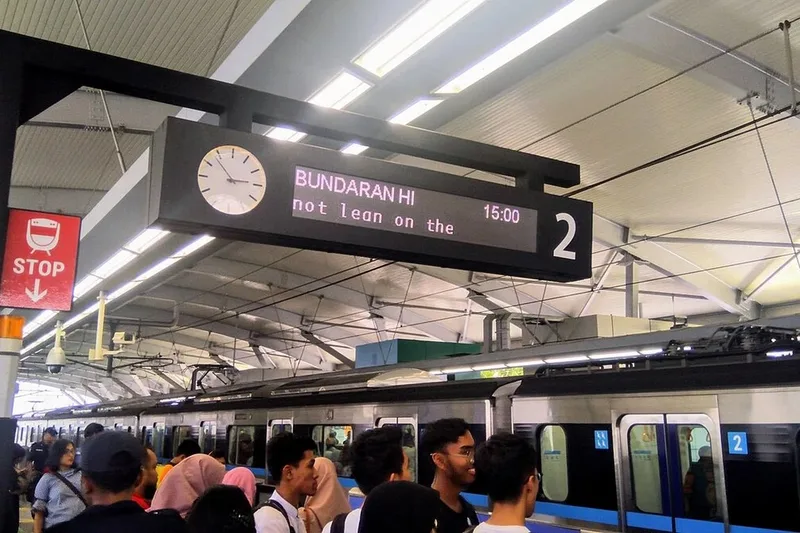
- Image: A factory roof may accommodate a much larger solar system than the factory can use on a Sunday. Under a rule that offers no bill credit for surplus exports, the difference between weekday and weekend load can decide whether the last row of panels pays for itse
Figures are as reported by the companies or cited outlets as of 22 November 2026. Check the source before quoting. Corrections: let us know through the solution form.