What happened
The technical evaluation places village transfers in the context of the transition away from PNPM and examined infrastructure financed under the replacement arrangements . That change in who decides and who pays matters because two roads of similar construction quality can have quite different prospects for maintenance.
Funds are transferred from the national budget through district governments to villages.
Researchers have also found the fund raised local spending and employment during construction, but its effect on poverty has been smaller than its size suggests, partly because so much went into physical projects.
The fund also financed social infrastructure. Government reports list thousands of integrated health posts, early-childhood schools and village markets built since 2015, and about 39,844 village-owned enterprises (BUMDes) set up by 2020, some of them running water supply, tourism and small trading businesses.
The Village Fund grew from a modest start into one of the largest transfers to local government anywhere. It began at Rp20.8 trillion in 2015, rose to Rp46.7 trillion in 2016, Rp59.8 trillion in 2018, Rp69.8 trillion in 2019 and Rp72 trillion in 2021, and has stayed around that level since. From 2015 to 2024 the central government allocated about Rp609.9 trillion to roughly 75,000 villages.
Most of the early money went into roads. By the government’s count, village funds built 158,000 km of village roads in the first four years and more than 300,000 km by 2023, along with bridges, markets, irrigation and clinics. One study found that by 2023 the fund had financed 316,590 km of roads, 1.6 million metres of bridges and 12,297 village markets.
The scale brought problems. Indonesia’s anti-corruption agencies and courts have handled many cases of village heads misusing funds, and researchers note that a large share of spending went to visible construction rather than maintenance or services. In 2022 the government began shifting part of the allocation towards villages with better performance, to reward results rather than simply spending.
Key moments
Village Law passed
Village Fund begins with Rp20.8 trillion
Allocation reaches Rp69.8 trillion
Rp72 trillion; shift towards performance-based allocation
About Rp609.9 trillion allocated in total
Allocations totalled about Rp609.9 trillion from 2015 to 2024 across about 75,000 villages. Sources: Cabinet Secretariat; Devpolicy (2024).
The trade-offs at the heart of the case
Put the rainy season in the appraisal
A road can make a market reachable when an unpaved route would be impassable. Count the additional reliable trips during the difficult weeks as well as minutes saved under ordinary conditions. A road already usable on most days may still have unusually high value at harvest. Conversely, a better surface adds little if a bridge immediately beyond the village remains unusable. Local labour payments can be important distributional benefits. In a public appraisal, the labour still has an opportunity cost. Counting the full wage both as construction expenditure and as a separate gain overstates value unless the alternative use of that labour is explicitly considered. A maintenance saving must also be genuine. Asking villagers to donate time after the grant runs out moves cost outside the cash budget.
Put a rainy week on the village budget calendar
List which households, traders and services depend on the road during heavy rain. Ask the village treasurer whether a routine drain clearing can be paid in advance and whether a larger repair needs another approval. A low-cost repair delayed for an entire budget cycle can be worse than a dearer contract executed before the rains. The committee should agree how to trigger maintenance and publish the name of the budget holder before accepting construction.
Who chooses the projects
Under the Village Law, villagers decide how to spend the fund through village meetings, and the village head and council approve the budget. That gives local people a voice and has led to many useful small projects. But it also means spending reflects local politics: projects that benefit the village head’s supporters or that are easy to show off may be chosen ahead of maintenance or social services. Stronger village councils, published budgets and independent audits are the main checks.
Built once, maintained never
Grants that pay for construction but not upkeep create a familiar pattern: new roads are built, then deteriorate within a few rainy seasons because no budget line covers drainage and patching. Village heads face strong incentives to build something new and visible within their term. Maintenance is invisible when done well. A road that washes out after three years may have cost more per year of use than a smaller road that was looked after. Earmarking part of each year’s grant for maintenance of assets already built is a simple way to change that incentive.
For your seminar, paper or interview
- Q1
Which journeys disappear entirely when the road floods?
- Q2
Whose unpaid time should enter estimated maintenance cost?
- Q3
How would a failed downstream bridge alter the project ranking?
- Q4
Who can release maintenance funds before the rainy season?
- Q5
How would contractor demand change during a district-wide flood?
- Fiscal decentralisation
- Capital versus maintenance budgets
- Community-driven development
- Local accountability
How we would approach it
Simplifying Finance’s opinion, offered as a starting point for debate, not as fact or investment advice.
The Village Fund delivered enormous amounts of basic infrastructure quickly, but its value now depends on maintenance. A fixed share of each village’s allocation should go to upkeep of roads already built, with simple condition checks before new construction is approved.
Earmark upkeep
Reserve part of each grant for maintenance.
Check condition first
Require a basic road condition survey before new projects.
Reward results
Link part of the allocation to performance.
What this plan gives up
Ring-fencing maintenance protects past investment but limits local choice over new priorities.
The strongest counter-argument
Earmarking maintenance reduces villages’ freedom to choose their own priorities, which was the point of the Village Law.
Metrics to watch
- Share of village spending on maintenance
- Condition of roads built before 2020
Propose your solution
Pick a discussion question and set out what you would do, why, and what it would cost. Strong, well-argued answers are reviewed and published below with your first name and programme.
Published solutions
Loading published solutions…
- World Bank: Indonesian Village Governance Under the New Village Law ↗
- World Bank: technical evaluation of village-funded infrastructure ↗
- Cabinet Secretariat: village fund allocation up to Rp400.1 trillion ↗
- Devpolicy: village governance and development in Indonesia ↗
- Kompas: Village Law ten-year report ↗
- The Jakarta Post: results-based village funds ↗
- Cabinet Secretariat: Rp187 trillion since 2015 ↗
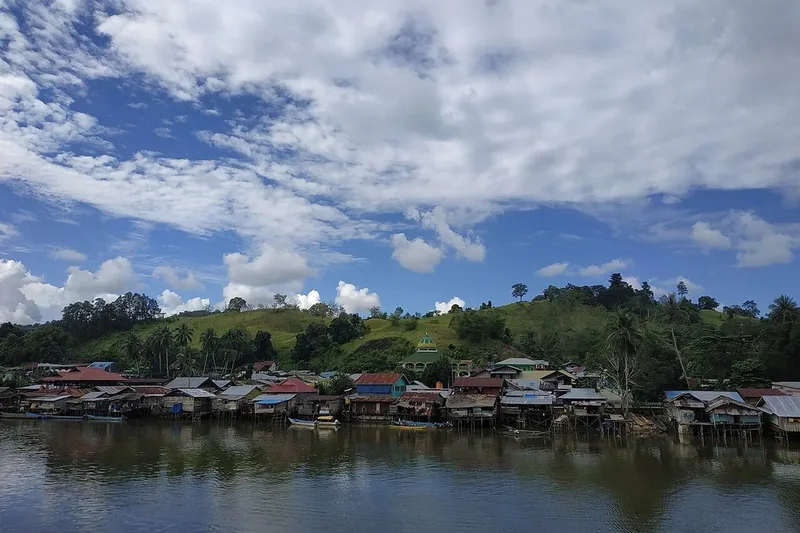
- Image: A village can obtain a construction grant for a road and still have no reliable way to finance drainage clearance after the first rainy season. The initial decision is visible, popular and easy to photograph. The maintenance decision is smaller, recurring and
Figures are as reported by the companies or cited outlets as of 22 November 2026. Check the source before quoting. Corrections: let us know through the solution form.