What happened
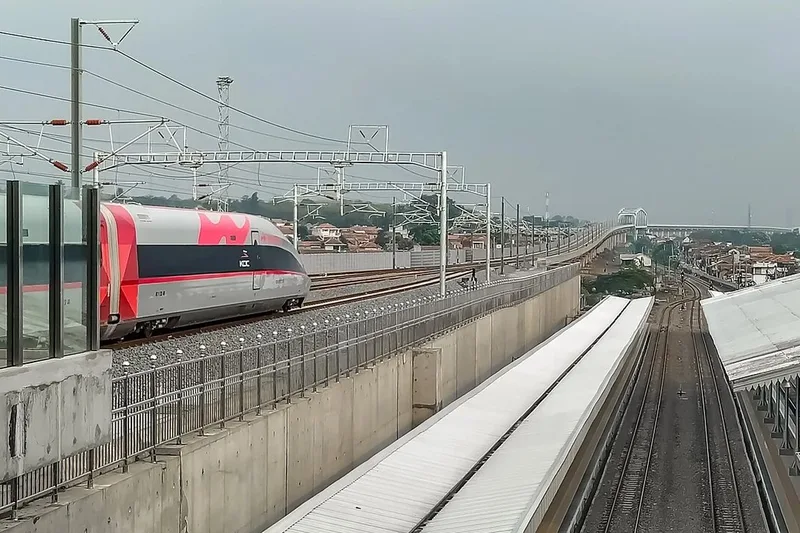
At Yogyakarta International Airport’s August 2020 inauguration, the government compared the new 3,250-metre runway with the 2,200-metre runway at Adisutjipto . A year later, the transport ministry soft-launched the airport train. The government put the expected city-to-airport rail time at about forty minutes . That figure covers the train segment. Waiting for a departure, reaching the city station and walking to check-in are separate parts of the traveller’s decision.
The airport inauguration also covered an air navigation tower and a tsunami early-warning system . They belong in an appraisal of the airport as a whole. Their benefits should only enter an appraisal of the rail link if the rail decision actually changes them.
The new airport is large and lightly used. YIA’s terminal covers about 219,000 square metres on a 587-hectare site, and the government has said it can serve 20 million passengers a year. In the first half of 2024 it handled 2,045,299 passengers, just 0.37 percent more than a year earlier: 1,828,262 on domestic routes and 217,037 on international routes, which grew almost 27 percent. Across 2023 it handled 30,674 aircraft movements.
Traffic is concentrated in holiday peaks. The busiest day on record came on 30 April 2023, after Eid, with 18,477 passengers, while an ordinary April day in 2024 saw about 11,000. In December 2024, Statistics Indonesia counted 189,277 domestic air departures and 186,483 arrivals in the province, against about 1.1 million rail departures in the same month.
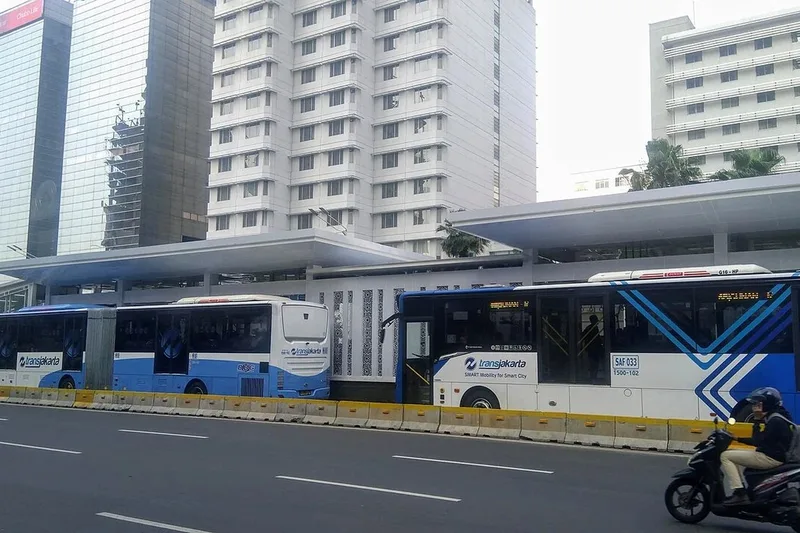
Getting there remains the weak point. Besides the airport train, DAMRI buses link YIA with the old Adisutjipto airport and towns such as Purworejo, Kebumen and Magelang, and a toll road to the city centre is still only planned. About 40 percent of the airport’s land was Paku Alam Ground, and the land acquisition was contested by local residents, a reminder that the site was chosen for space and runway length rather than closeness to the city.
Key moments
YIA officially opens for business
Inauguration; 3,250 m runway replaces Adisutjipto’s 2,200 m
Airport train soft-launched, about 40 minutes to the city
30,674 aircraft movements
2.05 million passengers, up 0.37 percent
In the first half of 2024 YIA handled 2.05 million passengers, of whom 217,037 were international. Sources: BPS Daerah Istimewa Yogyakarta; Angkasa Pura I via VOI.
The trade-offs at the heart of the case
Value a departure bank
An airline can move a flight to an improved runway and still lose passengers if the first train arrives too late for that departure. A hotel guest travelling alone evaluates the train differently from a family sharing a car. A scheduled transfer may be valuable principally as insurance against congestion. A traveller with a fixed meeting has a reason to pay for a predictable arrival even when a car is faster on an unusually clear morning. The airport can subsidise frequencies, invite airlines to coordinate departure times or invest in direct coach links to districts beyond the rail catchment. Each attracts a different set of travellers. Moving someone from an airport bus onto the train adds rail revenue but may add no passenger to the airport. A new airline route adds little regional benefit if it merely relocates demand from another service and requires a permanent subsidy.
Compare bids for the first departure
At 320 completed units per year, the first offer costs Rp568 million against Rp532.4 million for the second. Equate the difference in fixed fees with the saving per unit. The two annual bills are equal at 258.621 units. Below that volume the smaller standing charge is valuable. Above it the lower unit charge becomes more valuable. A bidder forecasting volume has a direct interest in the side of that threshold the buyer believes it will occupy. Now let volume fall to 240 units, three quarters of plan. The bills become Rp456 million and Rp466.8 million. A simple low-volume test exposes the cost of committing ahead of demand. It does not test service quality. Agree on the meaning of a completed unit, how rework is counted and what happens when the supplier misses a deadline. Otherwise a supplier can show an attractive unit price by billing for work the purchaser must perform a second time. A dawn bus that reliably meets the train may matter more than a shorter average driving time. Specify luggage capacity and what happens if the train timetable changes mid-contract. A quoted saving per trip is fragile when the cheapest contractor operates too early for passengers to use it.
The passenger who changes the investment decision
Take a traveller with a morning flight and a suitcase starting outside central Yogyakarta. Compare the last feasible departure from home under rail and road, including the consequence of missing the planned train. Then repeat for a midday flight. The two answers may support a first-train adjustment instead of an across-the-board frequency increase. Passenger numbers alone cannot reveal the trips that never moved from road because the rail timetable offered no feasible morning itinerary.
For your seminar, paper or interview
- Q1
Whose travel time is outside the train operator’s data?
- Q2
How would the result differ for a family sharing a car?
- Q3
Which departure bank should receive the first extra service?
- Q4
Which flight times gain most from the first train of the day?
- Q5
When would a through itinerary bring a new traveller into the catchment?
- Airport catchment economics
- Surface access and mode choice
- Induced versus relocated demand
- Infrastructure sequencing
How we would approach it
Simplifying Finance’s opinion, offered as a starting point for debate, not as fact or investment advice.
Make the airport easy to reach before chasing more airlines. With capacity far above current traffic, frequent trains timed to the first and last flights, through-ticketing and coach links to the wider catchment will do more for passenger numbers than new routes that need permanent subsidies.
Time trains to flight banks
Schedule the first and last trains around morning and late-evening departures.
Extend the catchment
Run coach links to Central Java towns beyond the rail line.
Bundle tickets
Sell rail-and-air or rail-and-coach tickets so travellers trust the connection.
What this plan gives up
Subsidising access widens the catchment cheaply but adds an operating cost every year; subsidising routes adds flights but may only relocate demand.
The strongest counter-argument
Airlines decide routes on demand and costs, not train timetables, so better rail links may simply shift existing passengers from buses and cars without adding flights.
Metrics to watch
- Share of passengers arriving by rail
- International passengers as a share of the total
Propose your solution
Pick a discussion question and set out what you would do, why, and what it would cost. Strong, well-argued answers are reviewed and published below with your first name and programme.
Published solutions
Loading published solutions…
- Indonesian Cabinet Secretariat: airport train soft launch ↗
- Indonesian Cabinet Secretariat: Yogyakarta International Airport inauguration ↗
- VOI: YIA passengers in H1 2024 ↗
- BPS DIY: transportation, December 2024 ↗
- Republika: YIA passenger records ↗
- Antara: YIA aircraft movements in 2023 ↗
- Structurae: Yogyakarta International Airport ↗
- Image: The YIA airport rail service linking Yogyakarta with its international airport. Photograph credit: Luthfi Ramadhan D. Original photograph · CC BY-SA 4.0. ↗
Figures are as reported by the companies or cited outlets as of 22 November 2026. Check the source before quoting. Corrections: let us know through the solution form.