What happened
The April 2018 announcement described an agreement to acquire 51 percent and stated that the incumbent management would continue. Marfrig later reported buying the controlling interest on 5 June for US$969 million. The transaction gave the buyer control of a business worth more than the portion it bought. It did not give Marfrig the right to keep all of the company’s future distributions.
A beef processor buys cattle and sells a mixture of cuts and by-products. The value recovered depends on yields, customer specifications, utilisation and access to markets for different parts of the animal. The acquisition can diversify geographic exposure, but both businesses remain connected to animal supply and global protein demand. Different currencies alone are insufficient evidence that two sources of earnings will offset each other during a downturn.
Control also changes financial presentation. Consolidated operating statistics can include the whole subsidiary, while a portion of earnings and cash belongs economically to other holders. A lender to the parent will care about the cash that can actually be distributed after subsidiary debt, capital expenditure and local needs. An analyst multiplying the whole subsidiary’s earnings by a valuation multiple and assigning everything to Marfrig would overstate its economic claim.
National Beef, based in Kansas City, was the fourth-largest US beef processor, with sales of US$7.3 billion and slaughter capacity of about 12,000 cattle a day, about 13% of US capacity. It had been controlled by Leucadia National, later Jefferies, since 2011.
On 9 April 2018 Brazil’s Marfrig agreed to buy 51% for US$969 million, mostly from Leucadia, which kept 31%. US Premium Beef, a producers’ association, held 15%. Marfrig, financed by a Rabobank loan, completed the purchase on 5 June 2018. Because it consolidated 100% of National Beef’s results, Marfrig said its debt-to-EBITDA ratio would fall from 4.55 to about 3.35 times. It also planned to sell Keystone Foods. In 2019 it bought Jefferies’ remaining 31% for US$860 million.
Owning 51% gives control and full consolidation, but minority holders still share in dividends.
Key moments
National Beef announces the agreement with Marfrig’s subsidiary.
Marfrig acquires the controlling stake.
Marfrig paid US$969m for 51%; in 2019 it bought Jefferies’ remaining 31% for US$860m, taking its stake to 81.7%. Sources: Food Processing; Food Dive.
The trade-offs at the heart of the case
Where local operating knowledge resides
A processor that misjudges the characteristics of the incoming cattle can buy apparent volume without securing the cuts its customers need. The procurement team knows local producers, seasonal patterns and the relationship between purchase terms and expected yield. Replacing that knowledge with a central price list may reduce quoted purchase costs while lowering the value recovered from the carcass. Test the output mix and quality-adjusted gross margin before calling the intervention a saving. The seller’s announcement expected existing management to continue. That choice can protect relationships and reduce disruption, but also requires the new controlling owner to specify which decisions it will reserve. A large capital project, a change in dividend policy and the choice of a supplier on a Tuesday morning need different degrees of oversight. Clear boundaries prevent local managers from waiting for headquarters on routine matters while ensuring that material risks reach the board. Currency diversification is another claim worth testing with a simple inventory of receipts and obligations. A Brazilian group acquiring a US business may earn additional dollars, but dollar-denominated borrowing, feed inputs, cattle purchases and customer contracts can offset or amplify that exposure. Express all flows on the same time basis. An apparently natural hedge may work over a year and still leave a funding shortfall in a month when cash cannot be remitted without sacrificing plant maintenance.
For your seminar, paper or interview
- Q1
Which purchasing gains survive an adjustment for cattle quality and carcass yield?
- Q2
Which decisions belong at headquarters after a 51 percent acquisition?
- Q3
Why might a subsidiary’s earnings be unavailable for parent debt service?
- Q4
How would you verify cash remittable to the parent after local obligations using information available at the time?
- Q5
Which finding about livestock procurement spreads and actual distributions would most change your recommendation, and why?
- Control premiums
- Consolidation
- Leverage reduction
- Minority partners
How we would approach it
Simplifying Finance’s opinion, offered as a starting point for debate, not as fact or investment advice.
A decision to build more processing capacity requires evidence that extra cattle can be secured at a cost consistent with the product market. Existing plants competing for the same animals may bid the additional margin away. Model the supply response locally and compare it with demand for the cuts produced. The ability to finance new equipment does not establish the availability of profitable throughput. Keep local operating responsibility where knowledge of sourcing, grading and customer specifications creates value. Set explicit policies for distributions and related-party transactions. A more centralised purchasing team might negotiate better terms, but it should demonstrate improvement after adjusting for cattle quality and freight. The first worthwhile integration project is one whose gains can be measured without weakening supplier incentives.
Buy majority control
Consolidate 100% of results while paying for 51%.
Keep management and partners
Retain existing managers and minority owners with a lock-up.
Sell non-core assets
Sell Keystone Foods to fund growth and cut leverage.
What this plan gives up
Control of National Beef made Marfrig the world’s second-largest beef producer and lowered its leverage ratio, but it increased exposure to the US cattle cycle.
The strongest counter-argument
An operating comparison across two processors should put the same transfer price on common inputs and reflect local differences in freight and cattle grading. If one plant pays more for cattle but produces a higher-value mix of outputs, an apparent purchasing disadvantage can become an operating advantage. Conversely, bulk buying at a discount can prove costly if the supply does not match contracted customer specifications. A further question is the minority holders’ stake in reinvestment. A proposal to retain all available cash for an expansion may benefit a long-horizon owner while disappointing a holder relying on distributions. The disagreement can arise even when everyone accepts the same forecast. Draw up the expansion’s investment case at subsidiary level, then consider separately the parent’s funding needs and the owners’ rights. Requiring the subsidiary to finance unrelated parent commitments would weaken the operating asset that made the control stake attractive. Distributions should be governed by sustainable cash generation and the terms under which the owners invested. Consolidation can overstate cash available at parent level if minority claims are ignored.
Metrics to watch
- US beef margins
- Marfrig leverage
Propose your solution
Pick a discussion question and set out what you would do, why, and what it would cost. Strong, well-argued answers are reviewed and published below with your first name and programme.
Published solutions
Loading published solutions…
- National Beef announces the Marfrig agreement (nationalbeef.com) ↗
- Marfrig transaction history, US$969 million controlling interest (US SEC EDGAR) ↗
- Food Processing: Marfrig controls National Beef ↗
- FoodNavigator: Marfrig announces National Beef acquisition ↗
- Food Dive: Marfrig increases its stake in National Beef ↗
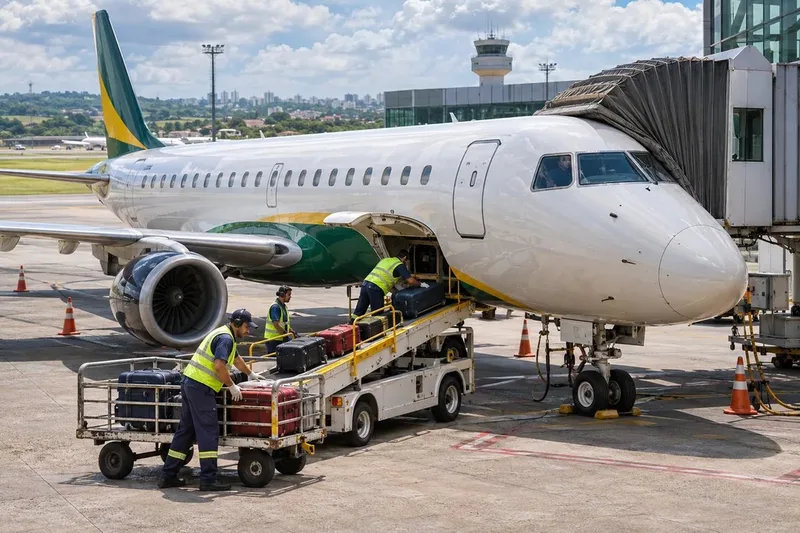
- Image: Simplifying Finance · AI-generated editorial illustration
Figures are as reported by the companies or cited outlets as of 22 November 2026. Check the source before quoting. Corrections: let us know through the solution form.