What happened
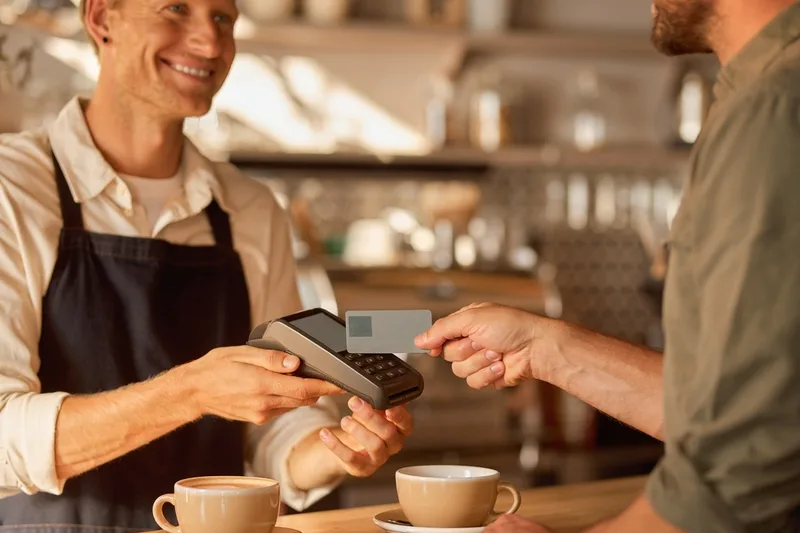
A small, rapid transfer can do more than settle a bill. It can let a person protect savings, change where she works or sustain a trading activity through a bad week. These decisions are gradual, so a snapshot of transactions shortly after an agent opens can miss the outcome of interest.
Researchers examined the expansion of local mobile-money agent networks and followed households over time. They studied consumption, poverty and occupational choices, including movement into business activities. The estimated effect refers to improved access and its household consequences, rather than a valuation of the network operator.
The authors estimated that expanded access lifted about 194,000 Kenyan households, around 2 percent of households, above the poverty line. They also found stronger effects for female-headed households and occupational changes among women. The national number is an extrapolation from study estimates, not a list of individually verified households.
Suri and Jack followed households from 2008 to 2014 as mobile-money agents spread across Kenya. Because agents opened at different times in different places, they could compare households that gained easy access earlier with those that gained it later.
They estimated that access to mobile money lifted about 194,000 households, around 2 percent of Kenyan households, out of extreme poverty. Effects were stronger for female-headed households, and many women moved from farming into business or retail work.
The researchers linked these gains to better saving, more efficient allocation of labour and greater resilience to shocks. Women in particular could keep money more securely and in their own control.
Mobile money has since become central to Kenya’s economy, handling payments for everything from school fees to utility bills, and has inspired similar systems worldwide. The study is often cited in discussions of how digital financial services can support inclusive growth.
Kenya’s mobile-money ecosystem developed thanks to a combination of a dominant mobile operator, a large network of small retail agents and a regulator, the Central Bank of Kenya, willing to allow innovation under supervision. That combination has been studied by policymakers in many countries.
Agents, often small shopkeepers, convert cash into electronic money and back. Their presence near homes and markets is what makes mobile money practical, which is why the study focused on proximity to agents rather than mere phone ownership.
The gender findings are especially important. Women who gained access to mobile money were more likely to move into business activities, which researchers linked to greater control over their own savings and lower costs of receiving support.
Later research has explored whether these effects persist and how they compare with other countries, but the Kenyan evidence remains among the strongest on the link between digital finance and poverty reduction.
For investors and policymakers, the case highlights that infrastructure for payments can have development benefits far beyond the revenues it generates for the operator.
The Central Bank of Kenya’s approach of allowing a non-bank to provide payment services, while monitoring risks, is often cited as a key factor in M-Pesa’s growth. Regulators elsewhere have since developed frameworks for mobile money operators and agent networks.
Mobile money also created a foundation for other services, including savings and credit products, merchant payments and government transfers, which have extended the benefits of digital finance further.
Women’s economic empowerment remains a focus of these later products, building on the evidence from this study.
The case therefore links technology, regulation and social outcomes in a way that is useful for students of both finance and development.
Policymakers and investors continue to cite the Kenyan experience when designing digital finance strategies, and the study’s methods have been applied to other countries.
Its central message is that access, not just availability, determines who benefits from new technology.
For individuals, the lesson is simple: a secure, nearby way to save and receive money can open the door to new work and greater independence, especially for women who previously had limited control over household finances and few safe places to keep their own earnings.
Key moments
M-Pesa launches in Kenya.
Researchers track households as agent networks expand.
Results published in Science.
Source: Suri and Jack, Science 354 (2016).
The trade-offs at the heart of the case
Reading the result
Separate the survey finding from the national extrapolation. Researchers observed households in places where agent access developed differently. The estimate of roughly 194,000 households moving above a poverty threshold applies those results more widely. It is not a register containing that many individually identified families. When interpreting the estimate, ask how representative the observed places were, which households began near the threshold and whether travel or occupational opportunities differed across locations. Moving just above a threshold and remaining well above it for years are different outcomes.
The financing decision
Compare using proximity to the nearest agent as a measure with asking whether someone can actually transact at the time she needs to. For a woman considering a different occupation, opening hours, retained control of funds and time away from other work could all matter.
For your seminar, paper or interview
- Q1
Which people would be missed by measuring only changes in household consumption and occupational choice?
- Q2
Who carries the cost of travel to agents and the reliability of cash availability?
- Q3
What could the evidence on results for groups with different starting opportunities change?
- Financial inclusion
- Poverty reduction
- Gender economics
- Infrastructure access
How we would approach it
Simplifying Finance’s opinion, offered as a starting point for debate, not as fact or investment advice.
We think the study provides strong evidence that easy access to mobile money helped reduce poverty in Kenya, especially for women. Expanding agent networks in underserved areas remains one of the most cost-effective ways to widen those benefits.
Fill agent gaps
Encourage agents in rural and low-income areas.
Support women’s businesses
Link mobile money to savings and credit for women.
Keep services affordable
Watch fees for small transactions.
What this plan gives up
Agent networks bring large benefits but depend on viable agent businesses.
The strongest counter-argument
Some researchers caution that national extrapolations rely on assumptions about comparable areas.
Metrics to watch
- Distance to nearest agent
- Share of women running businesses
Propose your solution
Pick a discussion question and set out what you would do, why, and what it would cost. Strong, well-argued answers are reviewed and published below with your first name and programme.
Published solutions
Loading published solutions…
- The long-run poverty and gender impacts of mobile money ↗
- Suri and Jack • Science article ↗
- Photo: Women weaving Sisal Baskets by Mulwaphilemon, CC BY-SA 4.0 (cropped and resized) ↗
Figures are as reported by the companies or cited outlets as of 22 November 2026. Check the source before quoting. Corrections: let us know through the solution form.