What happened
A health program delivered through schools can affect participation without changing the curriculum. If benefits also reach nearby children, a comparison between treated and untreated pupils becomes difficult to interpret. The potential spillover is important for a public budget and especially hard to estimate precisely.
Schools entered a phased deworming and health-education intervention. Researchers analyzed attendance and examination results, including possible effects on children living near intervention schools. Separate researchers later reanalyzed the data and tested the sensitivity of conclusions to the statistical approach.
The original research reported improved participation and neighboring benefits. The reanalysis found some evidence for attendance, judged it sensitive to analytical choices and at high risk of bias, and found no evidence of improved exam performance. A spending decision should present both readings rather than treating one cost-per-extra-year estimate as settled.
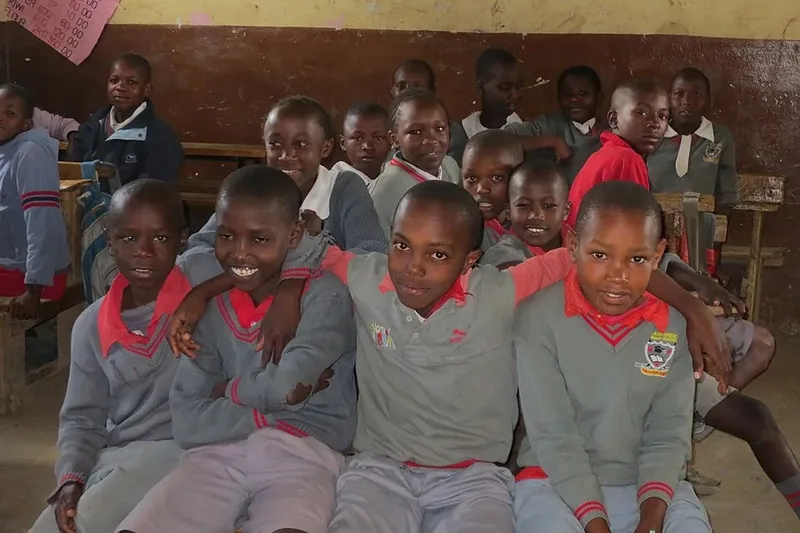
The Primary School Deworming Project was carried out by ICS Africa with the Busia District Ministry of Health. In January 1998, 75 schools with over 30,000 pupils were divided into three groups of 25 and phased into treatment over three years. Treatment schools also received health lectures, wall charts and teacher training on worm prevention, such as handwashing and wearing shoes.
Miguel and Kremer reported that the programme reduced absenteeism by more than one quarter and benefited untreated children in treatment and neighbouring schools by reducing transmission. J-PAL’s cost-effectiveness analysis lists deworming among the cheapest ways to increase school participation. The 2015 reanalysis, however, judged the attendance findings sensitive to analytical choices and found no evidence of improved exam performance.
The debate became one of the best-known replication discussions in development economics. It illustrates how important it is to publish data and code so that others can test conclusions, a practice now standard in many fields.
For investors and analysts, the case shows the value of sensitivity analysis. A decision that looks clearly worthwhile under one set of assumptions should be checked against reasonable alternatives before large sums are committed.
Deworming programmes were later scaled nationally in Kenya through the National School-Based Deworming Programme, launched in 2012 with government and partner support, which has treated millions of children each year through schools.
Whatever the precise education effects, the health case for treating worm infections in high-prevalence areas is supported by global health guidance, and the low cost per child makes school-based delivery efficient.
Publishing both the original and the reanalysis results side by side allows readers to form their own judgement, an approach that builds trust in evidence over time.
Health spending that also improves schooling is especially attractive to budget holders, which is why the debate attracted such attention and why careful, transparent evidence matters so much.
Treating worms remains inexpensive per child, which keeps the programme attractive even under cautious assumptions about its effects on schooling and later earnings.
Key moments
75 Busia schools are divided into three groups of 25.
Schools are phased into deworming over three years.
Independent reanalysis published in the International Journal of Epidemiology.
Source: J-PAL, Primary School Deworming in Kenya. 75 schools, over 30,000 pupils.
The trade-offs at the heart of the case
Reading the result
Draw a school boundary on a map and then draw the routes along which children actually meet. If a program changes attendance at a school receiving it, that is one comparison. If nearby schools also experience a change, the choice of comparison schools can affect the estimated difference. Reanalysis of the Kenyan study makes the question practical. Preserve the distinction between the finding for attendance and the evidence for learning, and report when analytical decisions change the strength of the conclusion. Attendance and examination marks have separate denominators.
The financing decision
A school considering an attendance initiative could fund more complete attendance records or an independent learning assessment. One helps establish whether children were present. The other helps determine what they learned there. The original debate gives a reason to retain both questions.
Phased introduction
A program rolled out in stages creates both a service and a possible comparison. A site still waiting in one year can help indicate what might have happened to a site served earlier. The central concern is how that waiting list was made. Starting with the largest places, the places with strongest management or those facing the sharpest deterioration can create different underlying trends. Put several observations from before the rollout beside the later trend, if available. Similar starting levels alone do not establish that the paths would have remained parallel. Timing also defines the question. A comparison after six months captures a different mix of one-off costs and learned behavior from a comparison after six years. Late adopters may enter after prices have changed or the service has improved. People may anticipate participation and act before their recorded start date. Draw separate dates for announcement, availability, first actual use and the point at which an outcome could plausibly change. This prevents an investment that takes time to mature from being judged against a calendar chosen solely because records happen to be available.
For your seminar, paper or interview
- Q1
Which people would be missed by measuring only additional school participation with uncertainty shown?
- Q2
Who carries the cost of program delivery and independent attendance measurement?
- Q3
What could the evidence on how results change with analytical method and geography change?
- Externalities
- Public goods
- Replication
- Cost-effectiveness
How we would approach it
Simplifying Finance’s opinion, offered as a starting point for debate, not as fact or investment advice.
We think school-based deworming is a low-cost health measure with plausible education benefits, but the size of the schooling effect remains debated. A budget decision should present a range of estimates and weigh the health case on its own merits.
Report a range
Show results under different analytical choices.
Value health directly
Count reduced infection as a benefit in its own right.
Keep monitoring
Track infection prevalence to decide treatment frequency.
What this plan gives up
Mass treatment is cheap and simple, but its education effects are uncertain.
The strongest counter-argument
Critics argue resources should go to programmes with more robust evidence of learning gains.
Metrics to watch
- Infection prevalence
- School participation
Propose your solution
Pick a discussion question and set out what you would do, why, and what it would cost. Strong, well-argued answers are reviewed and published below with your first name and programme.
Published solutions
Loading published solutions…
- Primary School Deworming in Kenya ↗
- Reanalysis of the Kenyan school-based deworming evaluation ↗
- Photo: When attendance benefits may cross the school boundary by Simplifying Finance, Original editorial graphic (cropped and resized)
Figures are as reported by the companies or cited outlets as of 22 November 2026. Check the source before quoting. Corrections: let us know through the solution form.