What happened
A successful lesson in one classroom is inexpensive to observe and hard to reproduce thousands of times. A school may receive its books after the term begins, a teacher may get a guide without practice using it, or a coach may record a visit that provides little instructional feedback. Scaling a reading program requires funding those connections.
The evaluations document improvements in reading measures across the program period. Because rollout was national, a before-and-after gain cannot be allocated entirely to one element such as coaching or books. Language, grade and the particular reading task matter when describing how much changed.
The external evaluation used separate Grade 2 oral reading fluency benchmarks of 65 correct words per minute in English and 45 in Kiswahili. Those numbers define classifications in the evaluation. They are neither national average reading speeds nor estimates of the gains caused by Tusome.
Tusome, meaning ‘Let’s Read’ in Kiswahili, built on the Primary Mathematics and Reading (PRIMR) initiative, which tested the approach in 1,384 schools between 2012 and 2014. Kenya’s Ministry of Education then scaled it nationwide from 2015 with support from USAID and the UK’s Department for International Development, implemented with RTI International.
The programme reached about 22,000 public primary schools in all 47 counties and 1,500 low-cost alternative schools in urban areas. Its midline evaluation found that the share of Class 2 pupils who could not read in English fell from 38 percent in 2015 to 12 percent in 2016. By the end of the eight-year programme, RTI reports that more than 10 million learners had been reached.
Tusome is widely studied because few programmes keep their impact when they move from pilot to national scale. Its design relied on existing government curriculum support officers as coaches, giving them tablets to record observations and funding to visit schools, which made the model part of the public system rather than a parallel project.
For other countries, the lesson is that the cost of scaling lies as much in support systems as in materials. Books are visible; coaching visits, data collection and teacher guides are less visible but just as necessary.
Kenya’s experience has been studied by ministries in other African countries planning their own national literacy programmes.
The national reading programme was later followed by efforts to extend structured teaching to mathematics and higher grades. Its legacy includes a large body of data on early-grade reading in Kenya, which allows the ministry to track progress and target support to counties where pupils are furthest behind.
Its approach is now a reference model for structured pedagogy worldwide.
Other ministries have studied its coaching model closely when designing their own national literacy programmes for the early grades of primary school.
Key moments
The PRIMR pilot tests the approach in 1,384 schools.
Tusome launches nationwide in public primary schools.
Midline evaluation shows sharp falls in non-readers.
Source: RTI International, Tusome Early Grade Reading Activity brief.
The trade-offs at the heart of the case
Reading the result
Read the two language assessments separately. A child may read aloud faster in Kiswahili while understanding a passage more readily in English, or the reverse. The number of words read in a minute and the answers to questions about meaning capture different skills. For a national assessment, also ask which children were present and which language was used at home. A change in a national average can identify an important trend even when the evaluation cannot assign all of that change to a specific book, lesson guide or coaching visit.
The financing decision
Compare printing replacement materials with protecting time for an instructional coach to watch a lesson. An inventory can verify that a book arrived. An observation can establish whether a teacher and child actually worked with it. Districts need different information for the two spending decisions.
Before and after
A before-and-after comparison is easiest to read when the two measurements use the same geography, population, units and time of year. Check those details before interpreting the size of a change. A new survey team may cover a slightly larger area. A change in the time of day can capture different users. A severe storm or holiday may make one period unusual. Record a baseline that another team could reproduce. Include where the observation was made, what was counted, what was excluded and how missing observations were handled. The difference between the two periods can still inform a decision when a causal estimate is unavailable. It can identify where to look, reveal a change in workload and establish the scale of a practical challenge. To attribute the difference to a particular action, look for an additional comparison: similar areas without the change, earlier trends or variation in the timing of implementation. A comparison that points in the same direction strengthens the case. A disagreement can reveal that an effect depends on local conditions that the first summary concealed.
For your seminar, paper or interview
- Q1
Which people would be missed by measuring only pupils reaching a clearly specified reading benchmark?
- Q2
Who carries the cost of timely books, coaching and feedback to teachers?
- Q3
What could the evidence on comprehension as well as oral reading fluency change?
- Scaling programmes
- Structured pedagogy
- Coaching
- Implementation fidelity
How we would approach it
Simplifying Finance’s opinion, offered as a starting point for debate, not as fact or investment advice.
We think Tusome is a strong example of how to scale a proven model through government systems. Its success came from combining books, structured lesson guides and regular coaching, so future budgets should protect the coaching and supervision that keep classroom practice on track.
Fund the support chain
Keep coaches and their travel budgets in place.
Keep books flowing
Replace lost or worn books on a schedule.
Monitor routinely
Use regular reading assessments to target support.
What this plan gives up
National scale reaches millions of children but makes it harder to keep quality high in every classroom.
The strongest counter-argument
Some educators argue scripted lessons limit teachers’ professional judgement.
Metrics to watch
- Share of pupils reading fluently
- Coach visits per school per term
Propose your solution
Pick a discussion question and set out what you would do, why, and what it would cost. Strong, well-argued answers are reviewed and published below with your first name and programme.
Published solutions
Loading published solutions…
- Tusome (“Let’s Read”) External Evaluation ↗
- Tusome • external midline evaluation ↗
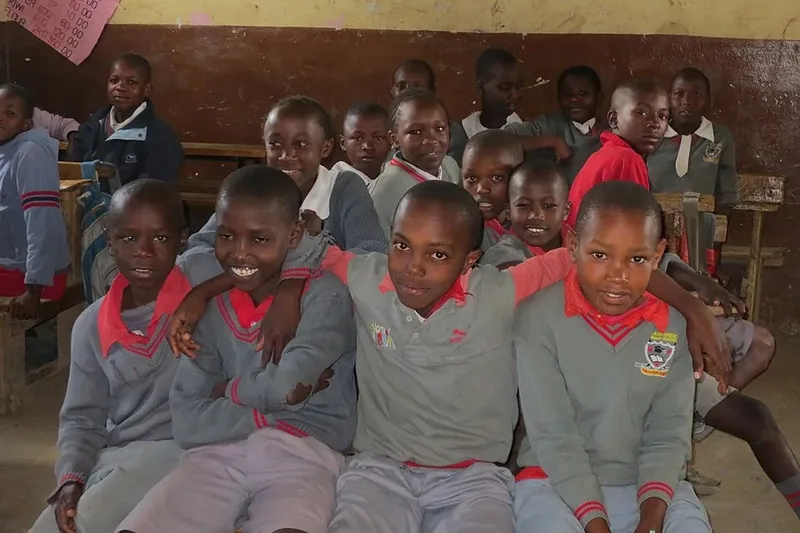
- Photo: Kenyan Students First grade students from Langata West Primary School in Nairobi County perform a poem (9737041642) by USAID in Africa, Public domain (cropped and resized) ↗
Figures are as reported by the companies or cited outlets as of 22 November 2026. Check the source before quoting. Corrections: let us know through the solution form.