What happened
On 25 September 2024 CADE cleared the acquisition under restrictions. Its description covered eleven Brazilian slaughter and deboning units, one unit in Argentina and one in Chile. The Brazilian facilities were spread across several states. The decision is evidence of a defined regulatory perimeter. It should not be treated as an account of every transaction the companies proposed in every South American jurisdiction.
The competition issue can arise on the buying side. If nearby processors compete for the same cattle, common ownership can change farmers’ outside options even where consumers buy beef from many retailers. A processor may gain from routing animals more efficiently. A fall in the price it pays suppliers could instead reflect reduced bargaining alternatives. Both can raise reported margins while having different consequences for the region.
Distance alone is an incomplete measure of substitutability. A plant might technically be reachable but lack capacity, the necessary inspection status or the ability to buy the farmer’s type of animal at the required time. Study actual shipment patterns around each plant and the prices paid after adjusting for cattle characteristics. A temporary drought or a change in herd composition can also move prices independently of the merger.
On 28 August 2023 Minerva Foods, a large Brazilian beef exporter, agreed to buy 16 beef and lamb plants from Marfrig in Brazil, Argentina, Chile and Uruguay for R$7.5 billion. Minerva said it was the second-largest deal in Brazilian meatpacking history, after JBS’s purchase of Bertin in 2009, and would give it about 30% of South American beef exports.
Uruguay’s competition authority blocked the three Uruguayan plants in May 2024. CADE reviewed 11 Brazilian plants and a distribution centre, plus one plant each in Argentina and Chile. On 25 September 2024 it cleared the deal unanimously, on condition that Minerva sell the Pirenópolis plant in Goiás, which had been closed since 2010, to prevent excessive concentration there. After approval Minerva had to pay about R$5.35 billion immediately.
The case shows how regulators can approve most of a deal while carving out specific local overlaps.
Key moments
Minerva and Marfrig agree a package of asset sales.
CADE clears the transaction it examined, subject to restrictions.
Deal value R$7.5bn; CADE cleared it unanimously on 25 September 2024. Sources: CADE; Minerva; The Cattle Site; Brazil Journal.
The trade-offs at the heart of the case
The plant that exists but cannot take the cattle
Consider a producer with animals ready for sale this week. The nearest independent plant can quote an attractive price but has no processing slot until next month. Feeding the animals longer introduces cost and weight risk. A second plant can accept them immediately but only after a longer journey. The real alternative to the acquiring firm is the largest feasible net receipt across these choices, not the highest number displayed on a buyer’s price sheet. A staggered assessment across procurement districts can separate local competition from countrywide changes in the cattle cycle. Identify districts where the transaction materially reduced the number of accessible buyers and comparable districts where it did not. Adjust for animal type, transport distance and season. If the gap in delivered farmgate prices grows most where alternatives disappeared, investigate further. The pattern is suggestive rather than dispositive because changes in plant efficiency can also alter demand for cattle. There is a useful tension between processing efficiency and local bargaining power. Consolidating throughput might permit longer production runs, more consistent export specifications and lower handling costs. It can also make the combined business the buyer setting the marginal bid for a large share of local supply. Preserve both mechanisms in the analysis. A credible efficiency claim identifies the physical resource saved and the conditions under which some of the gain could reach producers or customers.
For your seminar, paper or interview
- Q1
Which alternative bid was genuinely available to a farmer on the required date?
- Q2
How would you distinguish lower cattle prices caused by merger effects from a wider cattle cycle?
- Q3
What evidence of a physical efficiency would support the buyer’s case?
- Q4
How would you verify net farmgate price after feasible transport costs using information available at the time?
- Q5
Which finding about number of effective bidders in each local catchment would most change your recommendation, and why?
- Merger remedies
- Cross-border approvals
- Capacity consolidation
- Earn-outs and payment timing
How we would approach it
Simplifying Finance’s opinion, offered as a starting point for debate, not as fact or investment advice.
One audit should start outside both companies. Ask producers who regularly shipped to each affected plant which alternative buyer could realistically collect their next load, what price was offered and whether payment timing changed. Compare their answers with completed transactions while protecting commercially sensitive information. That evidence helps a regulator detect an option lost at the farm gate even when the national statistics show many operating plants and little movement in the average retail price of beef. Evaluate each affected procurement area and track the practical effect of the remedies. Evidence that a rival can take extra volume on short notice is more informative than an unused pin on a map. If operating savings are genuine, the buyer should be able to demonstrate shorter hauls, reduced losses or more efficient processing without relying entirely on a reduction in farmer receipts.
Accept a targeted remedy
Sell one idle plant to remove concentration in Goiás.
Proceed country by country
Complete the parts that are approved when one jurisdiction blocks.
Pay on approval
Hold most of the payment until regulators clear the deal.
What this plan gives up
The deal made Minerva the leading South American beef exporter, but the Uruguay block and the long review cut the deal’s scope and delayed the benefits.
The strongest counter-argument
An independent buyer looking to expand nearby faces a timing decision. It may have the space to add capacity but need financing, permits and a dependable supply of animals before committing. Farmers may in turn wait for that capacity before redirecting supply. Competition authorities should distinguish the existence of potential entry from entry that can occur quickly enough to constrain prices now. Evidence of completed approvals and signed supply commitments is stronger than a map of a possible expansion. The acquired plants’ export eligibility can affect their bids to local producers. Access to a customer paying for particular cuts may raise the value the processor can recover from a qualifying animal. If a higher bid follows the opening of an export channel, it need not signal more local competition. Likewise, a fall in processing cost can support both improved margins and a higher cattle price. Build separate comparisons for cattle with similar attributes and eligible end markets before interpreting an observed price difference as bargaining power. Better export access can change the value recovered from the same animal.
Metrics to watch
- Minerva leverage
- Plant utilisation
Propose your solution
Pick a discussion question and set out what you would do, why, and what it would cost. Strong, well-argued answers are reviewed and published below with your first name and programme.
Published solutions
Loading published solutions…
- CADE decision on Minerva and Marfrig assets, Portuguese (Brazilian public authority) ↗
- CADE summary of conditional clearance, English (Brazilian public authority) ↗
- CADE: Clears with restrictions Minerva’s acquisition of Marfrig’s assets ↗
- Minerva: CADE approves M&A unanimously ↗
- The Cattle Site: Brazil’s antitrust regulator okays Minerva purchase ↗
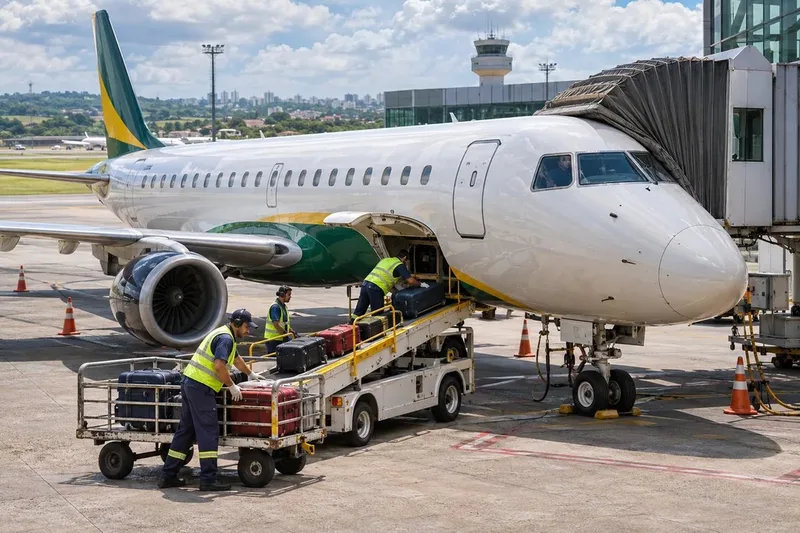
- Image: Simplifying Finance · AI-generated editorial illustration
Figures are as reported by the companies or cited outlets as of 22 November 2026. Check the source before quoting. Corrections: let us know through the solution form.