What happened
Petrobras disclosed completion of the sale of the Landulpho Alves refinery and associated logistics assets in Bahia on 30 November 2021. The purchaser was MC Brazil Downstream Participações, part of the Mubadala Capital group. Including the logistics assets matters. A model based only on processing equipment misses the infrastructure that gets feedstock in and saleable products out. The filing establishes the transfer, while subsequent pricing effects require separate evidence. Petrobras reported a US$1.8 billion closing payment after preliminary adjustments to a US$1.65 billion purchase price.
A refinery earns a spread across a basket of outputs. A barrel of crude cannot be converted entirely into whichever product commands the best price this week. Product yields differ by crude quality and plant configuration. Some costs follow throughput, while a shutdown can stop sales before it stops wages or finance charges. Even purchases and sales described in the same currency may settle on different dates, creating a financing requirement that the quoted spread leaves out.
An independent buyer may choose its crude more freely or market products to different distributors. Local buyers may still have few affordable alternatives if another supplier must pay ocean freight, terminal charges and inland transport. The relevant comparison is the delivered cost of the next available supply. It changes with the buyer’s location, the time needed to replenish storage and the cost of having a truck wait for loading.
The Landulpho Alves refinery, known as RLAM, in São Francisco do Conde, Bahia, can process about 333,000 barrels of crude a day and was Brazil’s second-largest refinery. Petrobras agreed to sell it after signing a commitment with Brazil’s competition authority, CADE, to open the refining sector, which Petrobras dominated.
The sale to MC Brazil Downstream Participações, part of Abu Dhabi’s Mubadala Capital, was announced in March 2021 and completed on 30 November 2021. It included four storage terminals and 669 kilometres of pipelines. Petrobras received US$1.8 billion, reflecting the US$1.65 billion purchase price adjusted for monetary correction and changes in working capital, net debt and investment. The refinery was renamed Mataripe and operated by Acelen from 1 December, with Petrobras providing support for a transition period.
RLAM was the first of eight refineries Petrobras planned to sell. The case shows how a headline price differs from cash received once closing adjustments are applied.
Key moments
Petrobras announces the sale agreement.
Petrobras reports completion and the adjusted payment.
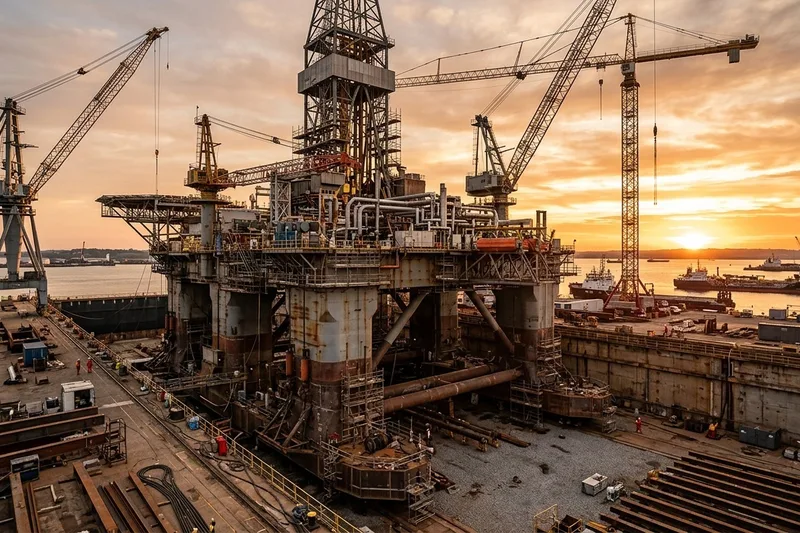
The 333,000 barrel-a-day refinery and its logistics, including four storage terminals and 669km of pipelines, passed to Mubadala Capital’s Acelen on 1 December 2021. Sources: Petrobras; Oil & Gas Journal; Argus.
The trade-offs at the heart of the case
The price on the contract and the cash at closing
The Petrobras completion release gives a useful illustration of why contract price and closing cash should occupy separate lines. It describes payment of US$1.8 billion, reflecting a US$1.65 billion purchase price with preliminary adjustments for monetary correction, working capital, net debt and investment up to closing. An analyst who reports the difference as a premium for improved refining conditions has invented a commercial explanation for an accounting and contractual bridge. The release identifies the adjustment categories, not a new competitive bidding round at completion. Imagine a fuel wholesaler comparing two offers for diesel. One supplier can load trucks tomorrow and the other can deliver a shipload next week. The second quote may be cheaper per unit at the port but require a larger order, a storage reservation and cash paid before local distribution. For a wholesaler with limited financing, the higher unit quote could be the cheaper usable option. That is why a market-power analysis needs a delivered alternative accessible to a customer of similar size. The ownership transfer can also change how value appears along the chain. Before separation, an internal transfer price could shift apparent profit between crude production, refining and distribution. Following a sale, contract terms become external revenues and expenses for different parties. Compare the quantity and quality of product delivered to independent customers and the external cost of crude and logistics. A change in one legal entity’s reported margin is not conclusive evidence of a productivity gain across the supply system.
For your seminar, paper or interview
- Q1
Why did the reported closing payment differ from the stated contract price?
- Q2
What makes an import quotation a credible competitive alternative for a local wholesaler?
- Q3
Which refinery margin comparison survives the move from internal to external transfer pricing?
- Q4
How would you verify contribution from products delivered to customers using information available at the time?
- Q5
Which finding about working capital and refinery availability would most change your recommendation, and why?
- Divestitures
- Competition remedies
- Working-capital adjustments
- Refining margins
How we would approach it
Simplifying Finance’s opinion, offered as a starting point for debate, not as fact or investment advice.
Service quality can be priced using a specific buyer facing a specific disruption. A distributor able to cover a delay from its own nearby stocks has a smaller loss than a buyer whose deliveries stop immediately. The commercial value of dependable terminal access therefore varies by customer, even when both receive the same grade of fuel. Judge the transfer through product-level delivered margins and service reliability. Track credit terms and working capital through a full purchasing cycle before attributing an improvement to plant efficiency. A compelling counterargument is that early operational changes require time to appear. A parallel record of shutdowns, loading delays and inventory can distinguish an integration period from an enduring weakness in the asset.
Sell the whole system
Include terminals and pipelines so the buyer can operate independently.
Provide transition services
Support the buyer’s operations for a period to avoid disruption.
Use completion adjustments
Adjust the price for working capital, debt and investment up to closing.
What this plan gives up
Selling the refinery helped open Brazil’s refining market and brought in cash, but it handed a regional near-monopoly to a single private owner.
The strongest counter-argument
Inventory financing deserves a separate place in the Bahia case. A refinery may pay for crude on delivery but sell the resulting products on customer credit. A rise in crude prices can therefore increase required funding even if the unit refining spread is stable. Model the peak cash invested in crude, work in progress and receivables. The profit made on a completed cargo cannot fund the same cargo weeks before the customer pays. A sensitivity to the length of a maintenance shutdown should include the logistics system too. An owner may continue serving customers by drawing down inventory or importing refined fuel. Doing so protects a commercial relationship while reducing margin and changing the demand for tank and berth space. The board should see the cost of honouring delivery commitments during the interruption alongside the lost processing contribution. Fuel already in a tank can protect service while using up financial flexibility.
Metrics to watch
- Fuel prices in Bahia
- Petrobras’s remaining refinery sales
Propose your solution
Pick a discussion question and set out what you would do, why, and what it would cost. Strong, well-argued answers are reviewed and published below with your first name and programme.
Published solutions
Loading published solutions…
- Petrobras November 2021 Form 6-K, sale of RLAM (US SEC EDGAR) ↗
- Petrobras closing release and purchase-price adjustment (api.mziq.com) ↗
- Petrobras: Completes sale of RLAM (SEC 6-K) ↗
- Oil & Gas Journal: Petrobras completes sale of RLAM refinery ↗
- Argus: Mubadala closes Petrobras refinery acquisition ↗
- Image: Simplifying Finance · AI-generated editorial illustration
Figures are as reported by the companies or cited outlets as of 22 November 2026. Check the source before quoting. Corrections: let us know through the solution form.